To store more meals and groceries, choose a format that suits the type of food you buy, how often you use it and the space available. A chest freezer makes it easier to store bulky items in larger quantities, while an upright freezer helps you separate portions. An under-counter model fits a suitably sized space, while a large fridge freezer is mainly worth considering if you’re replacing your fridge too. Before choosing, compare the freezer’s usable capacity, the permitted ambient temperature range, its kWh/year figure and the stated storage time in the event of a power cut.
Who is this guide for?
Households that buy in bulk
You buy large quantities of groceries, sometimes in bulky packaging, and may have room for a separate appliance. Que Choisir’s buying guide points out that capacity alone doesn’t determine how easy a freezer is to use: access to the food matters too.
Households that prepare meals in portions
You cook ahead and want to keep meals and ingredients separate so they’re easy to find. The internal layout and access to containers can matter just as much as the stated capacity.
Households with limited space
You need to work around an alcove, limited floor space or plans to replace your fridge. ADEME recommends checking that the appliance’s climate class is suitable for the room where it will be installed.
What should you compare?
Chest freezer
Choose this if: you store bulky items or packages in different shapes and have floor space available.
Bear in mind: it can be harder to find items placed at the bottom.
Upright freezer
Choose this if: you regularly take out portions and want to separate food into compartments.
Bear in mind: check how the door opens and allow enough room to pull out drawers and containers.
Under-counter freezer
Choose this if: you have a suitably sized space and your storage needs can be met by a compact model.
Bear in mind: a built-in appliance requires precise space measurements and installation conditions.
Large fridge freezer
Choose this if: you’re replacing your fridge too and want frozen food storage in a single appliance.
Bear in mind: compare the freezer compartment’s capacity, not just the appliance’s total capacity.
To add storage without making food harder to access, compare the model’s dimensions, internal layout and operation with the way you’ll use it. The EU energy label shows details including the energy class, kWh/year and compartment volumes (European Commission).
| What matters to you |
What to check |
Who it matters most to |
| Storing bulk groceries |
Packaging shapes, frozen storage capacity in litres, dimensions and lid clearance. |
When I bring home bulk shopping, I want to check that the packaging will fit and that food at the bottom will still be accessible. Around 29% of consumers prioritise storing groceries in bulk. |
| Finding meals and portions |
Number and ease of use of drawers, container dimensions and door opening. |
If I prepare portions in advance, I want to keep them separate and find them without moving everything else; around 23% of consumers prioritise easy access to portions. |
| Installing the appliance in the right place |
Dimensions and clearance, alcove requirements and the model’s ambient temperature range. |
When the available space or room temperature limits my options, I check the dimensions and installation conditions for the model. Around 18% of consumers prioritise where the appliance will go. |
| Keeping an eye on electricity use |
kWh/year on the label, energy class and the capacity actually allocated to the freezer. |
If I want to manage the electricity use of an appliance that runs continuously, I compare its kWh/year figure and freezer capacity. Around 18% of consumers put electricity use first. |
| Comparing storage time during a power cut |
The stated storage time for the model and, if available, the conditions or test method used. |
If power cuts are a concern, I compare the information for each model rather than relying on the format alone. Around 12% of consumers prioritise the stated storage time. |
Mistakes to avoid
-
Comparing a fridge freezer’s total capacity with a freezer’s frozen food capacity
The Whirlpool WHK2 6494 X6E has a stated total capacity of 490 l, including 150 l for the freezer compartment, according to Whirlpool France. So the total capacity isn’t the same as the space available for frozen food.
Compare the capacity of the freezer compartments only and check that your containers will fit.
-
Assuming an appliance will work in a cold garage
The permitted ambient temperature range varies by model. Liebherr states that FrostProtect works down to −15 °C for the CFe 2080 chest freezer; this feature isn’t available on all freezers.
Check the room temperature and the range specified in the product details and manual for the model you’re considering.
-
Assuming all appliances of the same format have the same stated storage time
Stated storage times apply to specific models. Que Choisir’s published test method measures how long it takes for the temperature to rise; figures are only comparable when the test conditions are suitable.
Check how the storage time is defined and the conditions it applies to for each model, rather than comparing formats in general.
-
Assuming reduced frost means no defrosting is needed
Liebherr says SmartFrost reduces frost build-up in the CFe 2080, while Bosch lists No Frost for the GSN36VWEP. These terms describe different features.
Check whether the product details for the specific model explicitly state No Frost or only reduced frost build-up, then follow the care instructions in the manual.
Brands to know
Whirlpool
Its chest freezer and large fridge freezer examples help you weigh up separate storage against replacing your fridge.
- Whirlpool France states that the WHCF2044 chest freezer has a capacity of 204 l and two baskets; its product details also give a stated storage time of 26 h.
- The WHK2 6494 X6E fridge freezer has a total capacity of 490 l, including 150 l for the freezer. The figures quoted are specific to each model.
Bosch
The freestanding GSN36VWEP upright freezer is worth considering if you prefer easy access at standing height and separate compartments.
- Bosch Electroménager France lists a capacity of 242 l, No Frost and a stated storage time of 9 h for this model.
- Check the appliance and drawer dimensions against the space available and the containers you use.
Liebherr
The models mentioned show two different installation options: a chest freezer and a built-in under-counter freezer.
- Liebherr France states that the CFe 2080 chest freezer has a capacity of 353 l and FrostProtect down to −15 °C; the SUFd 3603 has a stated capacity of 87 l.
- The specified alcove for the SUFd 3603 measures 82–88 × 60 × 56 cm. SmartFrost is described as reducing frost, not eliminating the need to defrost altogether.
Samsung
Consider the RB38C600CS9/EF fridge freezer if you’re also planning to replace your fridge.
- Samsung France states that this model has a total capacity of 390 l and an energy class of C.
- The total capacity alone doesn’t tell you how much space is available in the freezer compartment; check the capacity allocated to it in the model’s product details.
Joybuy products for your needs
This selection includes chest and upright freezers for adding extra storage, as well as fridge freezers to consider if you’re replacing your fridge. For every fridge freezer, check how much capacity is allocated to the freezer and distinguish between replacing an appliance and adding a separate one.
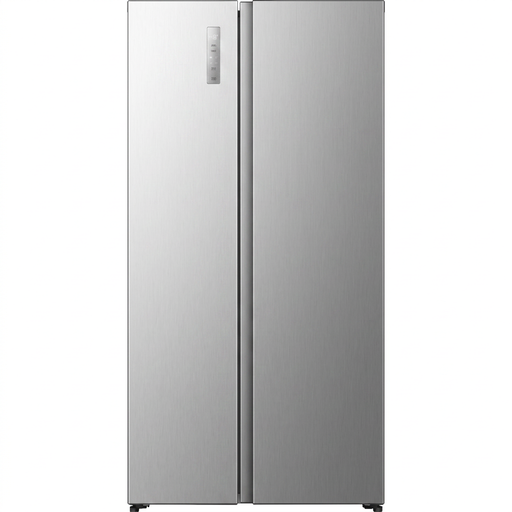 Image unavailable
Hisense RS3P558NEID American-style fridge freezer, 544 L, No Frost, water dispenser
Worth considering if you’re replacing your fridge and want an appliance with a separate freezer compartment.
Stated total capacity: 544 L; No Frost; water dispenser. Check the capacity allocated to the freezer compartment before comparing it with a standalone freezer.
View on Joybuy
 Image unavailable
Heinrich’s upright freezer, 161 L, No Frost, energy class C
Worth considering if you want to keep portions separate in an upright freezer rather than stacking them loose in a chest freezer.
Stated capacity: 161 L; No Frost; three freezer drawers; energy class C. The product name also mentions a reversible door and an alarm.
View on Joybuy
 Image unavailable
AUCMA convertible chest freezer, 291 L, energy class E
Worth considering if you want extra chest freezer space for storing groceries in bulk.
Stated capacity: 291 L; energy class E; removable basket and five-level digital control, as listed in the product name. You can switch between fridge and freezer modes: select freezer mode to store frozen food.
View on Joybuy
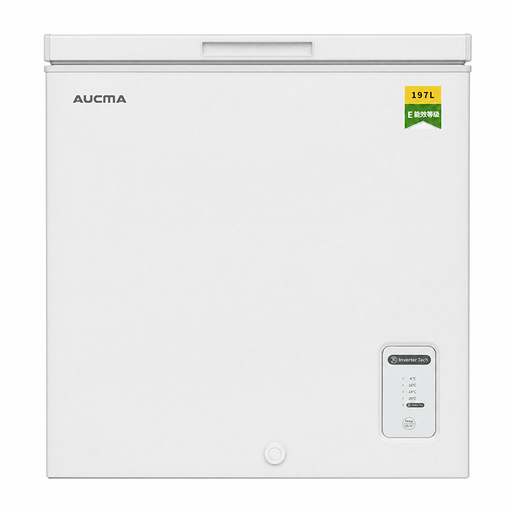 Image unavailable
AUCMA convertible chest freezer, 197 L, energy class E
Worth considering if you’re looking for a chest freezer with a stated capacity of 197 L and a removable basket to keep some of your food separate.
Energy class E; five-level digital control, as listed in the product name. You can switch between fridge and freezer modes: select freezer mode to store frozen food.
View on Joybuy
 Image unavailable
CHiQ JR525WSE side-by-side fridge freezer, 525 L, No Frost
Worth considering if you’re replacing your fridge and want a separate freezer compartment rather than adding a standalone appliance.
Stated total capacity: 525 L, including 333 L for the fridge and 192 L for the freezer; No Frost; energy class E; stated noise level: 37 dB.
View on Joybuy
Frequently asked questions
Can you install any freezer in a cold garage?
No. Compare the room temperature with the ambient temperature range specified for the model and follow its manual. Liebherr states that the CFe 2080 chest freezer can be used down to −15 °C; ADEME recommends checking that the climate class is suitable for the room.
Do SmartFrost and No Frost both mean you don’t need to defrost?
No. Liebherr describes SmartFrost as reducing frost build-up in the CFe 2080, while Bosch lists No Frost for the GSN36VWEP. Check the technology used by the exact model and follow its care instructions.
How can you estimate a freezer’s annual electricity use?
Check the kWh/year figure on the energy label and compare it with other models on the same basis. It shows the labelled energy consumption, but doesn’t guarantee the actual consumption in every household, which depends on how the appliance is used.
What rights and information should you check when buying an appliance in France?
When you buy from a professional seller, you should make any claim under the legal guarantee of conformity to the seller. According to the DGCCRF, legal action must be brought within two years of delivery of the goods, subject to the conditions set by law. The EU energy label shows details including the energy class, kWh/year and compartment volumes. When you replace an appliance, the French ministries responsible for the ecological transition state that the retailer must offer to take back the old appliance, including for distance sales.


