Households that take out prepared meals
If you regularly need to find individual portions, look at the drawer layout and how easy it is to take food out. Que Choisir points out that ease of access matters just as much as capacity.


If you often take out different portions, an upright freezer with drawers makes them easier to organise. For larger stocks, and if you have enough floor space, compare chest freezers instead. A compact freezer may be enough as an extra, while a fridge freezer means you won’t need a separate appliance if its freezer compartments offer enough space for your needs. Whatever you choose, check the dimensions, kWh/year, stated storage time in the event of a power cut, and the ambient temperature range for the exact model.
If you regularly need to find individual portions, look at the drawer layout and how easy it is to take food out. Que Choisir points out that ease of access matters just as much as capacity.
If you store large batches or bulky packaging, an open storage space can be handy, provided you have enough floor space and can keep the contents organised.
If space is limited, or the appliance needs to go in a cellar, pantry or garage, compare its dimensions and check the ambient temperature range specified for the exact model.
Best if: you often take out individual portions and want to store them in separate drawers.
Bear in mind: drawers may make it harder to store large packages; check their usable capacity and dimensions.
Best if: you store large stocks or packages of different sizes, and have enough floor space.
Bear in mind: reaching food at the bottom may mean more rummaging. You’ll also need enough clearance to open the lid.
Best if: you need extra freezer space and don’t have room for a tall upright or a large chest freezer.
Bear in mind: the smaller capacity limits how much you can store, and a compact design isn’t necessarily suitable for use in a cold room.
Best if: you’re also thinking of replacing your fridge and don’t need separate freezer storage.
Bear in mind: compare the capacity of the freezer compartments alone, not the appliance’s total capacity.
| Criterion | What to check | Who considers it most important |
|---|---|---|
| Access to meals | Drawer layout and depth, or how you organise the open interior of a chest freezer. | If I often take out different portions, I want to be able to find and reach them easily. Around 33% of consumers put easy access to portions first. |
| Storage capacity | Freezer compartment capacity in litres, external dimensions and the space needed to open the door or lid. | If I store large packages or batches, I check that they’ll fit in the appliance and that I have room for it at home. Around 27% of consumers prioritise storage capacity. |
| Room for the appliance | Dimensions and clearance; the room’s minimum and maximum temperatures; the range specified for the exact model. | If space is limited or the room may be cold, I want to make sure the appliance is suitable for the intended location. Around 20% of consumers prioritise suitability for the room. |
| Energy consumption | kWh/year and frozen volume shown on the label; estimated cost based on your price per kWh. | If I’m comparing running costs, I look at annual energy consumption for appliances with a similar usable capacity. Around 13% of consumers put electricity costs first. |
| Stated storage time in the event of a power cut | The time stated in hours for the exact model, and the conditions specified by the manufacturer. | If a power cut is a concern for me, I compare the stated storage time without confusing it with other features. Around 7% of consumers prioritise this criterion. |
ADEME points out that freezers run continuously. To compare two appliances, the European Commission recommends checking the annual energy consumption in kWh and the volume of the frozen compartments on the label. You can estimate the cost by multiplying the kWh/year by your price per kWh in €/kWh.
Capacity doesn’t tell you whether your packages will fit easily, or whether you’ll be able to find food without moving what’s on top or in front.
Compare the appliance’s dimensions and layout with the packages you usually store. Also check how easy the drawers are to use or how the lid opens.
A chest design alone doesn’t mean the appliance will work in a cold room. Beko says the SN-T range is 10 to 43 °C; suitability for lower temperatures must be stated for the specific model.
Note the minimum and maximum temperatures where you plan to install it, then compare them with the range in the instructions for the exact model.
The letter doesn’t replace the annual energy consumption in kWh, and appliances with different capacities don’t offer the same performance.
Compare the kWh/year and frozen volume, then estimate the cost using your own electricity tariff.
No Frost relates to defrosting; the stated storage time during a power cut is a separate feature that varies by model.
Check the defrosting system and the stated storage time for the exact model separately.
Freestanding upright models to consider if you prioritise compartments and drawers.
The models mentioned let you compare a compact drawer freezer with a chest freezer, including for use in a cold room.
The range includes drawer-style upright models and chest freezers in different capacities, so you can compare different ways to organise your supplies.
Worth considering if the room where you’ll install the freezer can get cold. Check which feature is listed for the model you choose.
This selection includes upright and chest freezers to give you extra freezer space, from drawer storage to an open interior.
 Image unavailable
The upright design and compartments may suit you if you want to keep food separate and find portions easily.
The product name lists 161 L, three freezer drawers, two drawers, an LED display, an alarm, a temperature range of −14 °C to −22 °C and energy rating C.
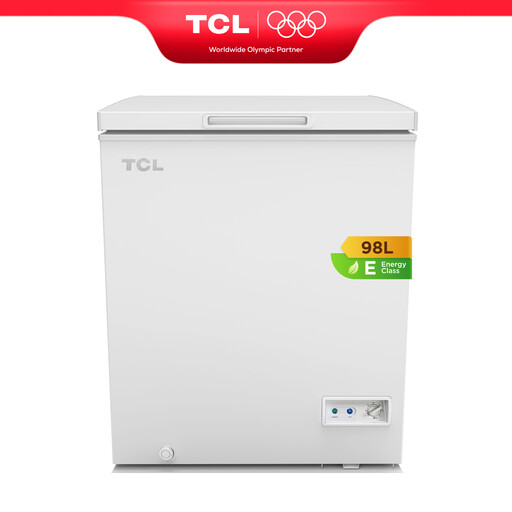 Image unavailable
This chest freezer may suit you if you want compact extra storage with an open interior and a basket.
The title lists a capacity of 98 L, a storage basket, a counterbalanced lid, temperature control and energy rating E.
 Image unavailable
Consider this if you want to switch between fridge and freezer modes rather than use the appliance for just one purpose.
The name lists 95 L, a seven-level thermostat, a removable basket, a defrost drain and energy rating E. It is stated to switch between fridge and freezer modes.
 Image unavailable
The removable basket can help keep some food within easy reach inside the freezer.
The title lists a capacity of 99 L, a 4-star freezer rating, an adjustable thermostat, a removable wire basket, a sliding lid and energy rating E.
 Image unavailable
This compact drawer model may suit you if you want to keep portions separate, have limited space and don’t need a large freezer.
The title lists 60 L, three freezer drawers, a reversible door, adjustable temperature and energy rating E.
Compare the capacity of the freezer compartments alone with the extra amount you want to store. The European Commission says the label distinguishes frozen volume from unfrozen volume. Also compare the dimensions and kWh/year of the options you’re considering.
Not if the room falls below 10 °C: Beko gives a range of 10 to 43 °C for SN-T. Check the temperature extremes where you plan to put the appliance and consult the instructions for the exact model. Liebherr states that its FTe554 and CFd 2085 Plus models with FrostProtect can operate down to −15 °C.
Multiply the kWh/year shown on the label by your price per kWh in €/kWh to get an indicative annual cost, excluding changes in tariffs and conditions of use. ADEME points out that freezers run continuously; compare usable capacities too.
Make sure the door or lid can open fully and follow the instructions for air circulation in the manual. Avoid placing the appliance near a heat source. If it needs manual defrosting, follow the manufacturer’s instructions and unplug it before cleaning or defrosting.
For goods bought from a professional seller, the DGCCRF states that claims under the statutory guarantee of conformity must be made within two years of delivery. Any commercial guarantee is in addition to this statutory guarantee, not a replacement for it.