If you mainly need more room for frozen food, a separate freezer lets you choose the storage style that suits you: accessible drawers in an upright model or more open space in a chest freezer. A small tabletop or under-counter model is better for a little extra capacity. If you’re also short on room for fresh food, compare the fridge and freezer capacities of a larger fridge freezer instead. Whichever you choose, check the location, ventilation and permitted ambient temperature range for the model.
Which format suits your household?
Households that freeze meals in portions
If you regularly take out prepared meals or bags of food, the drawers in an upright freezer can make it easier to sort and reach everything. Check that the drawers are large enough for your containers and that the door can open fully.
Households that buy in bulk
A chest freezer is worth considering for large stocks or bulky items, provided you have enough floor space. If you’re placing it in a utility room or garage, also check the room temperature against the range permitted for the model.
Small spaces in need of extra capacity
A tabletop or under-counter freezer can provide a little extra storage without the need for a large upright or chest freezer. Measure the space and allow for the ventilation clearances specified for your chosen appliance.
What to consider when choosing
First decide whether you need more freezer space alone or more room for both fresh and frozen food. If you’re choosing a separate freezer, the right format will depend on the space available and how often you need to get food out.
Upright freezer
Choose this if: you want to organise portions in drawers and access them regularly.
Bear in mind: large containers need to fit in the compartments, and the door needs enough clearance to open.
Chest freezer
Choose this if: bulk shopping or bulky items matter more than being able to reach each portion quickly.
Bear in mind: you’ll need floor space, and food at the bottom is harder to reach.
Tabletop or under-counter freezer
Choose this if: a little extra storage is enough and there’s no room for a large appliance.
Bear in mind: its more limited capacity makes it less suitable for storing large shops.
Large-capacity fridge freezer
Choose this if: both the fridge and freezer compartments in your current appliance are too small.
Bear in mind: total capacity doesn’t tell you how much frozen food it can hold, so check the freezer capacity separately.
| Criterion |
What to check |
Who it matters to |
| Freezer capacity |
Compare the freezer compartment capacity in litres and the usable space for your larger containers. |
When buying in bulk or preparing meals in quantity, I want enough room to avoid piling food up and losing track of it. Around 36% of consumers would put capacity first. |
| Organisation and access |
Check the size of the drawers or baskets and whether the door or lid can open fully. |
If I often take out a portion, I’d rather find it without having to move everything else. Easy access to food would be a priority for around 29% of consumers. |
| Space required |
Measure the space and access routes, then allow for the ventilation clearances specified in the manual. |
When kitchen space is limited, I mainly want a little extra storage without blocking the way. A compact size would come before other criteria for around 21% of consumers. |
| Location and maintenance |
Check the permitted ambient temperature range and the defrosting method for the specific model. |
If the room is cool or the appliance is difficult to maintain, I first want to make sure it can operate in that location and that I’m happy with the upkeep. Around 14% of consumers would make these considerations their priority. |
Mistakes to avoid
-
Choosing a chest freezer based on capacity alone
Its open space can accommodate large stocks, but food at the bottom is harder to reach than in the drawers of an upright freezer.
If you use portions regularly, consider an upright model or plan to use baskets and storage zones in the chest freezer.
-
Assuming any model will work in a garage
The room temperature and airflow around the appliance determine where it can be installed. A suitability claim for one model doesn’t apply to an entire range.
Check the room’s usual temperatures, then compare them with the permitted range and the clearances specified in the manual.
-
Comparing energy ratings alone
An energy rating on its own doesn’t tell you the annual energy consumption or how much frozen food the appliance can hold.
For appliances with the capacity you need, check the kWh/year figure and freezer capacity together on the energy label and product information sheet.
-
Forgetting about defrosting
Frost can take up space and mean regular maintenance. No Frost and LowFrost features depend on the specific model.
Check the technology listed for your chosen model. If it needs manual defrosting, make sure you can empty and maintain it easily.
Brands to consider across their ranges
Beko
Beko’s range includes chest, upright and tabletop freezers.
- Some models are listed with features such as baskets, temperature alarms or suitability for use in cold rooms.
- Check the permitted ambient temperature range and features of your chosen model: they don’t apply to every Beko appliance.
Electrolux
The range includes freestanding upright freezers and built-in models, including some compact options.
- Electrolux lists LowFrost or No Frost features on some models.
- For a built-in model, check the required space and ventilation in its manual. Don’t assume features listed for one model apply to another.
Liebherr
Liebherr offers freestanding and built-in upright freezers.
- Liebherr’s product information for the FNe 5006 lists a capacity of 238 L and NoFrost.
- These specifications apply to the FNe 5006. Compare the dimensions and energy label of any other model you’re considering.
Bosch
Bosch offers upright freezers, including freestanding models.
- Bosch describes removable drawers and shelves on the GSN58AWEV, which are worth checking if you store bulky packaging.
- The internal layout and features such as No Frost vary by model.
Haier
Haier offers upright and chest freezer ranges, so you can compare vertical and horizontal storage.
- Having both formats available lets you compare different layouts to suit the food you want to store.
- The format alone isn’t enough to choose between two models: check their freezer capacity, dimensions and climate range.
Freezers available on Joybuy
These appliances are worth considering if you’re looking for a separate freezer. Chest freezers offer different storage capacities, while an upright model is better suited to drawer-based organisation. If you also need more fridge space, compare the fridge and freezer capacities of a fridge freezer separately.
 Image unavailable
AUCMA, 291 L convertible chest freezer
Worth considering if you want extra frozen food storage in a chest freezer and have enough space to open the lid.
The product name lists an E energy rating, a 5-level temperature control, a removable basket and a defrost drain. Select freezer mode to store frozen food, and check the permitted ambient temperature range before installing it in an unheated room.
View on Joybuy
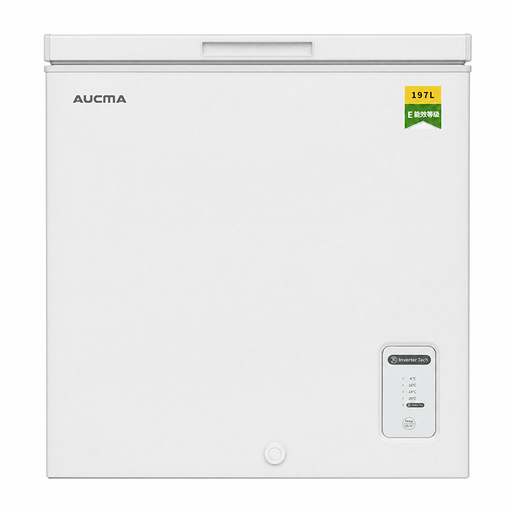 Image unavailable
AUCMA, 197 L convertible chest freezer
This chest freezer is worth considering if you want extra storage and a basket for items you need to find quickly.
The product name lists an E energy rating, 5-level digital temperature control, a removable basket and a defrost drain. Use freezer mode for frozen food, and check the model’s climate range for the room where you plan to keep it.
View on Joybuy
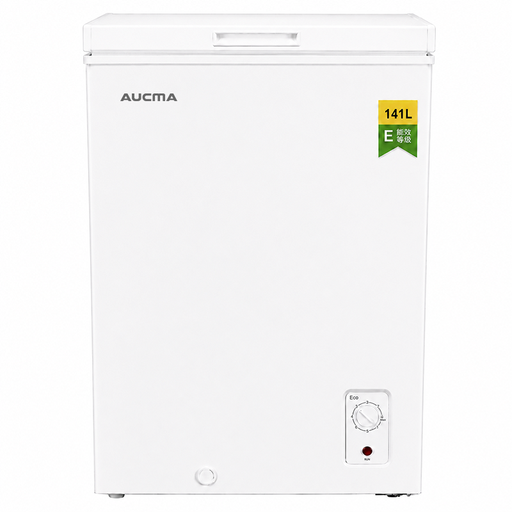 Image unavailable
AUCMA, 141 L convertible chest freezer
This size can provide extra storage if you’re happy to reach in from the top rather than use drawers.
The product name lists an E energy rating, a 7-level thermostat, a removable basket and a defrost drain. Select freezer mode for frozen food and check the installation requirements for this specific model.
View on Joybuy
 Image unavailable
Heinrich´s, 161 L upright freezer, stainless steel
Drawer storage is worth considering if you want to keep portions separate and take them out regularly.
The product name lists No Frost, a C energy rating, an LED display and an adjustable temperature range of −14 °C to −22 °C. Measure the space and door clearance, then check the permitted ambient temperature range.
View on Joybuy
 Image unavailable
CHiQ JR99DWE, 99 L chest freezer
This chest freezer is better suited to providing a little extra capacity than storing large shops.
The product name lists an E energy rating, a 4-star rating, an adjustable thermostat, a removable basket and a sliding lid. Allow enough room to open it, and check the ventilation and defrosting requirements.
View on Joybuy
Frequently asked questions
Should I add a freezer or replace my fridge freezer?
Add a separate freezer if you only need more space for frozen food. If the fridge compartment is also too small, consider a larger fridge freezer and compare the fridge and freezer capacities separately.
Can a freezer work in an unheated garage?
Yes, but only if the model’s permitted ambient temperature range covers the temperatures in the garage and you follow the ventilation clearance requirements. A suitability claim for some appliances, including certain Beko models, doesn’t apply to all freezers.
Which figures should I compare on the energy label?
For appliances suited to similar storage needs, compare annual energy consumption in kWh/year with the capacity of the freezer compartments. The energy rating and noise level are also useful to consider. The European Commission’s EPREL database provides the declared information for registered models.
Does No Frost mean you won’t need to defrost manually?
For the models concerned, Electrolux describes No Frost as a technology that prevents frost from forming and removes the need for manual defrosting. Check that the feature is listed for the specific model you’re considering. If the appliance requires manual defrosting, follow its maintenance instructions.


