Choose an upright freezer if easy daily access, drawers and visibility are your priorities; a chest freezer is better suited to large stocks and bulky food. According to Electrolux, upright freezers are easy to organise, while chest freezers are suitable for large quantities. A fridge freezer is still a sensible choice if you are replacing your fridge as well and your freezing needs remain moderate.
Which households are they for?
Households that lose track of their frozen food
You mainly want to see and separate portions, bags and boxes easily, so you can find an item without moving the entire stock. An upright freezer or a drawer-based fridge freezer will generally meet this organisation priority better than a large chest freezer with few compartments. Electrolux and Bosch notably distinguish between drawer and compartment organisation depending on the model.
Households that stock up in large quantities
You store large purchases, bulky products or family-sized supplies and have enough floor space available. A chest freezer should then be the first format to consider, provided that top access and basket-based organisation suit your habits.
Households with an unheated garage, cellar or utility room
Your choice should first depend on the ambient temperature range covered by the model. Bosch points out that the climate class corresponds to the ambient temperature intended for the appliance to operate in; you should also check the manufacturer’s installation instructions.
What to check before buying
Upright freezer
Best for: if you open the freezer frequently and want to separate portions, bags and boxes quickly.
Bear in mind: the height, net capacity and clearance required in front of the door.
Chest freezer
Best for: bulk buying, large volumes and bulky products.
Bear in mind: the lid opening and a storage system for products placed at the bottom.
Fridge freezer
Best for: if replacing your fridge goes hand in hand with a moderate need for freezer space.
Bear in mind: its freezer capacity will be more limited than that of a large standalone freezer.
| Priority |
What to check |
Your needs |
| Stock organisation |
Count the drawers, compartments, shelves or baskets. Check whether there is a dedicated area for large packages. |
I want to find portions and bags without moving all the food. Drawers are better suited to frequent browsing; a basket keeps smaller products accessible in a chest freezer. |
| Usable capacity |
Compare usable litres between appliances with the same purpose. Also measure the bulky products you usually store. |
My supplies need to fit without buying an appliance that is too large. A fridge freezer may be enough for a moderate stock, while a dedicated chest freezer is better suited to bulky purchases. |
| Energy consumption |
Compare the energy label, annual consumption, usable capacity and noise level between similar models. Check the label’s QR code when available. |
I want an appliance suitable for continuous use without over-sizing my capacity. ADEME reminds us that fridges and freezers operate continuously. |
| Installation |
Check the climate class, the actual room temperatures and the ventilation clearances specified in the manual. Also measure the door or lid opening. |
My appliance must be suitable for installation in the intended room. For a garage, cellar or utility room, I check the model’s temperature range before choosing. |
Mistakes to avoid
-
Choosing a chest freezer solely for its capacity
Food that is rarely used can become difficult to find at the bottom of the compartment. A large capacity alone does not solve the need for visibility.
Use baskets for frequently used bags and portions, group food by category, and choose a drawer-based upright freezer if easy daily access is your priority.
-
Installing the appliance without checking its climate class
According to Bosch, an ambient temperature that is too low can stop the motor, while a temperature that is too high can make it run continuously. Performance depends on the range intended for the appliance.
Record the room’s minimum and maximum temperatures, then check the climate class and the manual for the exact model. Compatibility advertised down to -15 °C applies only to the model concerned.
-
Comparing only the energy-efficiency class letter
Two appliances with different capacities and uses cannot be meaningfully compared based solely on the class letter. ADEME recommends considering the size and the information on the energy label.
Look at annual consumption, usable capacity, noise level, dimensions and energy-efficiency class together, comparing appliances with a similar capacity.
-
Forgetting about ventilation and opening clearance when measuring
A freestanding appliance needs ventilation clearances, while a chest freezer requires enough space to open its lid. Insufficient clearance can obstruct heat dissipation.
Measure the width, height, depth, delivery access and opening space before ordering. Whirlpool specifies 5 cm above and 10 cm behind its freestanding appliances; follow the manual for the model you choose.
Brand pointers for comparing formats
Whirlpool
Whirlpool provides a useful reference point for comparing large-capacity chest freezers, upright freezers and fridge freezers sold on the French market.
- For the W3RHS37EW1 chest freezer, Whirlpool states 371 L, three baskets, a convertible function and operation down to -15 °C.
- These features apply to this specific model. Freestanding appliances must retain the ventilation clearances specified by the manufacturer.
Bosch
Bosch is a useful reference for upright freezers and fridge freezers where drawer and compartment organisation, along with frost-reduction functions, form part of the decision.
- The KGN33NSDB, KGN39VLCT and KGE398IBP examples state 90 to 103 L of freezer capacity, with features such as a door alarm, No Frost, LowFrost or a Big Box depending on the model.
- These details apply to the references listed and do not necessarily describe the entire Bosch range.
Electrolux
Electrolux offers a straightforward way to distinguish between formats: its French guide presents upright freezers as easy to organise and chest freezers as suitable for large quantities.
- The guide helps link the format to the main need: organised access or substantial storage.
- This is a brand guide, not an independent comparative test; capacity, dimensions, climate class and defrosting still need to be checked on each product page.
Options available on Joybuy
These Joybuy options include upright and chest freezers for increasing storage capacity, as well as a fridge freezer for more moderate freezing needs when replacing a fridge.
 Image unavailable
Heinrich’s 161 L No Frost upright freezer
For a household that wants to regularly separate portions and bags in a medium-sized dedicated freezer.
It features 161 L, three freezer drawers, two shelves, No Frost protection, an LED display, an alarm and a reversible door.
Check the manual for the full dimensions, climate class, ventilation clearances and consumption data before installation.
Joybuy
 Image unavailable
COMFEE’ RCU60WH2(E) 60 L upright freezer
For a small kitchen or additional storage where food needs to remain separated.
The model features 60 L, three storage zones, an adjustable temperature, a reversible door and dimensions of 44,5 × 47,5 × 84,5 cm.
At 60 L, it is mainly suitable as an additional freezer rather than for large supplies; check the manual for installation requirements.
Joybuy
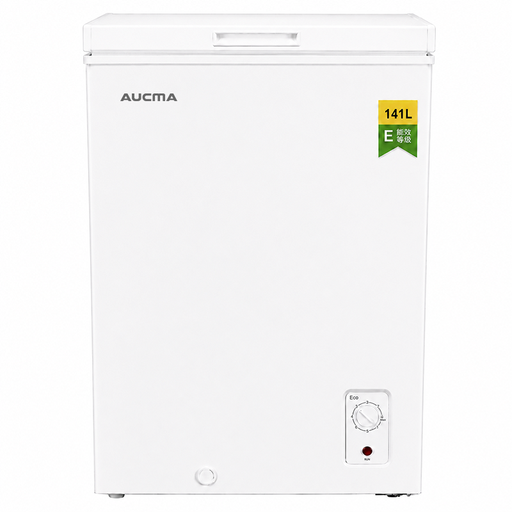 Image unavailable
AUCMA 141 L convertible chest freezer
For adding frozen supplies while keeping a few smaller products accessible in a separate basket.
It features 141 L, a switchable fridge or freezer mode, a seven-level thermostat, a removable basket and dimensions of 632 × 554 × 848 mm.
Top opening and a single basket do not offer the same organisation as drawers; check the manual before using it in an unheated room.
Joybuy
 Image unavailable
CHiQ JR263LGE 262 L Low Frost fridge freezer
For replacing a fridge while also gaining a moderate, well-organised amount of freezer space.
This 70/30 fridge freezer features 75 L of freezer capacity, three transparent drawers, Low Frost, a width of 54 cm, a height of 176 cm and an N-ST climate range of 16 to 38 °C.
Its 75 L of freezer capacity is less suitable for substantially increasing your supplies; the model is designed for an ambient temperature of at least 16 °C.
Joybuy
 Image unavailable
TCL CF182EWE0FR 140 L chest freezer
For additional frozen storage with a basket reserved for the items you use most often.
The chest freezer features 140 L, a storage basket, a counterbalanced lid, castors, a mechanical thermostat and dimensions of 637 × 556 × 846 mm.
Products placed at the bottom are less visible than they would be in drawers; check the climate class, ventilation and consumption in the manual and on the energy label.
Joybuy
Frequently asked questions
Is a chest freezer always better for storing lots of frozen food?
No. A chest freezer is suitable when capacity and bulky products are the priority; Electrolux presents it as a format for large quantities. If you mainly want to find small portions quickly, an upright freezer with drawers is generally easier to organise. Baskets can nevertheless keep the food you use most often within easy reach in a chest freezer.
Can I install any freezer in a garage or cellar?
No. Check the climate class and temperature range for the exact model. Bosch states that the appliance operates within a defined ambient temperature range; Whirlpool specifies that the W3RHS37EW1 is designed to operate down to -15 °C, which cannot be assumed for all freezers.
How much space should I leave around a freestanding freezer?
Always follow the instructions for the appliance you have chosen first. For its freestanding appliances, Whirlpool specifies 5 cm above and 10 cm behind to allow heat to escape; requirements may vary by model. For a built-in appliance, follow the niche and ventilation dimensions supplied by the manufacturer.
How can I compare consumption without relying on a simple energy-saving claim?
Compare the stated annual consumption, usable capacity and intended use between similar models. ADEME reminds us that fridges and freezers operate continuously: an annual figure helps compare appliances, but on its own it cannot predict a household’s actual consumption.


