Households that take out individual portions
You often open the freezer to find a specific meal or ingredient. Drawer organisation and being able to see what’s inside matter just as much as total capacity.


If you regularly take out individual portions, start by looking at how an upright freezer is organised. For storing larger quantities, compare chest freezers if you have room to open the lid. An under-counter appliance may suit you if you have limited storage needs, while a fridge freezer could be enough if its freezer compartment meets your requirements. Compare freezer capacity, dimensions, kWh/year and the stated storage time in the event of a power cut for each model. Don’t assume that one format is always more energy-efficient or better at keeping food frozen during a power cut.
You often open the freezer to find a specific meal or ingredient. Drawer organisation and being able to see what’s inside matter just as much as total capacity.
You buy food in larger quantities and have enough room to open a chest freezer. Capacity, access to food at the bottom and the model’s stated storage time in the event of a power cut are all worth considering.
You’re looking for a small standalone appliance or a freezer compartment in a fridge freezer. The space you have, the type of installation and the capacity actually available for frozen food will all help you decide.
Start with the freezer capacity you need, then check how easy it is to access the food and where the appliance will go. Next, compare the kWh/year and the stated storage time in the event of a power cut for each model you’re considering.
| What matters to you | What to check before you buy | Who it matters most to |
|---|---|---|
| Finding individual portions | Check the number and layout of the drawers, how easy they are to access and whether the door has enough room to open in your kitchen. | If I take out portions regularly, I want to find them without emptying the freezer; around 36% of consumers prioritise easy access for frequent use. |
| Storing larger quantities | Compare the freezer compartment’s capacity in litres, the floor space required and, for a chest freezer, how the lid opens and whether it has baskets. | When I store larger food shops, I need enough capacity while keeping everything accessible; nearly 29% of consumers put bulk storage first. |
| Making the most of limited space | Measure the appliance and check the space needed for the door or lid to open; also check whether it’s freestanding or built-in. | If space is limited, I need to make sure the appliance and its door or lid will fit in my kitchen; around 21% of consumers prioritise this constraint. |
| Energy use and power cuts | Compare the kWh/year and freezer capacity on the energy label, then check the stated storage time in the event of a power cut for each model. | When comparing appliances over the long term, I look at energy use and storage time rather than relying on the format alone; around 14% of consumers put these features first. |
For example, the Whirlpool WHK2 6494 X6E has a total capacity of 490 L, including 150 L of freezer space, according to Whirlpool France. So its total capacity isn’t the same as its freezer storage capacity.
Compare the capacity of the freezer compartment alone with that of the appliances you’re considering.
Keeping food frozen and freezing fresh food are two different functions.
The French Ministry of Agriculture advises checking that the appliance has a four-star compartment and checking its freezing capacity if you want to freeze your own portions.
You also need enough room to open the appliance and must follow the installation requirements for that model.
Measure the space needed to open it, and check the instructions for the installation type, ventilation clearances and permitted ambient temperature.
Energy use and the stated storage time in the event of a power cut vary between models; you can’t work them out from the format alone.
Compare specific models, taking their freezer capacity, kWh/year and stated storage time into account.
With upright, chest and compact models available, you can compare different ways of organising your frozen food.
The CFe 1870 Pure chest freezer is worth considering if you need extra storage and have enough room for it.
The range includes freestanding and built-in upright freezers, so you can compare them to find the right fit for your layout.
A fridge freezer could be a good option if you want to combine refrigeration and freezing in one appliance.
The LUB3AE88S is a low-height built-in freezer to consider if it suits your planned installation.
This selection includes upright and chest freezers, as well as fridge freezers, so you can compare storage layouts and freezer capacity to find the right fit for your available space.
 Image unavailable
Worth considering if you’re looking for a standalone appliance with separate spaces to organise your frozen food.
161 L; No Frost; three freezer drawers and two drawers; energy rating C.
 Image unavailable
Worth considering if you want to combine refrigeration and freezing. Check that the freezer compartment is large enough for your needs before comparing it with a dedicated freezer.
360 L total capacity; No Frost; energy rating E; Wi-Fi and My Zone.
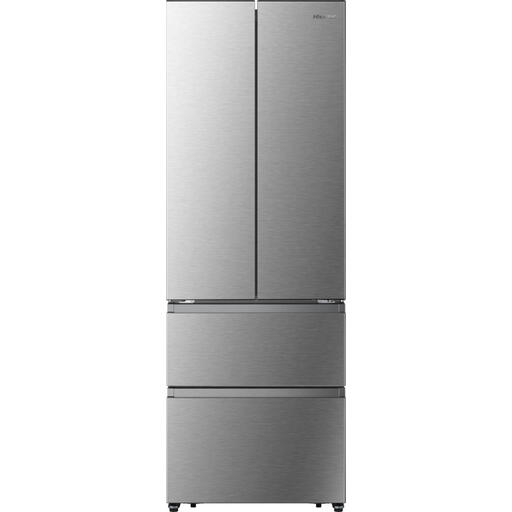 Image unavailable
Worth considering if you want to combine refrigeration and freezing. Check the freezer compartment’s capacity to see how much room there is for your supplies.
485 L; Total No Frost; energy rating E; water dispenser.
 Image unavailable
Worth considering if you’re looking for a fridge freezer with its freezer capacity listed separately from its fridge capacity.
444 L total capacity, including 276 L for the fridge and 168 L for the freezer; stated width of 83 cm; No Frost; energy rating E.
 Image unavailable
Worth considering if you’re stocking up in a chest freezer and have enough room to open the lid.
291 L; convertible between fridge and freezer; removable basket; five-level digital control; energy rating E.
Not simply because it’s called a freezer. The French Ministry of Agriculture distinguishes between keeping food frozen and freezing fresh food. For the latter, check that the appliance has a four-star compartment and look at its freezing capacity, particularly in kg/24 h.
The French Ministry of Agriculture recommends −18 °C. Anses explains that at this temperature, domestic freezing stops bacteria from multiplying but doesn’t destroy most micro-organisms. Freezing doesn’t sterilise food.
No. Check the instructions for the installation type and clearances required for your chosen model. For a small fridge installed under a worktop, Whirlpool says that an air vent is needed towards the back. This guidance doesn’t replace the instructions for the freezer you’re considering.
Compare the kWh/year and freezer capacity shown on the EU energy label, taking into account how much space you need. The European Commission explains that the label also shows the capacity of each compartment and an energy rating from A to G. Your electricity bill will then depend on your tariff and how you use the appliance.
Check whether the model is No Frost or needs manual defrosting, then follow its instructions. The French Ministry of Agriculture recommends a thorough clean at least once a year, followed by drying the walls. When defrosting, Electrolux advises against using sharp objects that could damage the appliance.