Which households are they for?

Households that cook and freeze meals in advance

If you prepare several portions for the following weeks, storage matters just as much as capacity. According to UFC-Que Choisir, an upright freezer with drawers helps you separate boxes, bags and labelled meals, while a chest freezer is more suitable when large volumes matter more than everyday access.

Shoppers who buy frozen food in bulk

A chest freezer can suit households that need to store bags of frozen food, family meals or bulk purchases when there is enough floor space available. However, plan a system for organising everything so you can find products stored at the bottom of the compartment.

Households with an unheated cellar, garage or utility room

In an outbuilding where the temperature varies significantly, check the ambient temperature range specified for the exact model. Some specialist appliances are designed to operate down to -15 °C, but this feature does not apply to every freezer.

Key selection criteria

Upright freezer

Consider it if: you open the appliance frequently and want to find portions, boxes and bags quickly.

Watch out for: net capacity, drawer size and the stated storage time, as these vary between models.

Chest freezer

Consider it if: you prioritise large packages and a separate reserve of frozen food.

Watch out for: the floor space required and how the layers of stored food are organised, which is less straightforward than with drawers.

Large-capacity fridge freezer

Consider it if: you also need to replace your main appliance and want fresh and frozen food storage in one unit.

Watch out for: the actual freezer compartment capacity, which is separate from the total capacity of the fridge freezer.

Priority What to check Your needs
Location and ambient temperature Compare the climate class with the temperature actually recorded in the room. An SN-T range covers 10 to 43 °C according to Bosch and Beko; for a room below 10 °C, look for low-temperature operation that is explicitly stated. I want to install the appliance in a utility room, cellar or garage without choosing a model that is unsuitable for the room temperature.
Access and storage Check the number of drawers or baskets, their dimensions, removable components and whether portions can be labelled. An open compartment is suitable for large items, but requires more careful organisation. I want to find prepared meals quickly and avoid food being forgotten at the back of the appliance.
Storage time during a power cut Compare the stated storage time in hours for each model, along with the temperature or door alarm if specified. UFC-Que Choisir measures this criterion by simulating a power failure without electricity. In the event of a power cut, I want a useful indicator for comparing how long different appliances can maintain a low temperature.
Energy consumption and model information Check the energy class from A to G, annual consumption in kWh, noise level and the model’s EPREL data. The European Commission states that EPREL brings together performance parameters for appliances sold in the European Union. I want to compare the consumption of an appliance that runs continuously, rather than relying solely on its energy class letter.

Mistakes to avoid before buying

  • Choosing solely by the stated capacity in litres

    A chest freezer provides an open compartment that is useful for large items, but food at the bottom is less accessible. An upright freezer may be better suited to portions that need to be rotated regularly, thanks to its drawers.

    List the formats you usually store — portion boxes, bags of frozen food, family meals or large packs — then check the drawers, baskets, internal dimensions and removable storage components.

  • Installing a standard model in a cold outbuilding

    Operating ranges differ from one model to another. Bosch and Beko specify an SN-T range of 10 to 43 °C; a garage that falls below 10 °C requires low-temperature operation to be explicitly documented.

    Measure the room’s minimum and maximum temperatures, then check the rating plate or technical specifications. A model rated down to -15 °C is only relevant if this range is necessary for your chosen location.

  • Inferring storage time from the format or capacity

    Storage time during a power cut is a separate criterion: values can differ considerably between appliances with similar capacities or formats.

    Compare the exact model’s storage time, temperature alarm and thermal stability whenever an independent test is available. Use the figure in hours as a comparison guide, without treating it as an absolute guarantee.

  • Forgetting about frost, ventilation and maintenance

    The energy class cannot compensate for a location that is too hot, too cold or inadequately ventilated. The need for defrosting also depends on the technology selected.

    Allow the clearance recommended in the manual, keep the appliance away from heat sources and check whether a No Frost function genuinely meets your need for reduced maintenance. For a manual model, schedule defrosting before a significant build-up of frost.

Brand guide for this requirement

Bosch

A brand worth considering for an upright freezer with organised storage, No Frost functions and space for larger items.

  • For the GSN58AWCV, Bosch states 366 L, energy class C, No Frost, 13 hours of storage time and a freezing capacity of 26 kg/24 h.
  • These specifications apply to this exact model and cannot be used to infer the performance of the entire Bosch range or its suitability for a cold room.

Whirlpool

The brand offers examples of drawer freezers and chest freezers with baskets, making it possible to compare formats according to your preferred access and the volume you need to store.

  • Whirlpool states 404 L, six drawers and 11 hours of storage time for the WHFF6403W4E upright freezer, as well as 198 L, two baskets and 41 hours of storage time for the W3RHS19DW chest freezer.
  • These differences show that format and brand alone are not enough to predict storage time, consumption or suitability for a garage.

Liebherr

An option for households looking for a very large-capacity chest freezer or a model designed for an unheated outbuilding.

  • For the CFe 2500 Pure, Liebherr states 497 L, FrostProtect down to -15 °C, SmartFrost and StopFrost.
  • These specifications apply to the model in question: also check the dimensions, energy class, delivery and electrical compatibility before choosing.

Options available on Joybuy

These Joybuy options include an upright freezer for portions you access frequently and several chest freezers for creating a separate reserve of groceries and prepared meals.

Heinrich’s 161 L No Frost upright freezer

Heinrich’s 161 L No Frost upright freezer

A vertical format worth considering for separating portions and prepared meals that you access frequently.

161 L, No Frost, three drawers, two shelves, LED display, alarm and reversible door; stated temperature range from -14 °C to -22 °C.

Check the storage time during a power cut, climate class, annual consumption and noise level before installing it in a cellar or garage.

View on Joybuy

AUCMA 291 L convertible chest freezer

AUCMA 291 L convertible chest freezer

Dedicated capacity for large packages, bags of frozen food and bulk grocery purchases.

291 L, fridge or freezer mode, removable basket, LED lighting, five-level digital control, defrost drain, energy class E and stated consumption of 226 kWh/year.

The fridge and freezer modes are alternatives; check the storage time, alarm and ambient temperature range according to the intended location.

View on Joybuy
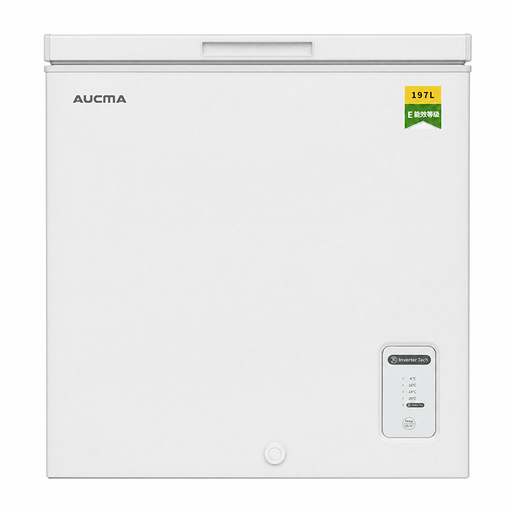
AUCMA 197 L convertible chest freezer

AUCMA 197 L convertible chest freezer

A separate reserve to supplement a freezer compartment that has become too small, without choosing a very large chest freezer.

197 L, 4-star freezer mode, removable basket, five-level digital control, defrost drain, 38 dB, 197 kWh/year and energy class E stated.

Storage in an open compartment requires organised portions; check the storage time, alarm and suitability for a cold outbuilding.

View on Joybuy
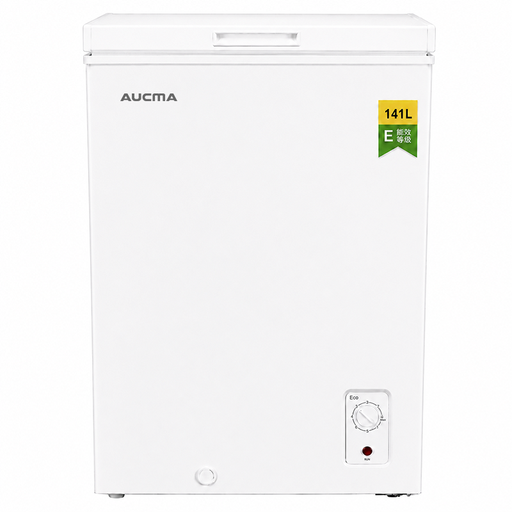
AUCMA 141 L convertible chest freezer

AUCMA 141 L convertible chest freezer

An additional chest freezer for storing portions, bags and bulk purchases when storage space is limited.

141 L, 4-star freezer mode, removable basket, seven-level mechanical thermostat, defrost drain, 38 dB, 179 kWh/year and energy class E stated.

The basket cannot replace drawers for organising the entire contents; fridge and freezer modes are alternatives.

View on Joybuy

CHiQ JR99DWE 99 L chest freezer

CHiQ JR99DWE 99 L chest freezer

An additional format to consider when you need a small reserve of frozen food in a space with limited floor area.

99 L, 4-star freezing, adjustable thermostat, removable wire basket, sliding lid, castors, 39 dB, energy class E and stated freezing capacity of 4.5 kg/24 h.

99 L may not be enough for many family meals or large shops; manual defrosting is required when frost exceeds 5 mm.

View on Joybuy

Frequently asked questions

How can I tell whether a freezer is suitable for my garage or cellar?

Record the minimum and maximum temperatures actually reached in the room, then check the climate class on the rating plate and in the technical specifications for the exact model. Bosch and Beko indicate, for example, a range of 10 to 32 °C for SN and 10 to 43 °C for SN-T; below 10 °C, only choose an appliance whose low-temperature operation is explicitly stated.

Does storage time during a power cut guarantee that everything will remain frozen?

No. It is a useful cold-retention period for comparing models, but it is not an absolute guarantee in all conditions. In its testing protocol, UFC-Que Choisir measures the time needed to rise from -17 °C to -9 °C without power.

What should I compare on a freezer’s energy label?

Compare the class from A to G, annual consumption in kWh, noise level and the model’s other specifications. The energy label makes it possible to compare the consumption of appliances on the market, while EPREL can provide additional information about the performance of the model registered in the European Union.

How can I freeze prepared meals without taking up unnecessary space?

Allow homemade dishes to cool before placing them in a 4-star compartment or at -18 °C, use airtight containers and prepare small portions labelled with the date. According to UFC-Que Choisir’s advice, the meals can be moved after 24 to 48 hours to free up the area intended for newly added food.

Do I need to plan for defrosting and maintenance?

Yes, depending on the model’s technology. For an appliance with manual defrosting, defrost it before a significant build-up of frost; No Frost, SmartFrost and StopFrost functions may reduce maintenance according to the manufacturers’ specifications, which should be checked for each model.