Households that batch cook
If you prepare several portions in advance, compare the freezer capacity with the space you have for your containers and bags. The layout inside matters too if you want to keep different foods separate.


If you regularly reach for pre-prepared portions, choose an upright freezer with drawers; if you want to build up a large stock, consider a chest freezer, provided you have enough space and are happy with how it opens. A fridge freezer saves you from adding a second appliance, as long as its freezer compartment has enough capacity. Whichever you choose, check the dimensions, the room temperature range the model can operate in and its stated energy consumption.
If you prepare several portions in advance, compare the freezer capacity with the space you have for your containers and bags. The layout inside matters too if you want to keep different foods separate.
If you’re installing an appliance outside the kitchen, compare the temperatures the room reaches with the ambient temperature range the appliance can operate in. The climate class is a functional requirement here, not just a matter of convenience.
A fridge freezer combines refrigeration and freezing in one appliance. To see whether it can hold the food you want to store, check the freezer compartment’s capacity separately from the total, then check the dimensions and drawer layout.
The style mainly determines how you store your food and access it. Check the capacity, location and practical features for the specific model you’re considering.
Consider one if: you open the appliance often and want to sort portions into different storage areas.
Bear in mind: its vertical design uses height; also check there’s enough room to open the door.
Consider one if: your priority is having plenty of freezer space and you can make room for a chest freezer.
Bear in mind: food at the bottom can be harder to reach, so baskets or bins are important for keeping things easy to find.
Consider one if: you’re replacing your kitchen appliance and want refrigeration and freezing in one, without adding a separate freezer.
Bear in mind: only part of its total capacity is for freezing. Compare the freezer compartment with the amount of food you plan to store.
| Factor | What to check | Who is this for? |
|---|---|---|
| Freezer capacity | Net freezer compartment capacity in litres and enough space for the containers you plan to use. | I prepare portions in advance or make the most of bulk buys, so my priority is being able to store everything. Around 40% of consumers also put freezer capacity first. |
| Access and storage | Number and size of drawers or baskets, and access to food at the bottom. | I often take out a portion and want to find it without moving other food. For around 30% of consumers, access and organisation come ahead of other factors. |
| Where you’ll install it | Dimensions, clearance and the ambient temperature range the model can operate in. | My appliance needs to go in a cellar or garage, so I first need to know whether it will work at the temperatures in that room. This is the priority for around 20% of consumers. |
| Use and maintenance | Annual energy consumption stated on the energy label and defrosting method. | I prefer to keep an eye on the energy use of an appliance that runs continuously and minimise defrosting. Around 10% of consumers prioritise these practical considerations. |
This figure combines the fridge and freezer compartments. For example, Whirlpool lists 223 l for the fridge and 97 l for the freezer in its WFNF82EOXFR. The total therefore doesn’t tell you how much space you have for frozen food.
Before choosing a fridge freezer, compare the litres allocated to freezing and the layout of the compartment.
A cellar, garage or other room outside the kitchen may reach temperatures beyond the range a particular model is designed for.
Check the seasonal temperatures where you plan to put it and compare them with the climate class or ambient temperature range in the manual for the exact appliance.
No Frost helps manage frost build-up; it doesn’t tell you whether the drawers will fit your containers or how easy it’ll be to find a portion.
Check the net capacity, drawers or baskets, and space for larger containers separately.
A freezer runs continuously, as ADEME points out. The rating alone doesn’t replace checking the model’s stated energy consumption or whether its capacity meets your needs.
Compare annual energy consumption, usable capacity, noise and defrosting method across appliances suited to similar needs.
Upright freezers to consider if vertical storage and easy access to your food reserves matter to you.
Chest freezers to explore if capacity and an out-of-kitchen location are key factors in your choice.
Upright and chest freezers to compare, depending on the layout you want and the temperature of the room.
Fridge freezers to consider if you want refrigeration and freezing in a single appliance.
These Joybuy appliances illustrate the three options covered: a fridge freezer to combine both compartments in the kitchen, a chest freezer for building up a stock, and an upright freezer for organising portions vertically. Compare their freezer capacity and where you could install them, based on how you plan to use them.
 Image unavailable
Consider this if you want to keep frozen food and fresh ingredients in one appliance.
Stated total capacity: 467 l; Total No Frost and energy rating E. Check the freezer capacity separately, and make sure there’s enough room to open the doors.
 Image unavailable
This fridge freezer is a good option if you want refrigeration and freezing together rather than adding a separate appliance.
Stated total capacity: 360 l; Total No Frost and energy rating E. Compare the freezer capacity with the amount of food you plan to store.
 Image unavailable
Consider this if you have room for a chest freezer and are happy to organise food so it’s easy to reach items at the bottom.
Stated capacity: 291 l; removable basket, convertible fridge and freezer modes, energy rating E. Before installing it outside the kitchen, check the ambient temperature range it can operate in.
 Image unavailable
An upright freezer suits anyone who wants to sort portions and access their food reserves regularly.
Stated capacity: 161 l; three drawers, No Frost, reversible door and energy rating C. Measure the space and check the door clearance. If you’re putting it in a cellar or garage, also check the ambient temperature range it can operate in.
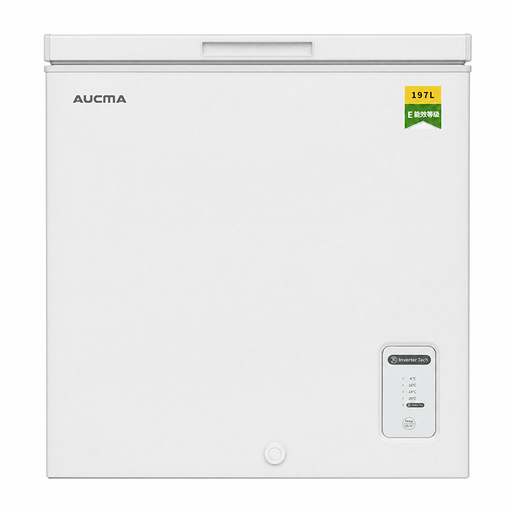 Image unavailable
This chest freezer could suit a smaller stock of food, with a basket to keep the items you want close to hand organised.
Stated capacity: 197 l; removable basket, convertible fridge and freezer modes, energy rating E. Check access to the bottom and the ambient temperature range before choosing where to put it.
Yes, as long as the room’s minimum and maximum temperatures stay within the ambient temperature range the model can operate in. Check temperatures throughout the year and consult the manual: a feature listed for an appliance designed for a cold room won’t necessarily apply to every freezer.
No. No Frost deals with frost, while storage depends on the capacity and interior layout. Check the size of the drawers or baskets and whether there’s enough room for your containers in the model you’re considering.
Compare the energy rating and stated energy consumption, then consider these alongside the freezer capacity you need. The European Union describes the label as a tool for comparing energy consumption between appliances. Also check the noise level and capacity listed for each model.
Keep transport time to a minimum and put your frozen food away promptly, following the instructions on each pack. The DGCCRF advises, among other things, following the maximum storage temperatures shown on prepacked food.