Households that stock up
You regularly buy large quantities and need to balance capacity, floor space and how easily you can reach food stored at the bottom.


If you’re storing large quantities and have enough floor space, a chest freezer is well worth considering; an upright freezer makes it easier to reach portions you use often. An under-counter model offers more limited extra storage, while a large fridge freezer makes most sense if you’re replacing your fridge too. In every case, check the capacity actually available for frozen food and make sure the appliance is suitable for the temperature where you plan to install it.
You regularly buy large quantities and need to balance capacity, floor space and how easily you can reach food stored at the bottom.
You want to find different portions quickly and have enough height and clearance for an upright freezer.
You want extra storage as a permanent fixture, but need to check the available space and distinguish between an under-counter appliance and a fridge freezer that also replaces your fridge.
Consider it: if you store large quantities or bulky packaging and have enough floor space.
Bear in mind: food at the bottom is harder to reach, so keeping everything organised takes a little effort.
Consider it: if you check your freezer regularly and want to organise food in drawers.
Bear in mind: check that the door can open fully, that the drawers are easy to handle and that there’s enough room for bulky packaging.
Consider it: if you want a permanent extra freezer under a worktop and don’t need a large capacity.
Bear in mind: check the capacity and installation instructions; a freestanding model isn’t necessarily suitable for built-in installation.
Consider it: if you’re replacing your fridge too and the freezer compartment meets your storage needs.
Bear in mind: the total capacity includes the fridge section, so check the freezer capacity separately.
For a household that regularly stores frozen food, the right choice depends on how much you need to keep, how often you take food out, the space available and the conditions in the room.
| Criteria | What to check before buying | Who it matters to |
|---|---|---|
| Capacity for frozen food | Compare the capacity in litres of the freezer compartment, not just the total capacity of a fridge freezer. | If I regularly buy in bulk, I want to know how much space is actually available for frozen food. Around 28% of consumers prioritise storage capacity. |
| Access and storage | Check the drawers, baskets and compartment dimensions against the portions and packaging you store. | When I take food out often, I want to find it without having to rummage through the whole appliance. Around 22% of consumers prioritise easy everyday access. |
| Space and room temperature | Measure the space and clearances; check the room temperature against the conditions specified for the model. | If the appliance needs to fit into a tight space or a cold room, I need to check its dimensions and suitability for those temperatures. Space and installation location are priorities for around 22% of consumers. |
| Storage time during a power cut | Compare the stated storage time for the specific models and check how this figure is defined. | If power cuts are a concern for my household, I want to compare the stated times without assuming they’re the same for every model. Around 17% of consumers prioritise this factor. |
| Energy use and maintenance | Compare kWh/year and the energy rating; distinguish No Frost from a feature that only reduces frost build-up. | For an appliance that’s in constant use, I want to assess its energy use and how often it needs defrosting. Around 11% of consumers prioritise energy use or maintenance. |
A fridge freezer shares its capacity between fresh and frozen food. Its total capacity alone won’t tell you how much space you have for frozen food.
Before choosing a model, compare the stated capacity of the freezer compartment with your needs.
The permitted temperature range depends on the model. A specific cold-ambient rating advertised for some models doesn’t apply to every appliance.
Check the actual temperatures in the room and read the product details and instructions for the exact model.
Manufacturers describe MinFrost and StopFrost as ways to reduce frost build-up; this doesn’t necessarily mean you’ll never need to defrost the appliance manually.
Check the exact function listed for the model you’re considering rather than assuming based on the brand or format.
Depending on the feature, you may still need to carry out maintenance or defrost the appliance manually.
The HSM29540 is an example of a chest freezer designed for substantial storage, including in some cold rooms.
The CFe 2500 Pure is an example of a very high-capacity chest freezer to consider if you have enough floor space.
The GSN36VWEP and GTV15NWEB are examples of an upright freezer and a freestanding under-counter model respectively, with different capacities.
Consider the FTN461WCE1 if you’re replacing your fridge too and its freezer capacity meets your needs.
This selection includes fridge freezers with dedicated freezer compartments and a chest freezer for storing food in bulk.
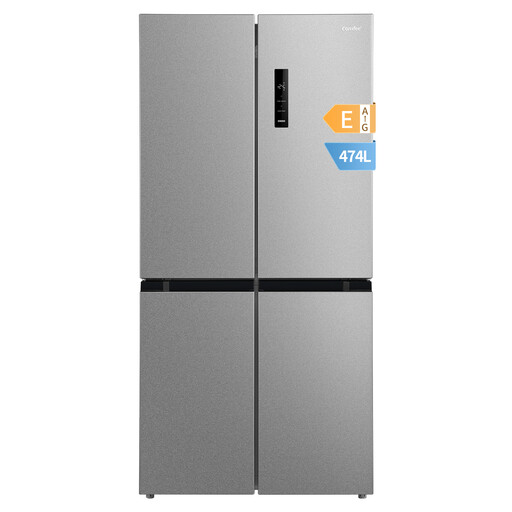 Image unavailable
Worth considering if you’re replacing your fridge too and want to store bulky food in the freezer compartment.
474 l total capacity; external temperature controls and freezer drawers that can be combined, according to the product description.
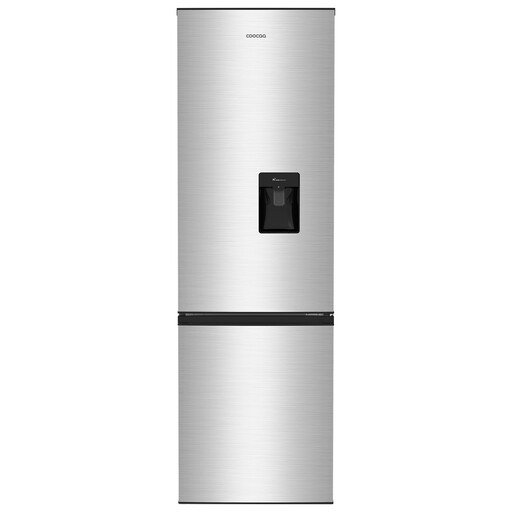 Image unavailable
Consider it if you’re replacing your fridge too and want a dedicated drawer for frozen food.
The product title mentions a large freezer drawer and a water dispenser. Check the freezer capacity against the amount of food you usually store.
 Image unavailable
Worth considering for storing food in bulk; organise it so you can find items at the bottom more easily.
The product description lists a capacity of 291 l, a removable basket and dimensions of 1 100 × 597 × 872 mm. The appliance switches between fridge and freezer modes, so select the mode suited to frozen food.
 Image unavailable
Compare it if you’re replacing your fridge too and would rather organise frozen food in drawers.
The freezer compartment is listed as 125 l and divided into three drawers; the stated storage time during a power cut for this model is 11 h. Compare this capacity with the amount you want to store.
 Image unavailable
Worth considering if you’re replacing your fridge too and want separate storage for fresh and frozen food.
The freezer compartment is listed as 168 l out of a total capacity of 444 l. The stated width is 83 cm; check that you have enough space and clearance.
Only if the actual garage temperatures fall within the range specified for the model. Beko lists suitability down to −15 °C for the HSM29540, and Liebherr does so for the CFe 2500; this feature isn’t available on every freezer. Also check the installation instructions for the model you’ve chosen.
Compare the stated times for the specific models and check how the measurement is defined. In its test, Que Choisir measures how long it takes for the temperature to rise from −17 °C to −9 °C without power. This result doesn’t mean that food which has warmed up is always safe to eat: follow the food’s storage instructions.
Group food into categories and use the baskets supplied with the appliance to make it easier to find. A chest freezer has an open interior, but food stored at the bottom needs careful organisation. Follow the temperatures and storage instructions on the packaging.
Compare the kWh/year shown on the energy label, as well as the delivery and installation options available. When you buy from a trader, the legal guarantee of conformity applies under the conditions set out by the Ministry of the Economy. The DGCCRF notes that when you buy a new appliance, free take-back of an equivalent used appliance is available under the applicable take-back arrangements.