Households that prepare portions in advance
If you often take out tubs or bags of food, an upright freezer with drawers can make it easier to separate and access them. Check that your containers fit in the compartments.


If you often need to find pre-prepared portions, choose an upright freezer with compartments; for larger quantities of food, compare chest freezers if you have enough floor space and are happy with top access. An under-counter model may suit more limited needs, provided it can be installed in your space. If you also need to replace your main fridge, compare the freezer capacity of a large fridge-freezer with that of a separate appliance.
If you often take out tubs or bags of food, an upright freezer with drawers can make it easier to separate and access them. Check that your containers fit in the compartments.
A chest freezer is worth comparing if you have large containers and enough floor space. Make sure top access and reaching food at the bottom work for the way you use it.
A tabletop or under-counter model can add limited extra capacity without the need for a large freestanding appliance. For a built-in model, check the dimensions of the housing unit and the installation instructions for the model you choose.
Start with the food you want to store and how often you’ll need to access it. Then check that the format you have in mind suits the available space and the product specifications.
| What to consider | What to check | Think about your needs |
|---|---|---|
| Capacity and access | Compare the usable capacity with the size of your tubs and large dishes. Look at the drawers or baskets and consider how easy it is to reach food at the bottom. | I want to get portions out often without moving all the other food, or store larger quantities. UFC-Que Choisir distinguishes between more compact upright freezers and chest freezers designed for larger volumes. |
| Space and installation | Measure the external dimensions and the space needed to open the door or lid, and check the ventilation requirements. For a built-in model, check the housing unit and door-fixing system. | The appliance needs to fit in my kitchen without getting in the way when opened. An under-counter housing unit also means checking the installation diagram. |
| Room temperature | Compare the room’s minimum and maximum temperatures with the climate class and any specific temperature limits for the model. | In an unheated cellar or garage, I can’t assume an appliance is suitable just because it’s a chest freezer. Liebherr states that models with FrostProtect can operate at temperatures as low as −15 °C; this doesn’t apply to all freezers. |
| Power cuts | Compare the stated power-cut safe-storage time in hours for each model, and pay attention to the conditions under which it was measured. | If I keep a large amount of food in the freezer or don’t visit the room it’s in very often, this safe-storage time matters. UFC-Que Choisir’s test protocol measures how long food stays below −9 °C during a simulated power cut. |
| Everyday use | Check the model’s energy label and annual energy consumption. Also compare the noise level in dB(A) and the stated defrosting method. | Noise matters to me if the freezer is near a living area, and I also want to compare energy consumption for an appliance that runs continuously. ADEME recommends using the energy label as a guide. |
| Separate or combined appliance | If you’re already replacing your fridge, check the capacity and layout of its freezer compartment before choosing a second appliance. | I’d rather avoid an extra appliance, but only if the new fridge-freezer has enough room for my portions and supplies. |
A spacious chest freezer may mean moving food to reach items at the bottom, while the drawers in an upright freezer may not fit every large dish.
Make a list of the containers you usually use, then check the internal dimensions, baskets or drawers, and the space needed to open the appliance.
The climate class shows the ambient temperature range the appliance is designed for. A model’s suitability for lower temperatures must be stated for that specific model.
Compare the room temperature with the climate class and the instructions for the model you’re considering. Don’t assume that a temperature limit stated for another model applies.
This figure varies between models and helps you assess how they perform without a power supply. UFC-Que Choisir measures it as part of its test protocol using a simulated power cut.
Compare the stated safe-storage time for the models you’re considering, especially if you plan to keep a large amount of food in the freezer.
The dimensions and door-fixing system of a built-in model must match the cabinetry; the requirements are different from those for a freestanding appliance.
Measure the housing unit, check the door type and ventilation requirements, then consult the installation diagram for the exact model.
An example of a freestanding chest freezer to consider if room temperature is a factor in your choice.
A brand to look at when comparing the internal layout of upright freezers.
A range of chest freezers to consider if you plan to install your appliance in a cold room.
Two built-in sizes show why it’s important to choose a model that fits your housing unit and capacity needs.
This selection includes a small upright freezer, an upright freezer and three chest freezers to provide extra frozen storage for prepared meals or food supplies. Compare their layouts and installation requirements with the space you have available.
 Image unavailable
Worth considering if you need a little extra capacity and space is limited. This freestanding model is listed with a reversible door, temperature control and an energy rating of E. Before planning to place it under a worktop, check its dimensions and ventilation requirements. Also check the internal layout, which is described differently in the product title and description.
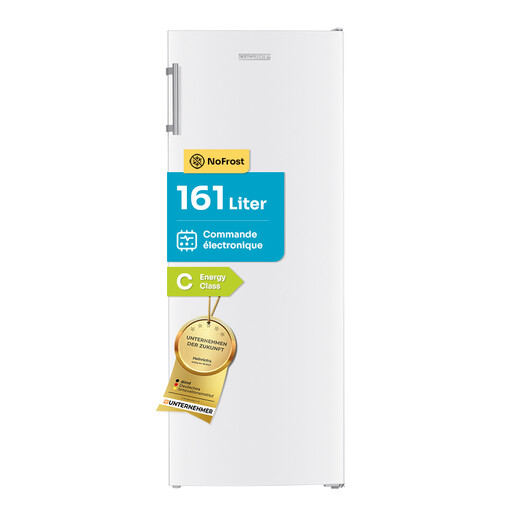 Image unavailable
Its upright design may make it easier to keep portions separate. The title lists drawers, No Frost technology, an alarm and an energy rating of C. It states that the appliance’s temperature can be set between −14 °C and −22 °C; don’t confuse this with the ambient temperature the room can be. Check the installation dimensions and climate class before choosing where to put it.
 Image unavailable
This chest freezer is worth considering for larger quantities of food if top access suits the way you use it. It’s listed as convertible between fridge and freezer modes, with a removable basket and an energy rating of E. Check that there’s enough room to open the lid, and check the climate class before installing it in an unheated room.
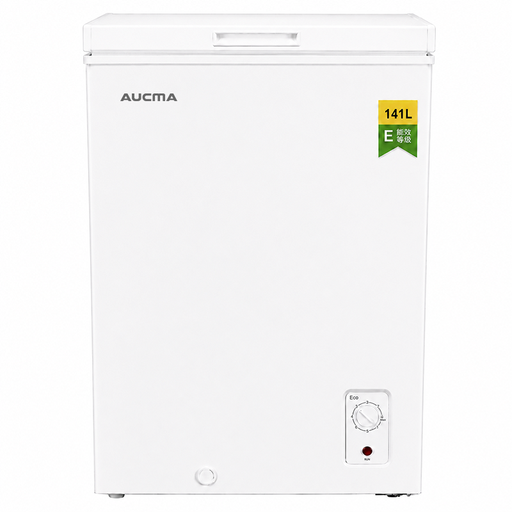 Image unavailable
This chest freezer provides a stated capacity of 141 L for extra storage. The title mentions a fridge mode, removable basket, seven-setting thermostat and energy rating of E. Check that top access suits you and that the climate class is right for the room you plan to use it in.
 Image unavailable
Worth considering if you’d prefer a small chest freezer to an upright model with drawers. The title lists a removable wire basket, adjustable thermostat, sliding lid and energy rating of E. Before buying, check the space needed to open it, the defrosting instructions and the model’s climate class.
Yes, provided the model’s specified operating temperature range covers the room temperature. Check its climate class and any specific suitability details in the instructions. For example, Liebherr states that its chest freezers with FrostProtect can operate at temperatures as low as −15 °C, but this doesn’t apply to all appliances.
Keep the ventilation openings clear, as Bosch’s instructions, for example, advise. For the clearances required around a specific model, follow its instructions and installation diagram, particularly if it’s built in.
Yes. ADEME recommends using it to compare appliances. Consider it alongside usable capacity, noise and the features you need, rather than as a deciding factor on its own.
First, follow the instructions for the model you’ve bought. For the appliances covered by its guidance, Whirlpool recommends waiting 24 hours before plugging it in for the first time, then waiting until the freezer reaches −18 °C before filling it. Don’t automatically apply these timings to another brand.
No. It describes a feature of the specific model. For example, Electrolux describes the KUN7NE18S as having a frost-free compartment. For any other freezer you’re considering, check the defrosting method stated in its product details and instructions.