Households that shop less often
If your fridge no longer has enough room for your food, work out how much frozen food you need to store, then think about how often you’ll need to access it.


If you want to keep food for several weeks, choose a chest freezer if you mainly store bulky packs and have floor space to spare; an upright freezer makes it easier to organise food and access it regularly. A large fridge freezer meets the need for both refrigeration and freezing, while an under-counter model is better suited to occasional extra storage. In every case, compare the freezer capacity with the amount of food you plan to store, and check that the appliance can be installed in the room you have in mind.
If your fridge no longer has enough room for your food, work out how much frozen food you need to store, then think about how often you’ll need to access it.
A chest freezer gives you open space for bulky packs, while a large upright freezer lets you arrange them across compartments. The size and shape of your food packs matter just as much as the stated capacity.
An integrated appliance can add compact storage without taking up the height of a full-size cabinet. However, check the dimensions of the space and the required ventilation: the Beko BU1204N manual calls for appropriate ventilation around the appliance.
Start with the space available and how you store your shopping, then compare the specifications of the exact model rather than relying on what’s typical of its category.
| Criteria | What to check | Your needs |
|---|---|---|
| Capacity and storage | Compare the freezer capacity in litres, the external dimensions and the space needed to open the door or lid. Consider the open space in a chest freezer versus the drawers in an upright model. | I mainly store large bags and packs that can be stacked, so a chest freezer could suit me. If I often look for a specific type of food, I’d prefer compartmentalised storage. |
| Freezing capacity and power-cut storage time | Check the freezing capacity in kg/24 h if you add a lot of food at once. Separately compare the stated storage time in the event of a power cut and any alarms on the model. | After a big shop, I want to know how much food the appliance can freeze in a day, without confusing this figure with its storage capacity. |
| Location | Check the ambient temperature range for the climate class and the clearances required by the manual. According to Beko France, climate class SN-T is suitable for a room between 10 and 43 °C; this alone doesn’t mean a colder garage is suitable. | The temperature in my pantry or garage varies with the season, so I need to compare it with the operating conditions for the model I choose. |
| Energy use and noise | Compare the energy rating, kWh/year, capacity and dB(A) of appliances that meet similar needs. The European Commission states that the energy label scale for household fridges and freezers has run from A to G since 1 March 2021. | In a kitchen near living areas, noise matters as much to me as capacity. I also check annual energy use rather than looking at the letter on the label alone. |
A large open space can hold bulky packs, but food stored at the bottom of a chest freezer takes more organising. Drawers make it easier to sort food if you open the appliance often.
Make a list of the pack sizes you store most often and check how easily you’ll be able to organise and retrieve them.
The temperature in a cellar or garage may fall outside the ambient range specified for the model. According to Beko France, climate class SN-T covers 10 to 43 °C, not temperatures below 10 °C.
Check the room’s seasonal temperatures and compare them with the climate class and the manufacturer’s guidance for the exact model.
The letter alone doesn’t tell you the available capacity, annual energy use or noise level. Different formats may also suit different storage needs.
For appliances of a similar type and capacity, consider the rating, kWh/year, litres and dB(A) together.
An integrated model depends on the installation requirements of the cabinet. The Beko manual covering the BU1204N calls for appropriate ventilation around the freezer.
Before buying, compare the available space, door opening and air gaps with the installation instructions for the model you’ve chosen.
These models illustrate different formats and capacities; their specifications don’t apply to every appliance from the same brand.
Examples to compare if you’re choosing between a large freestanding upright freezer and a fridge freezer.
The CF200EWN chest freezer and BU1204N integrated under-counter model suit different space and storage requirements.
The FNe 4605 Pure NoFrost is an example of a mid-capacity freestanding upright freezer.
The WHFF 6403 W4E is an example of an upright freezer to consider if you need plenty of storage space.
These options include upright and chest freezers, plus a fridge freezer, to suit different amounts of food. Compare the capacity specifically intended for freezing and the installation requirements of each appliance.
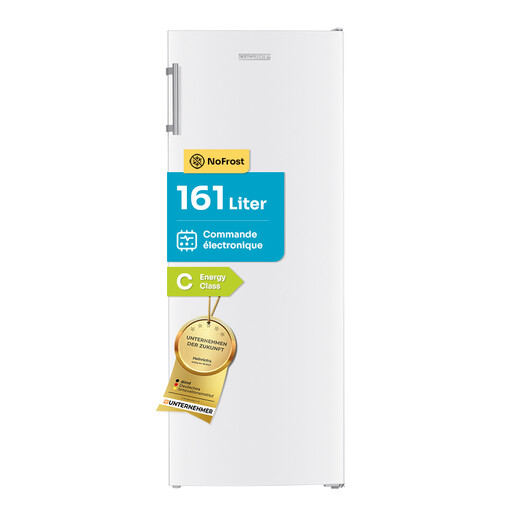 Image unavailable
Its 161 l capacity and vertical layout are worth considering if you’d rather keep food separate than stack it in a chest freezer. The product title lists three drawers, two shelves, an alarm and a C energy rating; check the dimensions, climate class and storage time to make sure they suit your installation.
 Image unavailable
This 60 l freestanding model is worth considering for a small extra supply, rather than a large family stock-up. The title lists a reversible door and an E energy rating; check the exact internal layout and the space needed for installation and ventilation.
 Image unavailable
The 291 l chest freezer could accommodate bulky packs if you have enough room for its lid and footprint. The title lists fridge and freezer modes, as well as a removable basket; check the climate class before installing it in a garage or cellar.
 Image unavailable
With a capacity of 99 l, this chest freezer could provide extra storage if you prefer an open space. Its title mentions a removable basket, adjustable thermostat and E energy rating; check the space needed to open the lid and the room’s permitted temperature range.
 Image unavailable
This fridge freezer is worth considering if you want to increase both your fresh and frozen food storage without adding a separate appliance. Its 360 l is the stated capacity for the whole appliance; check the freezer capacity separately before planning to store several weeks’ worth of frozen food. The title lists three doors, Total No Frost and an E energy rating.
Choose based on the shape of your food packs and how often you need to access them: a chest freezer offers open space for bulky packs, while the compartments in an upright freezer make it easier to sort food. UFC-Que Choisir says chest freezers can hold up to 600 l, while upright models generally hold around 200 l, with larger models reaching 400 l; however, compare the dimensions and capacity of the exact appliance.
Yes, provided the room temperature stays within the permitted range for the model you choose. Check the temperature throughout the year and consult its climate class: according to Beko France, class SN-T is suitable for 10–43 °C and doesn’t guarantee operation below 10 °C.
Look at the energy rating alongside annual energy use, capacity and noise, rather than focusing on a single letter. The European Commission states that the scale for household fridges and freezers has run from A to G since 1 March 2021; compare appliances with a similar capacity to suit your needs.
It may be enough for a limited supply, but check how much capacity you need for your shopping before relying on it as your only freezer. As examples specific to these models, Beko France lists a capacity of 94 l for the BU1204N under-counter freezer and 198 l for the CF200EWN chest freezer, while Bosch Electroménager France lists 366 l for the GSN58AWEV upright freezer.
Because ventilation requirements are part of the installation: the Beko manual, which covers the BU1204N, calls for appropriate ventilation around the freezer to ensure it works efficiently. Before buying, compare the exact model’s manual requirements with the dimensions and openings in your under-counter space.