If your fridge freezer no longer has enough room, choose an upright model for easy access to a variety of meals, or a chest freezer for storing larger quantities if you have the space. A large fridge freezer is a better choice if you also need to replace your main fridge: compare its freezer capacity separately. Whichever you choose, check that it will fit through the access route and in its intended space, that the room temperature is within the permitted range, and how long it can keep food frozen during a power cut.
Which option suits your needs?
People who regularly check what they have in stock
If you rotate between portions, ready meals and bags of food, the drawers in an upright freezer make it easier to organise everything and find what you need. Do check that your largest containers will fit. UFC-Que Choisir highlights the organised access an upright freezer offers compared with the open space of a chest freezer.
Households that store large quantities
For large stocks or bulky food, a chest freezer offers a less compartmentalised space. You’ll need to allow enough floor space and make sure the lid can open fully.
People planning to use a garage, cellar or utility room
The priority is to compare the actual temperatures in the room with the range permitted for the model. The climate class alone doesn’t guarantee that an appliance will work in a very cold space.
What should you check before buying?
Upright freezer
Consider this if: you often take meals from your freezer and prefer to sort them into drawers you can access from the front.
Bear in mind: drawers can limit the size of the containers you can store. However, according to UFC-Que Choisir, an upright model generally takes up less floor width than a chest freezer.
Chest freezer
Consider this if: you stock up in bulk and have a space wide enough for the appliance.
Bear in mind: the lid needs room to open, and food at the bottom can be harder to find quickly.
Large fridge freezer
Consider this if: you also need to replace your main fridge and would prefer to keep just one appliance.
Bear in mind: this option doesn’t provide separate freezer storage. The freezer compartment capacity, not the total capacity, is what matters here.
| Criteria |
What to check |
Who it matters to |
| Access and storage |
Convenient opening, drawer or basket dimensions, and whether they can be removed. |
When I’m regularly changing the meals and bags I store, I want to find each item quickly without emptying the freezer. Around 33% of consumers would prioritise this kind of organised access. |
| Capacity and footprint |
Freezer compartment capacity, external dimensions and clearance needed to open the appliance. |
When I want to put away a big shop, I need storage that will genuinely fit in the room. Around 27% of consumers would prioritise capacity that works with the space available. |
| Room temperature |
The room’s minimum and maximum temperatures, and the permitted range for the exact model. |
If the freezer is going in a garage or cellar, I need to know whether it can handle the temperatures there. Around 20% of consumers would put this compatibility first. |
| Power cuts and everyday use |
Stated storage time in hours, annual energy consumption in kWh, noise and defrosting type. |
When I’m keeping a large stock of food, I want to compare how long it will stay frozen during a power cut, as well as how practical the appliance is to use every day. Around 20% of consumers would prioritise this protection and these features. |
Mistakes to avoid
-
Choosing based only on the stated capacity in litres
A large chest freezer can provide open space for bulky containers, but it may need more width. Drawers in an upright freezer help you organise meals, but each drawer has its own size limits.
Measure the route into your home, the space where the appliance will go, and the clearance needed for the door or lid to open. Also check that you’ll be able to remove the drawers or baskets once the appliance is in place.
-
Assuming any model will work in a garage
The climate class indicates the ambient temperature range the appliance is designed for. Any suitability for particularly cold rooms must be stated for the model you choose; don’t assume it based on the appliance’s design.
Check the room’s temperatures throughout the year and compare them with the conditions listed on the product specification or in the manual.
-
Comparing old and new energy ratings
The European Commission states that, since 1 March 2021, the energy label for domestic refrigeration appliances has used a scale from A to G. The old A+, A++ and A+++ ratings cannot be compared directly with this scale.
Use the current energy labels for the models you’re considering, and also check their annual energy consumption, freezer capacity and noise levels.
-
Assuming storage time during a power cut based on whether it’s a chest or upright freezer
How long an appliance stays cold during a power cut varies by model and depends on the conditions used to determine the stated figure. UFC-Que Choisir assesses this in its testing protocol by measuring the time it takes to rise from −17 °C to −9 °C without a power supply.
If power cuts are a major concern, compare the stated storage times in hours and the conditions under which they were measured, rather than relying on the type of appliance.
Brands to consider
Beko
Upright and chest freezers worth considering, particularly if the temperature of the room where you plan to install the appliance will influence your choice.
- Beko explains how to interpret the temperature range associated with a climate class.
- Check the range for the specific model you choose: a particular climate class or suitability isn’t necessarily applicable to the whole range.
Whirlpool
The range includes upright freezers with drawers and chest freezers, so you can compare vertical storage with open space.
- Whirlpool offers No Frost upright freezers and chest freezers, with different features depending on the model.
- Capacity, storage time during a power cut and suitability for a cold room stated for one model don’t necessarily apply to all Whirlpool appliances.
Liebherr
Chest freezers to consider if baskets and frost-related features affect how you organise your food.
- Liebherr highlights features such as StopFrost and LED lighting on some chest freezer ranges.
- Check which features are included, as well as the capacity and climate class of the model you choose.
Electrolux
A range that lets you compare upright freezers, compact built-in models and chest freezers to suit the space available.
- Electrolux highlights how the different formats are organised and offers NoFrost on some models.
- Check the freezer capacity and defrosting method on the specification for the model you’re considering.
Extra freezers available on Joybuy
These models add extra freezer space: upright models prioritise compartmentalised storage, while chest freezers are available in different capacities. If you’d rather replace your fridge with a large fridge freezer, compare its freezer compartment separately.
 Image unavailable
Heinrich´s, 161 L stainless steel upright freezer
Worth considering if you’d like to organise meals in an upright appliance. The product name specifies a capacity of 161 L, three drawers, a No Frost function, a reversible door and energy class C.
For your intended space, check the dimensions and permitted ambient temperature range. If power cuts are a concern, also check the stated storage time. The −14 °C to −22 °C range mentioned in the product name doesn’t, on its own, describe the permitted room temperature.
View on Joybuy
 Image unavailable
AUCMA, 291 L convertible chest freezer
Consider this if you want plenty of storage and have a space where a top-opening appliance will fit. The product name specifies a capacity of 291 L, fridge and freezer modes, a removable basket and energy class E. Make sure you use freezer mode for frozen food.
Measure the floor space and allow room for the lid to open. Before installing it in a garage or cellar, check the permitted ambient temperature for this model, along with its storage time during a power cut.
View on Joybuy
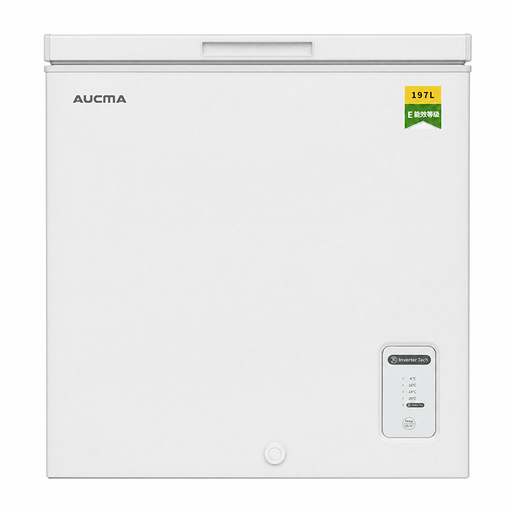 Image unavailable
AUCMA, 197 L convertible chest freezer
This chest freezer is for anyone looking to add 197 L of storage with a removable basket, without choosing the 291 L AUCMA model. The product name specifies fridge and freezer modes and energy class E. Use freezer mode to store frozen food.
Allow enough space for the lid to open, and check the model’s permitted ambient temperature range if the room isn’t heated. If it matters for your food, also compare the stated storage time during a power cut.
View on Joybuy
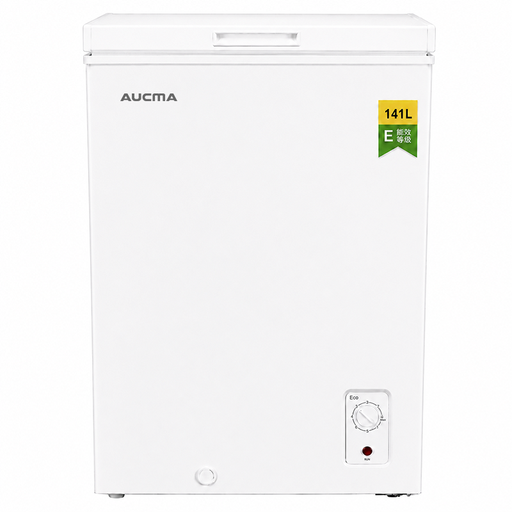 Image unavailable
AUCMA, 141 L convertible chest freezer
Worth considering if you want an extra chest freezer rather than a high-capacity model. The product name specifies a capacity of 141 L, a removable basket, a seven-setting thermostat, fridge and freezer modes, and energy class E.
Make sure this capacity suits your shopping and that the lid can open where you plan to put it. If the room isn’t heated, check the permitted ambient temperature range, and also check the storage time during a power cut.
View on Joybuy
 Image unavailable
COMFEE' RCU60WH2(E), 60 L upright freezer
For extra compartmentalised storage, this model offers 60 L of capacity and three drawers. Check that it has enough room for the meals you want to store. The product name specifies a reversible door and energy class E.
Before placing it in a tight space, check the dimensions and door clearance. If these are important to you, also check the permitted ambient temperature, storage time during a power cut and annual energy consumption.
View on Joybuy
Frequently asked questions
Can you install any freezer in a garage or cellar?
No. The ambient temperature range specified for the model must cover the temperatures in the room. Beko, for example, states that climate class SN-T corresponds to a range of 10 °C to 43 °C. Some appliances are designed to work in particularly cold conditions, but you’ll need to confirm this for the specific model.
What does the stated storage time during a power cut mean?
It’s the time an appliance can keep food cold under defined conditions, not a guarantee that applies in every situation. In its testing protocol, UFC-Que Choisir measures how long it takes for the temperature to rise from −17 °C to −9 °C without a power supply. Compare the figures for each model alongside the test conditions.
What should you check on a freezer’s energy label?
As well as the energy class, check annual energy consumption in kWh, the capacity of the freezer compartments and the noise level. According to the European Commission, the A to G scale has applied to domestic refrigeration appliances since 1 March 2021, so make sure you’re comparing labels based on the same scale.
Does No Frost mean you never have to maintain the freezer?
No. This function can reduce the need for manual defrosting on models that have it, but you’ll still need to follow the manual’s instructions for cleaning and checking the door seals. Check the exact function specified for the appliance you choose.


