If you regularly store large quantities, a chest freezer gives you open storage space, while an upright model makes portions easier to access and usually takes up less floor space. An under-counter model is better suited to a little extra capacity; if you only run short of space occasionally, first check whether a larger fridge-freezer compartment would be enough. For a cellar or garage, the model’s permitted ambient temperature range is a key factor.
Who is each type best suited to?
Households that batch-cook
If you regularly freeze several portions at once, compare the usable capacity with the space taken up by your containers. If you often need to freeze large quantities of food, also check the model’s freezing capacity, measured in kg/24 h.
Households with limited kitchen space
An upright freezer can make it easier to organise food in drawers without needing the width of a large chest freezer. If you only need a little extra capacity, measure the available space before considering an under-counter model.
Households with a spare room
A cellar or garage can free up space in the kitchen, as long as the temperatures in the room stay within the range permitted for your chosen appliance. Check this before comparing capacities.
What should you look for first?
Start by working out how much extra freezer space you actually need, then weigh up capacity, access to portions and where the appliance will go. Que Choisir describes chest freezers as offering large capacities and upright models as generally more compact; if you prefer a fridge-freezer, the usable capacity of its freezer compartment is the figure to check.
| Criterion |
What to check |
Who it matters to |
| Storage capacity |
Compare the usable capacity and, if you often need to freeze large quantities of food, the freezing capacity in kg/24 h. |
I batch-cook several meals or buy food in bulk, and my fridge-freezer compartment is no longer big enough. Capacity would be the top priority for around 36% of consumers. |
| Available space |
Measure the appliance, its opening clearance, the delivery route and the clearances specified in its manual. |
In a narrow kitchen, I want extra storage without blocking the walkway or preventing the appliance from opening. Around 29% of consumers would put size and space requirements first. |
| Access to portions |
Check the layout of the drawers or baskets and the size of the compartments for the containers you usually use. |
I often take out just one portion and want to find it without moving other food. For around 21% of consumers, organisation would be the main priority. |
| Location and maintenance |
Compare the model’s permitted ambient temperature range and its defrosting method. |
The temperature in my cellar or garage changes with the seasons, and I need to be able to use the appliance there in the conditions it is designed for. Suitability for the room and maintenance would be the main priorities for around 14% of consumers. |
Mistakes to avoid
-
Choosing a chest freezer based on capacity alone
A large chest freezer won’t be right if its lid can’t open fully or the appliance gets in the way. For the chest freezers covered in its guide, Que Choisir gives a width of around 110 to 140 cm and an average depth of 70 cm.
Measure the space, the clearance above the lid, the delivery route and the ventilation clearances specified in the manual.
-
Assuming any freezer will work in a garage
The climate class specifies the ambient temperature range the appliance is designed for. A cold cellar or a hot conservatory may fall outside this range, even if the appliance fits in the room.
Compare the room’s minimum and maximum temperatures with the specifications for the exact model. If necessary, look for an explicit statement that it can operate at low temperatures.
-
Confusing open storage with easy organisation
A chest freezer can accommodate bulky containers, but finding a small portion may mean moving other food. The compartments in an upright freezer make it easier to organise food, provided they’re large enough for your containers.
Before choosing, check the baskets in a chest freezer or the dimensions and removable fittings in an upright model.
-
Forgetting about your old appliance when replacing it
An old freezer must be disposed of through a suitable recycling route for refrigeration appliances. ADEME says it can be handed to the retailer or delivery team when your new appliance is delivered, or taken to the designated area for electrical and electronic equipment at a recycling centre.
Arrange collection or drop-off before your new appliance arrives.
Brands to compare
These ranges give you a useful overview of the types and features available; always check the specifications of the model you’re considering.
Bosch
The range includes freestanding and integrated upright freezers.
- Bosch lists a usable capacity of 225 l and a freezing capacity of 19 kg/24 h for its GSN33VWEP upright freezer.
- These figures apply to the GSN33VWEP: check the capacity, layout and climate class of any other model.
Liebherr
The range includes chest freezers for storing large quantities.
- Liebherr lists a capacity of 497 l and says its CFe 2500 Pure chest freezer can operate in ambient temperatures down to −15 °C.
- Suitability for an unheated room depends on the specific model; don’t assume this applies to all Liebherr chest freezers.
Beko
The chest freezer range offers different capacities and storage features to compare.
- Beko offers its Freezer Guard feature, which is specified for ambient temperatures down to −15 °C on selected models.
- Check the product details for the chest freezer you choose to confirm that it has this feature and to check its dimensions.
Whirlpool
The range includes chest and upright freezers, as well as some integrated models.
- The choice of formats lets you compare chest and upright freezers to find one that suits your available space.
- Whirlpool says the climate class is shown on the rating plate or in the technical details. Check the information for the model you’re considering if you plan to put it in a spare room.
Freezers to consider on Joybuy
These appliances include chest freezers with different capacities and upright models for organising portions in separate compartments. Capacity alone won’t tell you which one is right for your space or for the amount of food you freeze at a time.
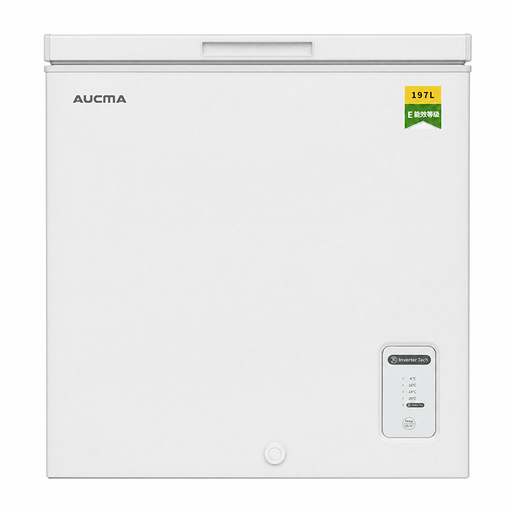 Image unavailable
AUCMA, 197 l convertible chest freezer
Worth considering if you want dedicated freezer space with top access. The product title indicates that it can switch between fridge and freezer modes, and lists a removable basket, five-level digital control and a defrost drain. Check the ambient temperature range and freezing capacity if you plan to install it in a garage or freeze large quantities at a time.
View on Joybuy
 Image unavailable
COMFEE' RCU60WH2(E), 60 l upright freezer
This size is better suited to providing extra capacity than storing large quantities. The product title lists three drawers, adjustable temperature control and a reversible door. Check the clearance needed to open the door and the ambient temperature range if you plan to put the appliance outside the kitchen.
View on Joybuy
 Image unavailable
Heinrich´s, 161 l No Frost upright freezer, stainless steel finish
An option to look at if you’d rather organise portions in an upright freezer than a chest freezer. The product title lists drawers, No Frost, an LED display and an alarm. Measure the space and check the freezing capacity and climate class for your intended use.
View on Joybuy
 Image unavailable
CHiQ JR99DWE, 99 l chest freezer
This compact chest freezer could provide extra capacity if top access suits your room; compare its 99 l capacity with the amount of food you want to store. The product title lists a removable metal basket, sliding lid and adjustable thermostat. Check the climate class before installing it in a spare room.
View on Joybuy
 Image unavailable
TCL CF182EWE0FR, 140 l chest freezer
Compare it with other chest freezers if you want dedicated storage without choosing the largest size featured here. The product title lists a basket, counterbalanced lid and adjustable temperature control. Check how much space you need to open the lid, as well as the freezing capacity and climate class for your intended use.
View on Joybuy
Frequently asked questions
Which climate class should I choose for a garage or cellar?
Choose a model with an ambient temperature range that covers the room’s minimum and maximum temperatures. Que Choisir’s glossary lists SN for 10 to 32 °C and N for 16 to 32 °C, among others. If the room could drop below 10 °C, look for an explicit statement that the specific model can operate at low temperatures.
Is a chest freezer better than an upright freezer for batch-cooked meals?
A chest freezer is a good choice if you prioritise capacity and have enough floor space; consider an upright model if you often take out portions that you want to keep organised. Que Choisir says some chest freezers have a capacity of up to 600 l, while the upright models covered in its guide are generally around 200 l, with larger models reaching 400 l.
Does No Frost mean there’s no maintenance?
No. No Frost removes the need for manual defrosting, but you still need to follow the maintenance instructions and leave the ventilation clearances specified in the manual. Que Choisir also notes that some fan-assisted models can be noisier than static models; compare the stated noise levels of the models you’re interested in.
What should I do with an old freezer when replacing it?
Arrange for it to be collected or taken to a suitable recycling point for refrigeration appliances. ADEME says an old appliance can be handed to the retailer or delivery team when your new one is delivered, or taken to the designated area for electrical and electronic equipment at a recycling centre.


