For storing large quantities, choose a chest freezer if you have enough floor space. If you regularly need to find individual portions of meals, an upright freezer with drawers is usually more practical. A small upright model is better suited to occasional extra storage, while a fridge freezer may be a good option if you’re replacing your fridge too and its freezer compartment is large enough. Before deciding, check the dimensions, the model’s ambient temperature range and its stated power-cut storage time.
Which format suits your household?
Households that freeze meals in portions
If you regularly prepare meals in advance, choose storage that makes it easy to find each portion. The drawers in an upright freezer help you keep everything organised. Just check that your containers will fit and that the drawers can open fully where you plan to place the appliance.
Households that stock up in bulk
A chest freezer’s open space can be useful for large quantities of groceries or bulky containers. Make room for the lid to open, and plan to use baskets or labels so you can still get to food stored at the bottom.
Households placing the appliance outside the kitchen
If you’re installing it in a cellar, garage or unheated utility room, choose a model that suits the temperatures the room actually reaches. Check the climate class or suitability for low temperatures for the specific model; don’t assume based on its format or brand.
How do the different formats compare?
First, decide which factor matters most for your frozen food storage: the amount you need to store, access to individual portions, available space or installation conditions. Then compare the features of models that meet your priority.
| Factor |
What to check |
Who this matters to |
| Storage capacity |
Compare the net capacity in litres and the usable space for your containers, then measure the clearance needed to open the appliance. |
When I freeze bulk buys and large dishes, I want to store them without awkward stacking; around 36% of consumers make capacity their top priority. |
| Access to portions |
Check the layout and size of the drawers or baskets, and make sure they can open where you plan to put the appliance. |
If I take out a prepared meal every day, I want to find the right portion without rummaging through everything; easy access and organisation come first for around 29% of consumers. |
| Available space |
Measure the width, depth and height, as well as the clearance needed for the door or lid. For a built-in appliance, also check the housing space and required ventilation. |
In a kitchen where every bit of space counts, I need the appliance to fit without blocking access, even if that means choosing a smaller capacity; this is the main constraint for around 21% of consumers. |
| Installation and food storage |
Check the model’s ambient temperature range and its stated storage time in hours in the event of a power cut. |
If I’m putting the freezer in an unheated room or am concerned about power cuts, I want to choose a model that’s suitable for those conditions; around 14% of consumers make this their priority. |
Mistakes to avoid
-
Choosing a chest freezer based on capacity alone
Its open space can hold large quantities, but portions stored at the bottom can be hard to find. For everyday use, access is just as important as capacity.
Before you buy, try arranging your usual containers in baskets. If you choose a chest freezer, consider using dated labels or keeping an inventory too.
-
Assuming any freezer will work in any garage
A climate class specifies an ambient temperature range; it doesn’t guarantee that the appliance will work in every cold or hot room. A stated ability to operate at low temperatures applies only to certain models, not to every model in the range.
Find out the likely minimum and maximum temperatures in the room, then compare them with the rating plate and the manual for the model you’re considering.
-
Comparing only the letter on the energy label
The label also shows annual energy consumption in kWh. When choosing between two appliances, usable capacity and installation conditions matter too. UFC-Que Choisir’s tests also look at how freezers perform at different ambient temperatures.
Compare the kWh/year figures for models with similar formats and capacities, then check their defrosting requirements and stated storage time during a power cut.
-
Relying on freezing to make food safe after its use-by date is near
According to Anses, freezing food at home at −18 °C stops bacteria from multiplying, but most micro-organisms survive. The DGCCRF advises against freezing a product when its use-by date is approaching.
Freeze food as soon as you buy or prepare it rather than leaving it until its use-by date is near, and label portions with the date so you can plan when to use them.
Brands to consider, depending on the model
Beko
Worth considering for a chest freezer for storing larger quantities, particularly if the space it will go in could be cold.
- According to Beko France’s product information for the HSM27050, this model has a net capacity of 284 L, and the manufacturer states that it works at ambient temperatures from −15 °C.
- These specifications apply to the HSM27050. Check the ambient temperature range, dimensions and storage time during a power cut for the model you choose.
Liebherr
Worth considering if an upright layout and a NoFrost model suit your needs.
- Liebherr describes the FNe 4204 Pure as a 160 L NoFrost upright freezer and states that this model can operate at ambient temperatures as low as −15 °C.
- Don’t assume this temperature range applies to all Liebherr upright freezers. Also check that the drawers can hold your largest dishes.
Bosch
Worth considering if you want to check the climate class and interior layout of an upright freezer in detail.
- Bosch Home Appliances states that climate class SN-T corresponds to an ambient temperature range of 10 to 43 °C.
- This range applies only to models with the corresponding climate class. Check the rating plate before installing an appliance outside a heated room.
Electrolux
Worth considering when a low built-in space calls for a compact freezer for extra storage.
- Electrolux France describes the LUB3AE88S as a built-in freezer measuring 87.3 cm tall, with a capacity of 98 L.
- Before choosing this model, compare its housing dimensions and net capacity with the amount of food you want to store.
Joybuy products for different needs
These models let you compare a compact chest freezer for extra storage, upright freezers for organising portions, and fridge freezers if you’re replacing your main appliance too. If you’re installing an appliance under a worktop or in an unheated room, always check the dimensions and the conditions specified for that particular model.
 Image unavailable
CHiQ JR99DWE, 99 L white chest freezer
Consider this for extra storage if you have room to open the lid and prefer an open storage space.
The product title mentions a removable basket, adjustable thermostat, four-star rating and E energy rating. Check the ambient temperature range and storage time during a power cut if the location or power cuts are key considerations.
View on Joybuy
 Image unavailable
Heinrich´s, 161 L No Frost stainless steel upright freezer
For meals you need to find regularly, an upright freezer lets you organise portions across separate compartments, provided they’re the right size for your containers.
The title mentions three freezer drawers, No Frost and a C energy rating. Measure the space and check the ambient temperature range and stated storage time during a power cut before choosing this model.
View on Joybuy
 Image unavailable
COMFEE' RCU60WH2(E), 60 L white upright freezer
Consider this for a few extra portions rather than large quantities. If you want to put it under a worktop, check that the dimensions and clearance requirements allow for this.
The title mentions three drawers, a reversible door and an E energy rating. Also check the permitted ambient temperatures for your chosen location.
View on Joybuy
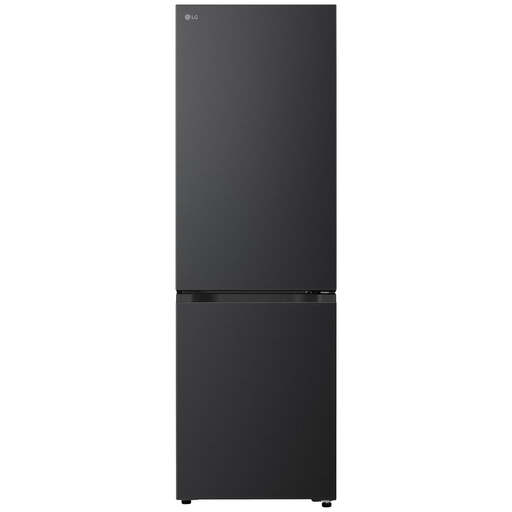 Image unavailable
LG GBBS312CEV, 333 L black fridge freezer
Worth considering if you’re replacing your fridge too. Before choosing a fridge freezer instead of a separate freezer, compare the capacity of the freezer compartment alone with the amount you plan to store.
The title states a C energy rating. Check the freezer compartment capacity, installation dimensions and storage time during a power cut separately.
View on Joybuy
 Image unavailable
AEG NSC6M18FES, 249 L white built-in fridge freezer
If you’re replacing a built-in fridge, first check that the housing is suitable, then make sure the freezer compartment can hold your meals in portions.
The title mentions TwinTech No Frost and an E energy rating. Don’t use the stated 249 L capacity for the whole appliance as the capacity of its freezer compartment.
View on Joybuy
Frequently asked questions
Can I put any freezer in a garage or cellar?
No. Choose a model whose ambient temperature range covers the temperatures in the room, then check the manual and rating plate. For example, Bosch Home Appliances states a range of 10 to 43 °C for climate class SN-T, while Beko and Liebherr state that certain specific models can operate at temperatures as low as −15 °C. None of these specifications apply to all their freezers.
What does the stated storage time during a power cut tell me?
It helps you compare how well different models keep food cold during a power cut, but it can’t guarantee the condition of food after an actual outage. As part of its testing procedure, UFC-Que Choisir measures how long it takes for the temperature to rise from −17 °C to −9 °C during a simulated power cut. So compare the times while taking each model’s measurement method into account.
Can I wait until just before the use-by date to freeze a meal?
No. If a food has a use-by date, freeze it as soon as you buy or prepare it rather than waiting until the date is near, in line with recommendations from Anses and the DGCCRF. Freezing does not eliminate most micro-organisms. Anses recommends defrosting food in the fridge, in a microwave using the defrost setting, or directly by cooking or reheating it thoroughly.


