
Livraison le jour même ou le lendemain

Qualité garantie

Débloquez vos offres de bienvenue: Livraison GRATUITE | Jusqu'à -80 % | 30 jours d'essai gratuits à JoyPlus
Téléchargez l'application
Buying a freezer isn’t just about comparing volumes or jumping on a promotion. A poorly sized appliance can clutter your kitchen, push up your electricity bill, or turn hunting for a bag of veg into a full-blown treasure hunt. Whether you’re a student, a parent of a large family, renting a small flat, or a keen garage-stocker, the format matters just as much as the stated capacity.
A chest freezer may boast a generous volume, but food piled at the bottom quickly becomes hard to reach. An upright freezer with drawers, on the other hand, makes organising and seeing your items easier, though it takes up more height. The right choice depends on your habits and what you plan to store: ready meals, meat, vegetables, ice cream or bulk supplies.
An energy rating of E or C gives you a standardised benchmark, but it isn’t enough to estimate running costs. Also check the annual consumption, expressed in kWh. Two appliances of different capacities can’t be compared on this criterion alone. How often you open the door, the room temperature, and the airflow around the freezer all play a part too.
Even a freezer advertised as quiet can be heard in an open-plan room or near a bedroom. The decibel level on the spec sheet lets you compare models, provided you keep the recommended gaps around the ventilation grilles. If it’s installed against a wall, in a damp environment, or near a heat source, the appliance may run less efficiently — and use more energy.
The 4-star label means the appliance can reach a temperature of around –18 °C or lower, depending on the model’s specifications. Freezing power, expressed in kilograms per 24 hours, tells you how much fresh food the appliance can freeze in that period. Don’t confuse it with the total volume.
For family use, also check for a fast-freeze function. It can come in handy after a big shop, but it’s best not to leave it on permanently unless the manufacturer specifies an automatic shut-off.
A freezer with drawers or removable baskets lets you separate food categories and avoids leaving the door open for long stretches. A reversible door is especially handy in a small kitchen. Adjustable feet make it easier to level the appliance on an uneven floor.
A frost-free model, or “No Frost”, limits ice build-up through ventilated air circulation. This reduces the need for manual defrosting, but it can affect noise levels and the purchase price. With a standard chest freezer, you’ll generally need to defrost when the ice layer gets too thick.
For a portable appliance, check compatibility with 12/24 V for the car and 100–240 V for home use. Battery discharge protection is welcome, but the freezer must still be properly secured during travel and have enough ventilation.
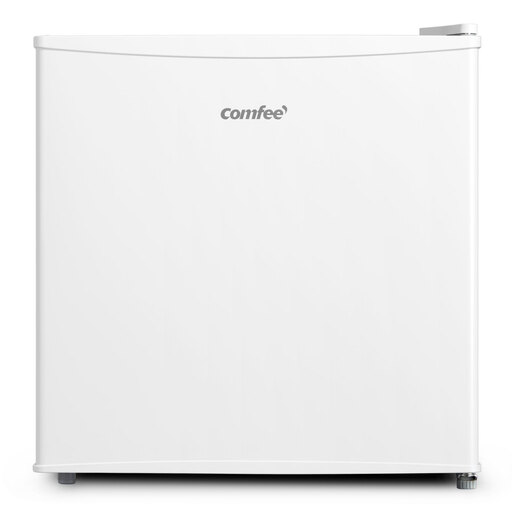
Why this choice suits this profile: Its compact size works well in a studio flat, office, or any home where every centimetre counts. The reversible door makes it easier to adapt to your room layout.
At 31 L, it stops you paying for capacity you don’t need. The spec sheet shows class E, 147 kWh annual consumption and a noise level of 41 dB — figures to weigh against your actual requirements.
Freezing power rated up to 2 kg in 24 hours, adjustable feet and interchangeable door hinge.
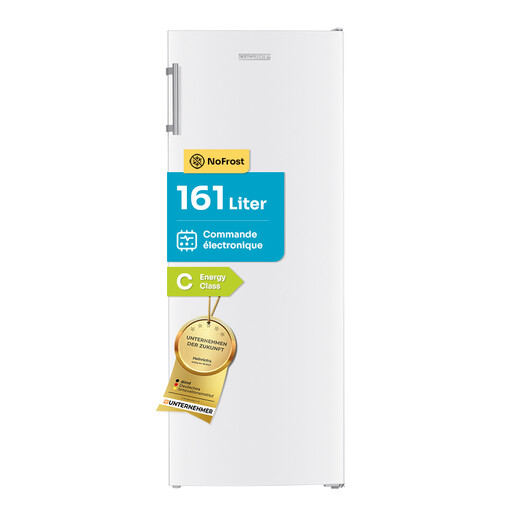
Why this choice suits this profile: This upright format suits a household that wants to organise its supplies across several drawers while cutting down on defrosting sessions.
The three drawers and two shelves reduce messy stacking. The No Frost system is said to minimise ice build-up, but you still need to keep the ventilation gaps clear.
161 L, energy class C, LED display, alarm, fast-freeze function and a stated temperature range of –14 °C to –22 °C.
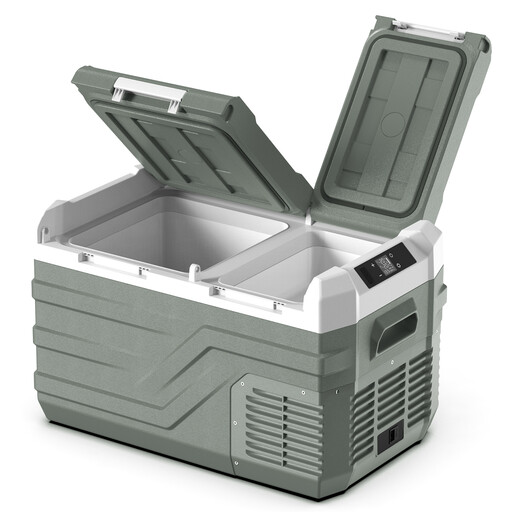
Why this choice suits this profile: Its 12/24 V and 100–240 V power supply lets it run in a car, campervan or at home. The two zones allow you to combine cooling and freezing depending on your journey’s needs.
It doesn’t rely on a simple thermoelectric system: the spec sheet mentions a compressor, three-level battery protection and a noise level of 45 dB.
Stated adjustment from –20 °C to 20 °C, MAX and ECO modes, USB port and energy class C.
We’ve put together a full selection, updated in real time, of products that meet these exacting criteria as well as European safety standards.
For proper everyday storage of frozen food, the recommended setting is generally –18 °C. Still, check your model’s manual and avoid putting warm food inside. An independent thermometer can help you verify the actual temperature reached.
The figure to watch is the annual consumption in kWh, shown on the energy label. To get an estimated cost, multiply this value by the per-kWh rate on your electricity contract. Actual consumption varies depending on the volume, the appliance’s age, the room temperature and how often you open the door.
A freezer’s lifespan depends on its maintenance, ventilation, compressor and usage conditions. Clean the seals regularly, defrost models that need it, and leave enough space around the grilles. If it breaks down, don’t touch the refrigerant circuit — call a qualified professional, following the manufacturer’s recommendations.