What should you look at first?
Start by working out what your current appliance is short of: chilled space, freezer space or both. Then compare the storage options and installation requirements of appliances that meet your needs.
| Priority | What to check | What I need |
|---|
| Capacity split |
Compare the usable capacity in litres of the fridge and freezer separately. With a fridge-freezer, don’t just look at the total capacity; check that each compartment suits the amount you usually store. |
I keep fresh ingredients as well as frozen portions, so I need enough space in the right part of the appliance. |
| Freezer style |
Look at the capacity and drawer access of a fridge-freezer, upright freezer or chest freezer. A separate appliance also needs a suitable space and an electricity supply. |
My fridge has enough chilled space, but its freezer drawers regularly fill up. I could consider a separate appliance if I have somewhere to put it. |
| Storage and access |
Check the shelf layout, the internal dimensions of the drawers and how easy it is to reach your portions. Compare them with your largest boxes and dishes. |
I want to be able to find a portion without moving everything else, and to store my dishes in the containers I normally use. |
| Installation and use |
Measure the space and delivery route, then check the ventilation clearances specified in the manual. According to Que Choisir, the energy label shows annual energy consumption: compare the kWh/year and noise levels of models with a similar size and capacity. |
If I add a freezer or choose a larger appliance, I need to make sure it will fit in my home and that I’m happy with its footprint, energy use and noise. |
Which brands should you compare?
These range examples can help you identify possible configurations, but they don’t represent every appliance from each brand.
Bosch
Bosch offers fridge-freezers and separate freezers. Compare both formats if your frozen food is taking up too much space.
- According to Bosch’s product details for the KGN392WCF, this fridge-freezer has a 260 l fridge compartment, a 103 l freezer compartment and a stated noise level of 35 dB.
- This capacity split applies to the KGN392WCF only. Check the capacity and layout of any other model you’re considering.
Samsung
Samsung’s fridge-freezer range includes models worth considering if you’re looking for more storage in a single appliance.
- Samsung’s product details for the RB38C607AS9-EF list a fridge-freezer with a capacity of 387 l.
- Connected features vary by model. Samsung states that a Wi-Fi connection and Samsung account are required for the relevant features. Check the energy consumption on the model’s label separately.
Haier
Some Haier fridge-freezers focus on interior layout, which is worth considering if you store dishes in a range of sizes.
- Haier describes the shelves on the HDPW5618DNPW as adjustable.
- This feature isn’t available across the entire range. Check the shelves and internal dimensions of the appliance you’re considering.
Appliances for different storage needs
This selection from Joybuy includes fridge-freezers for keeping chilled and frozen food in one appliance, as well as a separate freezer to consider if your current fridge already meets your needs for chilled storage. Compare the compartments with your containers and the space available at home.
 Image unavailable
Haier HTW5618ENMG, 3-door fridge-freezer, 360 l
An option that combines chilled and frozen storage for ingredients and prepared portions. The model name lists Total No Frost, energy class E, Wi-Fi and My Zone. Check the capacity split and make sure there’s room for your containers before choosing.
View on Joybuy
 Image unavailable
Heinrich´s, 161 l stainless steel freezer
Worth considering for frozen portions if another appliance already meets your needs for chilled food: this freezer doesn’t provide any fridge space. The product name lists No Frost, three freezer drawers and energy class C. Check its footprint, compartment sizes and annual energy consumption.
View on Joybuy
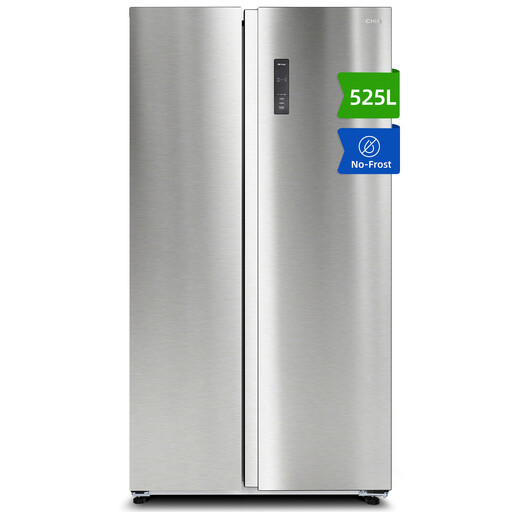 Image unavailable
CHiQ JR525WSE, 525 l side-by-side fridge-freezer
This side-by-side format lets you consider a larger freezer capacity without adding a second appliance. The product name lists 333 l of fridge space, 192 l of freezer space, No Frost, 37 dB and energy class E. Measure the installation space and delivery route, then compare the kWh/year.
View on Joybuy
 Image unavailable
CHiQ JR263LGE, 262 l black fridge-freezer
If you’re looking to combine chilled and frozen storage in an appliance listed as 54 cm wide, check that the drawers and shelves will fit your dishes. The product name also lists a height of 176 cm and Low Frost. This doesn’t mean you’ll never need to defrost it. Check the full installation dimensions and kWh/year too.
View on Joybuy
 Image unavailable
CHiQ JR227LSE, 227 l silver fridge-freezer
This fridge-freezer is listed as 54 cm wide and divides its 227 l capacity between 153 l of fridge space and 74 l of freezer space. Pay particular attention to whether those 74 l will fit your frozen portions. The product name lists Low Frost and energy class E. Check there’s room for your containers, the full dimensions and the annual energy consumption.
View on Joybuy
Frequently asked questions
How can I estimate how much space I need for prepared meals?
Make a list of the meals, boxes, fresh ingredients and frozen food you keep during a typical week. Then compare the usable capacity of the fridge and freezer separately, along with the dimensions of the shelves and drawers. A capacity figure in litres doesn’t guarantee that your containers will fit.
What should I compare on the energy label?
For appliances of a similar size and capacity, compare the annual energy consumption in kWh, the energy class and the noise level of the exact model. Que Choisir points out that the label shows annual energy consumption; the class alone doesn’t tell you how much energy the appliance you install will use.
Can a separate freezer replace a fridge-freezer?
It can supplement your existing appliances if your fridge already meets your needs for chilled storage and you only need more freezer space. Before adding one, check where it will go, how easily you’ll be able to reach your portions and the combined annual energy consumption of both appliances.
How do I choose where to put the appliance?
Measure the installation space and the route to the kitchen, then follow the ventilation clearances specified in the model’s manual. Que Choisir recommends keeping refrigeration appliances away from heat sources and leaving space for air to circulate around them. The manufacturer’s instructions will give you the specific installation requirements for your appliance.


