Start by choosing according to the space you need for fresh food and how often you freeze portions. A fridge freezer is suitable when these two needs remain balanced; a separate freezer becomes more relevant if batch freezing clearly exceeds the capacity of the combined appliance. Then compare the capacity of each compartment, the footprint, annual energy consumption, noise level and internal layout.
Which households is it for?
Households preparing several meals for the week
Allow enough capacity for ready-to-eat dishes and a freezer compartment suited to the portions you set aside. The choice mainly depends on how the usable litres are divided between these two areas, as UFC-Que Choisir points out.
Households that regularly freeze portions in batches
A separate freezer is worth considering when frozen portions become your main requirement. According to UFC-Que Choisir, an upright freezer makes drawer-based organisation easier, while a chest freezer prioritises capacity if you have enough floor space.
People living in small homes or open-plan kitchens
You need to balance footprint, noise, usable capacity and everyday convenience. A fridge freezer is easier to integrate than a second appliance, provided its freezer capacity genuinely matches your meal-preparation needs.
Buying priorities
Start by separating your refrigeration and freezing needs, then check whether the appliance can be installed and used comfortably in your room.
| Priority |
What to check |
Your needs |
| Space for fresh meals |
Compare the fridge’s usable capacity, shelves and drawers with the containers you normally use. UFC-Que Choisir suggests allowing 100 to 150 L for one person, followed by 50 L for each additional person. |
I want to store prepared meals, containers and ingredients without overcrowding the cooling areas or blocking air circulation. |
| Freezing capacity |
Look at the freezer’s litres separately. An upright freezer makes drawer access easier; a chest freezer offers more capacity but requires more floor space. |
If I often freeze portions, I’m looking for dedicated space rather than an impressive total capacity that is poorly divided. |
| Energy consumption and noise |
Compare kWh/year, usable capacity and noise levels between appliances of the same type. Refrigeration appliances are covered by the energy label; EPREL allows you to consult the declared energy data for models in the EU. |
In an open-plan kitchen or studio flat, I want a discreet appliance while keeping energy consumption suitable for continuous use. |
| Cooling and maintenance |
Check the temperature at the coldest point and the storage conditions. Anses recommends a temperature between 0 °C and 4 °C; also check features such as No Frost or a door alarm on the model you choose. |
I want to store my prepared meals in a well-regulated appliance and avoid frost making the freezer harder to use. |
Mistakes to avoid
-
Relying on total capacity without separating the compartments
A fridge freezer may look spacious while offering too little room for frozen portions. Conversely, a large separate freezer will not make up for a lack of space for meals to be eaten fresh.
For a typical week, note how many containers need to be kept chilled and how many portions need to be frozen, then compare the usable litres in each compartment.
-
Installing a chest freezer without measuring the space
UFC-Que Choisir states that chest freezers can reach 600 L and are often between 110 and 140 cm wide, with a depth of around 70 cm. The room temperature must also match the model’s climate class.
Measure the available floor space, access routes and lid clearance before buying, then check the compatible ambient temperatures in the model’s documentation.
-
Treating No Frost as a substitute for organisation and temperature control
Depending on the manufacturer, No Frost can help limit frost, but food preservation also depends on maintaining the right temperature and ensuring sufficient air circulation around the food.
Choose this technology for easier maintenance if it suits the way you use the appliance, but check the actual temperature and avoid overloading the cooling areas.
-
Comparing only the energy-label letter
Two appliances with different capacities or formats cannot be compared directly based solely on their energy class. Annual consumption, usable litres, noise and configuration also matter.
Compare kWh/year, litres per compartment and noise levels between appliances of the same type, then consult the product information or EPREL for the declared data.
Brand guide
Bosch
Worth considering for a fridge freezer with storage features, No Frost and an emphasis on low noise in a kitchen used every day.
- Bosch presents VitaFresh as a storage solution with temperature and humidity suited to fruit and vegetables.
- The A energy class and 29 dB figures quoted by Bosch apply to specific models: check the capacity, energy class and noise level of the appliance you choose.
Liebherr
Worth comparing for a separate freezer, whether upright or chest-style, when storing frozen portions becomes your main requirement.
- Liebherr offers chest freezers focused on capacity, as well as StopFrost or NoFrost technologies across certain ranges.
- Compare the capacity, dimensions, climate class, energy consumption and storage time of the exact model rather than assuming these features apply across the entire brand.
Whirlpool
Worth considering for a freestanding or built-in fridge freezer, with No Frost models available in a range of formats and capacities.
- Whirlpool describes the fan-assisted cooling in its No Frost models as a technology designed to limit frost and distribute the cold evenly.
- The WB70E973W model is advertised with 462 L and Total No Frost, but these specifications do not automatically apply to other appliances in the range.
Electrolux
Worth comparing if you have a built-in slot and want to manage refrigeration and freezer capacities separately.
- For the built-in ENC8MC18S model, Electrolux states 186 L of refrigeration capacity, 62 L of freezer capacity, 139 kWh/year and No Frost in both compartments.
- These figures are specific to this built-in model; check the niche dimensions and capacity split before comparing.
Joybuy products
These Joybuy options are household fridge freezers designed to divide fresh meals and portions ready for freezing.
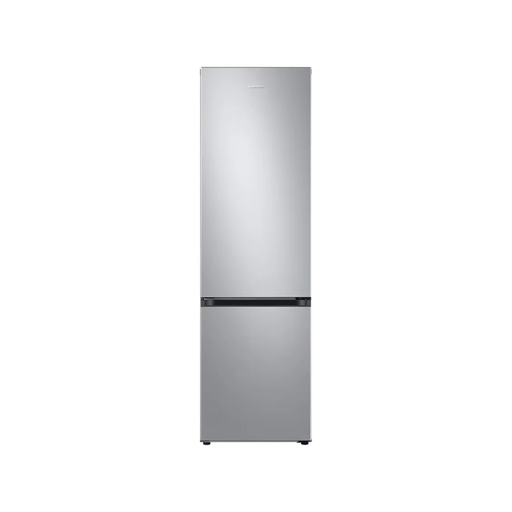 Image unavailable
Samsung RB38C604DSA 390 L fridge freezer, D energy class
An option for separating a generous volume of fresh meals and frozen portions within a width of 59.5 cm.
276 L of refrigeration capacity and 114 L of freezer capacity; Full No Frost, advertised at 35 dB, 211 kWh/year, door alarm and reversible door.
Check that the height of 203 cm, depth of 65.8 cm and ventilation clearances are suitable for the intended location.
Joybuy
 Image unavailable
CHiQ JR263LGE 262 L fridge freezer, Low Frost
Its 54 cm width may suit a compact kitchen that needs to accommodate fresh meals and a few frozen portions.
187 L of refrigeration capacity and 75 L of freezer capacity; 39 dB(A), 215 kWh/year, three freezer drawers, reversible door and N-ST climate range from 16 to 38 °C.
The 75 L freezer may be limiting for large weekly quantities; the freezer still requires manual defrosting.
Joybuy
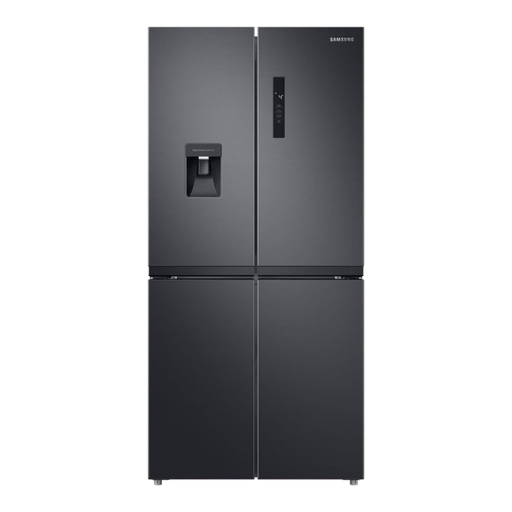 Image unavailable
Samsung RF48A401EB4 488 L American-style fridge freezer, E energy class
This multi-door configuration is designed for households needing generous fresh and frozen storage areas.
329 L of refrigeration capacity and 159 L of freezer capacity; Twin Cooling, rapid cooling and freezing, door alarm, 298 kWh/year and advertised at 41 dB.
Measure delivery access, the space in front of the doors and installation clearances: the appliance measures 83.3 × 179.3 × 74 cm.
Joybuy
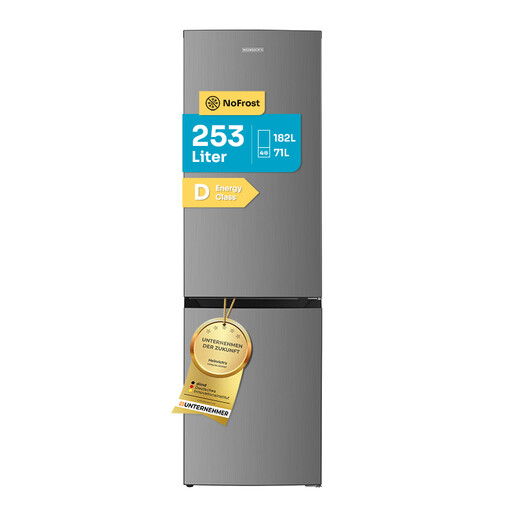 Image unavailable
Heinrichs 253 L fridge freezer, No Frost
A configuration designed for a smaller household wanting to keep fresh meals separate from frozen portions.
182 L of refrigeration capacity and 71 L of freezer capacity; No Frost, 360° air circulation, LED lighting, advertised at 39 dB and reversible door.
Before buying, check the complete dimensions, climate class and annual energy consumption; 71 L of freezer capacity may be limiting for batch preparation.
Joybuy
 Image unavailable
Sonlu CC-520WE 444 L fridge freezer, No Frost
A high-total-capacity option for storing fresh and frozen food in a side-by-side configuration.
444 L total net capacity; Total No Frost, 40 dB, 289 kWh/year, rapid cooling and advertised SN-T climate range from 10 to 43 °C.
Check how the litres are divided between the fridge and freezer, as well as the external dimensions, storage layout and clearances, before choosing this format.
Joybuy
Frequently asked questions
What temperature should you aim for when storing prepared meals in the fridge?
Anses recommends a temperature between 0 °C and 4 °C at the coldest point of the fridge. Pay particular attention when the appliance is very full or frequently opened, and allow air to circulate around the food.
How do you compare the energy consumption of two fridges or freezers?
Compare appliances with similar categories, usable capacities and configurations, then look at kWh/year as well as the energy class. In France, the energy label is compulsory for these appliances; the European EPREL database can supplement the product information with the model’s declared data.
Can a chest freezer go in a garage or cellar?
This depends on the climate class declared by the manufacturer and the actual room temperature. UFC-Que Choisir recommends checking this class, which indicates the minimum and maximum ambient temperatures compatible with the appliance.
Is No Frost essential for preparing meals in advance?
No. This technology is mainly useful if you want to reduce the need for defrosting and limit frost in the freezer compartment. It does not replace suitable capacity, the correct temperature setting or storage that allows air to circulate.


