People who prepare portions each week
If you regularly freeze meals to reheat later, being able to access and separate portions matters just as much as the stated capacity.


If you want to find prepared portions easily, choose an upright freezer with drawers to keep your supplies separate. For home-grown produce or bulk buys, a chest freezer may be a good fit if you have the space and are happy with less direct access. Before adding another appliance, compare the food you regularly store with the freezer space you already have. Then check the dimensions, defrosting method, kWh/year and permitted ambient temperatures for the model you’re considering.
If you regularly freeze meals to reheat later, being able to access and separate portions matters just as much as the stated capacity.
When storing items in different-sized batches, compare the freezer capacity and the space the appliance will take up, as well as how easy it is to find things at the bottom.
In a fitted kitchen or a restricted space, the dimensions and door opening all matter. For an integrated model, you’ll also need to check that it’s compatible with the housing unit.
Start by comparing the food you usually store with the freezer compartment you already have. If an additional appliance makes sense, choose a style that suits the access you need and the space available.
Consider it: for keeping portions separate and accessing different foods regularly.
Bear in mind: its height, and that capacity, defrosting method and energy use vary by model.
Consider it: for home-grown produce or bulk buys, if you have enough floor space.
Bear in mind: it opens from the top, so food at the bottom is less accessible.
Consider it: if space is limited and you only need room for a few extra portions.
Bear in mind: its limited capacity, and compare it with the freezer compartment you already use.
Consider it: if your kitchen has a suitable housing unit.
Bear in mind: each model has specific housing, fixing and installation requirements.
Consider it: if its freezer compartment can hold the food you regularly store.
Bear in mind: the total capacity of a fridge freezer is not the same as its freezer capacity.
| Criteria | What to check | Relevant consumers |
|---|---|---|
| Access to portions | Drawer or basket layout and defrosting method. | I want to find a particular meal quickly among the dishes I prepare regularly. Around 30% of the consumers concerned would make ease of access their priority. |
| Storage capacity | Net capacity in litres and external dimensions; stated freezing capacity in kg/24 h if you add large batches of food to freeze. | When home-grown produce or bulk buys arrive in large quantities, I first need enough room to store them. This would be the top priority for around 30% of the consumers concerned. |
| Location | Dimensions, clearance for opening and permitted ambient temperatures; housing unit and fixing for an integrated model. | If I have a fixed space, the appliance needs to fit and be installed there in line with its instructions. Around 20% of the consumers concerned would prioritise this compatibility. |
| Everyday use | Energy consumption in kWh/year, capacity, noise in dB(A) and defrosting method. | For an appliance that runs continuously, my main concerns are its energy use and the maintenance it needs. This would be the top concern for around 20% of the consumers concerned. |
According to ADEME, a freezer runs continuously, and its size affects its energy consumption. The European Commission says the label includes information such as the energy rating, kWh/year and capacity. The rating letter alone won’t tell you whether it’s the right size for your food stocks.
Work out how much capacity you need, then compare the kWh/year of appliances that meet that need.
Permitted ambient temperatures depend on the appliance. EPREL product information and Bosch manuals show that you need to check the temperature range for the specific model you choose.
Before ordering, compare the temperatures in the intended location with the limits stated in the product information or manual.
Food piled up in a chest freezer can be harder to find at the bottom than in separate, easy-to-access drawers.
If you’re storing batches for a long time, organise them by category using suitable baskets or containers. If you take out a portion every day, consider upright models with drawers too.
Finding food beneath other batches can take longer.
The appliance’s height alone won’t tell you whether it will fit your kitchen unit. The housing unit and fixing system matter too.
Measure the housing unit’s height, width and depth, then check the fixing, door opening and installation requirements against the manual for the exact model.
Bosch product information for chest and upright freezers lets you compare the features of individual models.
Whirlpool product information in France includes upright freezers with different drawer layouts and defrosting methods.
Electrolux integrated models are worth considering when you need to check the required housing unit and the capacity available for frozen food.
These appliances suit different needs: upright freezers for organising portions, chest freezers for storing batches, and fridge freezers whose freezer compartment should be compared with the food you usually keep in stock.
 Image unavailable
An upright freezer to consider if you want to keep prepared portions separate.
The product title states a capacity of 161 L, three freezer drawers and a No Frost function.
Check the dimensions, kWh/year and permitted ambient temperatures for your chosen location.
 Image unavailable
A fridge freezer to consider if you’d like to compare its freezer capacity with your food stocks before adding a separate appliance.
The 467 L refers to the stated capacity of the whole appliance; the product title also specifies Total No Frost.
Compare the freezer compartment’s capacity with your needs, and check the model’s permitted ambient temperature range.
 Image unavailable
A chest freezer to consider for home-grown produce or bulk buys, if a top-opening design suits your space.
The product title states a capacity of 291 L, a switchable fridge and freezer mode, and a removable basket.
Think about how you’ll access food at the bottom, and check the permitted ambient temperatures for the intended location.
 Image unavailable
Compare this fridge freezer with a dedicated freezer if you need to organise portions while replacing or choosing a fridge.
The 360 L refers to the stated capacity of the whole appliance; the product title specifies Total No Frost.
Check the capacity available for frozen food, then confirm the dimensions and permitted ambient temperatures for your location.
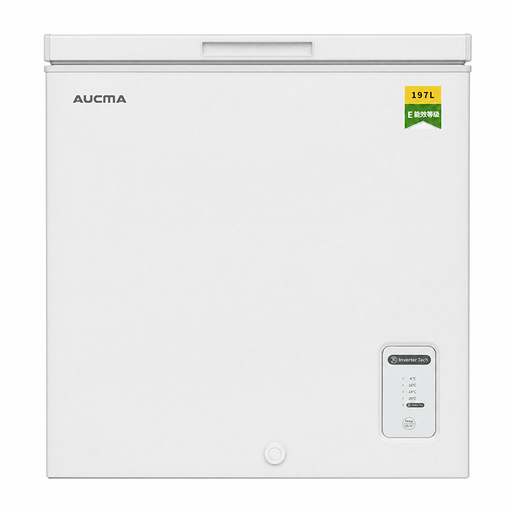 Image unavailable
Compare this chest freezer with the 291 L model if your batches need less capacity and a top-opening design suits you.
The product title states a capacity of 197 L, a switchable fridge and freezer mode, and a removable basket.
Check that this capacity is enough for your food stocks and that the ambient temperature range suits the installation location.
A separate appliance is worth considering if your current freezer compartment can’t hold the food you regularly store. Compare its net freezer capacity with the space your portions, home-grown produce and bulk buys usually take up. The total capacity of the fridge freezer won’t answer this question.
Only if the room temperature stays within the permitted range for your chosen model. Before buying, check its climate class and the limits listed in its product information or manual; these can vary between models.
No Frost may be useful if you want to reduce the need for defrosting, but it doesn’t replace checking the storage layout. If you use portions often, compare the drawers, net capacity, dimensions and kWh/year for each model too.
Look at the annual energy consumption in kWh alongside the freezer capacity, rather than considering the energy rating alone. The European Commission says the label for refrigeration appliances includes this information and noise data. Compare models with capacities that suit the same storage needs.