If you want to store more meals and groceries, start by considering how often you’ll need to access them and how much space you have. An upright freezer makes it easier to organise food in compartments, while a chest freezer is well suited to storing larger quantities if you have enough floor space. A compact model can provide extra capacity; if you’re already replacing your fridge and only need a modest increase in freezer space, consider a large fridge freezer too. For every model you’re considering, check the usable capacity, dimensions, climate class, power-cut storage time and defrosting requirements.
Who is each type best for?
Households that take out portions every day
If you prepare meals in advance or regularly use frozen food, an upright freezer with compartments can make it easier to find what you need. Check that the drawers can open and be removed in the space available.
Households that buy in bulk
For bulk purchases, bulky items or supplies you access less often, a chest freezer offers open storage space. However, it needs plenty of floor space and good organisation so you can still reach food at the bottom.
Small homes that need extra capacity
A compact appliance can provide extra storage without taking up the height of an upright freezer. If you’re considering an under-counter or integrated model, check its dimensions and ventilation requirements against the space available.
What are the key differences?
Que Choisir distinguishes between upright and chest freezers not only by their capacity, but also by how they’re organised. Start by thinking about how you’ll use the extra storage, then check the available space and the specifications of the exact model.
| Your priority |
What to check |
Best suited to |
| Access and organisation |
Drawer layout and the space needed to open or remove them. |
I take out portions often and want to find them without rummaging through the whole freezer. Around 36% of consumers would prioritise this organised access. |
| Storage capacity |
Usable capacity, the shape of the compartment and access to items at the bottom. |
When I buy groceries in bulk or store bulky food, storage space matters more than everyday access. Around 29% of consumers would have the same priority. |
| Small footprint |
Appliance dimensions; for an integrated model, the niche dimensions and specified ventilation requirements. |
I only need extra capacity and have to fit it into a small kitchen or a suitable niche. Around 21% of consumers would prioritise the space available. |
| One appliance only |
The capacity of the freezer compartment alone in a fridge freezer, rather than its total capacity. |
If I’m already replacing my fridge and only need a modest increase in freezer space, I’d look at a large fridge freezer first. Around 14% of consumers would prioritise this option. |
Mistakes to avoid
-
Choosing based on capacity alone
A spacious chest freezer can make it difficult to find portions at the bottom, while an upright freezer with compartments needs enough clearance to use its drawers.
Measure the floor space and clearance you’ll need, then think about where your usual food packaging will go before comparing usable capacities.
-
Installing a freezer without checking the room temperature
The climate class shows the ambient temperature range the model is designed for. According to Beko, some models designed for cold rooms are an exception, but this feature isn’t available across its entire range.
Compare the temperatures your garage, cellar or utility room can reach with the range stated in the documentation for the model you’ve chosen.
-
Assuming the storage time during a power cut depends on the type of freezer
You can’t automatically tell how long an upright or chest freezer will keep food frozen during a power cut from its type alone. This specification depends on the model.
Compare the stated storage time in hours for the models you’re considering, especially if you store a large amount of food.
-
Forgetting about maintenance and what to do with your old appliance
Defrosting requirements vary depending on the freezer technology. When replacing a refrigeration appliance, your old one should also be taken to an appropriate collection point, as ADEME advises.
Check the maintenance instructions for your chosen model, and arrange for the seller to take back your old appliance or take it to a suitable collection point.
Brands to consider, model by model
These examples are useful for comparing specific features; the specifications of one model don’t apply to every freezer from the same brand.
Bosch
Its upright and chest models let you compare two different ways of organising frozen food.
- According to its product information, the Bosch GSN29EWEV is a 200 L upright freezer with No Frost, a Big Box drawer and Vario Zone.
- The stated 9 h storage time during a power cut applies to the GSN29EWEV; it doesn’t apply to other Bosch models.
Electrolux
Worth considering when comparing integrated appliances and the available space requires a niche.
- Electrolux lists a capacity of 98 L and a power-cut storage time of 12.7 h for its integrated LUB3AE88S model.
- Before choosing an integrated model, check the niche dimensions and ventilation requirements in its manual.
Beko
Worth looking at model by model if the freezer will be installed in a room with variable temperatures.
- Beko describes the climate class as the ambient temperature range an appliance is designed for, and says some Freezer Guard models are designed to work at temperatures as low as −15 °C.
- This feature is specific to the models concerned. Check the documentation for the freezer you’re considering before installing it in a cold room.
Freezers for extra storage
These models include upright and chest freezers in a range of capacities, whether you need a compact top-up or more substantial extra storage. Your choice will also depend on how you want to access your food and where you plan to install the appliance.
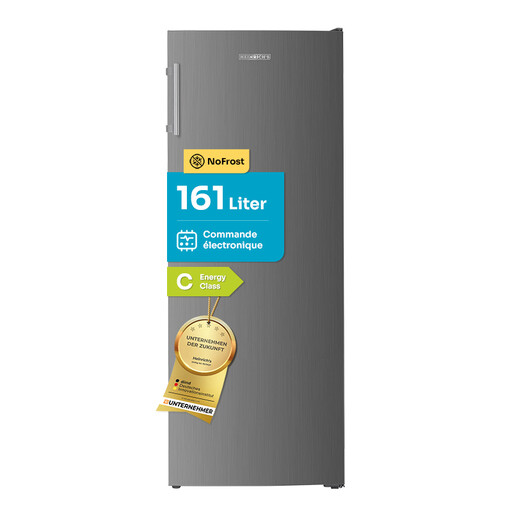 Image unavailable
Heinrich´s, 161 L upright freezer, stainless steel
Worth considering if you’d like to organise portions in a vertical freezer. The product name lists a capacity of 161 L, drawers, No Frost and an energy rating of C.
Before choosing where to put it, check its dimensions, climate class and power-cut storage time.
View on Joybuy
 Image unavailable
AUCMA, 291 L convertible chest freezer
This chest freezer is for anyone who wants open storage for bulk groceries. Its product name lists a capacity of 291 L, a convertible fridge and freezer function, a removable basket and an energy rating of E.
Allow for the floor space it needs and room to open the lid. If the room temperature varies, check the model’s climate class and power-cut storage time.
View on Joybuy
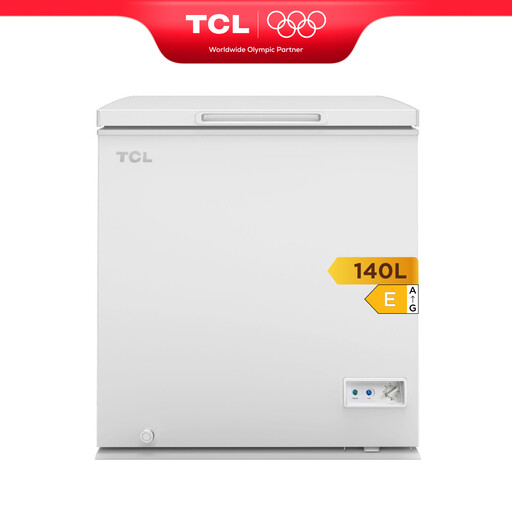 Image unavailable
TCL CF182EWE0FR, 140 L chest freezer
This 140 L chest freezer could suit you if you need extra storage but don’t want a full-height upright model. Its product name mentions a counterbalanced lid and an energy rating of E.
If you’re relying on a basket to organise food, check what’s included in the box. Also check the model’s climate class and stated power-cut storage time.
View on Joybuy
 Image unavailable
COMFEE' RCU60WH2(E), 60 L upright freezer
If you need a compact top-up, this upright model lists a capacity of 60 L, a reversible door and an energy rating of E. Check that there’s enough clearance to open the door where you plan to put it.
If ease of maintenance matters to you, check the defrosting instructions. Also check its climate class and power-cut storage time.
View on Joybuy
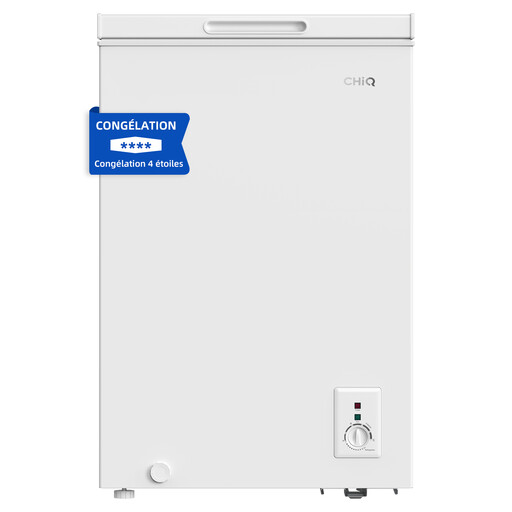 Image unavailable
CHiQ JR99DWE, 99 L chest freezer
This compact chest freezer is for adding a little extra storage rather than finding a large-capacity model. Its product name lists a capacity of 99 L, a removable wire basket and an energy rating of E.
Plan to defrost it manually as instructed, and check its climate class and power-cut storage time for the room where you’ll install it.
View on Joybuy
Frequently asked questions
Can I put a freezer in a garage or cellar?
Yes, provided the room temperature stays within the range specified for the model you choose. For example, Beko gives a range of 10 to 32 °C for climate class SN and 10 to 43 °C for class SN-T. Check the climate class and any specific suitability information in the documentation for the exact model.
How much storage time should I look for in a power cut?
Choose a stated storage time that suits your risk of power cuts and the food you want to protect, rather than relying on the type of appliance. Bosch and Electrolux list 9 h for the GSN29EWEV upright freezer and 12.7 h for the integrated LUB3AE88S respectively. Compare the figures for the models you’re actually considering.
Should I choose a No Frost freezer?
Not necessarily, unless avoiding manual defrosting is a priority for you. No Frost and LowFrost don’t have the same maintenance requirements, so check the technology and defrosting instructions for the model you choose.
What should I consider when using a second freezer?
Compare the energy consumption figures and energy ratings of the models you’re considering, as an extra freezer runs continuously. ADEME also recommends taking account of the ambient temperature advised for the place where it will be installed.
What should I do with my old freezer when replacing it?
Arrange for it to be collected appropriately instead of putting it out with your household waste. ADEME advises that you can ask the seller or delivery driver to take it back, or drop it off in the designated area for electrical and electronic equipment at a recycling centre.


