If your fridge’s freezer compartment is no longer big enough, a chest freezer is a good choice for storing large quantities if you have floor space; an upright freezer makes food easier to access and organise. An under-counter model can provide extra capacity if you have a suitable space, while a large fridge-freezer is worth considering if you’re replacing your fridge as well. Compare freezer capacity, annual energy consumption, how long food stays frozen during a power cut and the temperature of the room where you plan to install it.
Which format is right for you?
Households building up a large stock
If your fridge-freezer’s compartment is no longer big enough for your shopping or the portions you want to freeze, compare the space you have at home with the capacity you need. A chest freezer has an open compartment, while an upright model lets you organise food across several sections.
Households that regularly use frozen food
If you often take food out of the freezer, look at how the drawers or shelves are arranged. Also consider the door opening, maintenance requirements and any alerts offered by the model you’re considering.
Households planning to install a freezer outside the kitchen
If you’re putting it in a cellar, utility room or unheated garage, check that the permitted ambient temperature range for the model covers the temperatures in that room. Climate class matters just as much as the space available.
How do the formats compare?
Start by working out how much freezer capacity you need, then see how each format fits your available space and the way you access your food.
| Criteria | What to check | What suits my needs |
|---|
| Capacity and space |
Compare the litres available for freezing, not the total capacity of a fridge-freezer. Measure the width and depth, the delivery route and the clearance needed to open the door or lid. UFC-Que Choisir says chest freezers can hold up to 600 L, while upright models generally offer around 200 L and can hold up to 400 L. |
I want plenty of storage and have floor space: I could consider a chest freezer. If I’m replacing my fridge too, I’ll check the freezer capacity of the new fridge-freezer. |
| Access and maintenance |
Check how the drawers, shelves or baskets are arranged to see whether they suit the size of the food you store. Check the defrosting system, door or lid opening and any alarms on the exact model. |
If I often need to find small portions, I’d prefer to organise them in separate compartments. An open compartment might suit bulky packaging better, as long as I can keep everything organised. |
| Electricity |
Compare kWh/year for appliances with a similar capacity and purpose. The European Commission uses an A to G efficiency scale on energy labels for household fridges and freezers; the rating doesn’t replace checking annual energy consumption. |
I’m looking for enough capacity for my supplies without overlooking the energy use of an appliance that, as ADEME points out, runs continuously. |
| Power cuts and location |
Compare how long each model is said to keep food frozen during a power cut. Also check its climate class and permitted ambient temperature range against the lowest and highest temperatures in the room. |
If my freezer is far from the kitchen or installed in an outbuilding, I want to be able to check its temperature and make sure the room is suitable. |
| Under-counter installation |
For a built-in appliance, measure the niche and check the ventilation clearances and door-opening direction specified for the model. Compare its freezer capacity with the amount of food you want to store. |
I have space under a worktop and want extra capacity rather than a large freezer for the whole family. |
What should you watch out for before buying?
-
Choosing capacity without measuring the space
A large chest freezer takes up a lot of floor space, while a large upright model can be deep too. Capacity won’t tell you whether the appliance will fit through the door or whether you’ll have enough room to open it.
Measure the space and the delivery route. For a built-in appliance, also check the niche and clearances specified in the manual.
-
Assuming any freezer will work in any garage
Climate class indicates the permitted ambient temperature range. Beko and Electrolux recommend checking that it’s suitable for the room; the low-temperature suitability advertised for some Beko models doesn’t apply to every freezer.
Check the room’s temperatures and compare them with the permitted range for the exact model before installing it in an outbuilding.
-
Relying on the energy rating alone
Two appliances with different capacities may not meet the same storage needs. Their efficiency rating on its own doesn’t tell you their annual energy consumption.
Check the model’s kWh/year and freezer capacity, then compare appliances designed for similar use.
-
Forgetting how long food stays frozen during a power cut
How long an appliance keeps food frozen varies by model. UFC-Que Choisir’s testing protocol includes measuring how long food stays below −9 °C during a simulated power cut.
Compare the stated power-cut storage time for the models you’re considering and check whether there’s an alarm, especially if the appliance will be installed away from the rooms you use every day.
A few examples from well-known brands
These examples show different formats and features to compare on specific models. They don’t necessarily apply to every model from each brand.
Beko
Chest freezers to consider if you’re planning to store supplies in a utility room, cellar or garage.
- Beko says its Freezer Guard function works down to −15 °C on some chest freezer ranges.
- Check the model and its permitted ambient temperature range: this feature isn’t available on every Beko model.
Bosch
The GSN33VWEP is an example of an upright freezer whose specifications can help you refine your comparison criteria.
- Bosch lists a capacity of 225 L, a noise level of 39 dB and 9 hours of storage time during a power cut for this model.
- These figures apply to the GSN33VWEP, not to every Bosch upright freezer.
Whirlpool
The WHFF 6403 W4E gives you an idea of how much space a large-capacity upright freezer needs.
- Whirlpool lists a capacity of 404 L, a noise level of 38 dB and 11 hours of storage time during a power cut for this model.
- It’s listed as 70 cm wide: check the full dimensions and door clearance before choosing this model.
Electrolux
The LUB3AE88S is an example of a built-in freezer for a specific kitchen space.
- Electrolux lists a capacity of 98 L, energy consumption of 177 kWh/year and 12.7 hours of storage time during a power cut for this model.
- Check that its installation dimensions and 98 L capacity suit your space and storage needs.
Joybuy products by format
These models include a fridge-freezer if you’re replacing your fridge as well, chest freezers for extra separate storage and an upright freezer with compartments for organising your food.
 Image unavailable
Haier HTW5618ENMG, 3-door fridge-freezer, 360 L
Worth considering if you’re replacing your fridge too: the 360 L refers to the advertised capacity of the whole appliance, not just the freezer. Total No Frost and energy class E are included in the product title; check the freezer capacity separately.
View on Joybuy
 Image unavailable
AUCMA, 291 L convertible chest freezer
This model offers 291 L of storage, with a separate compartment that opens from the top. It includes a removable basket and LED lighting. It’s described as convertible between fridge and freezer modes, with five-level digital controls; check the space it needs and the permitted ambient temperature range for your room.
View on Joybuy
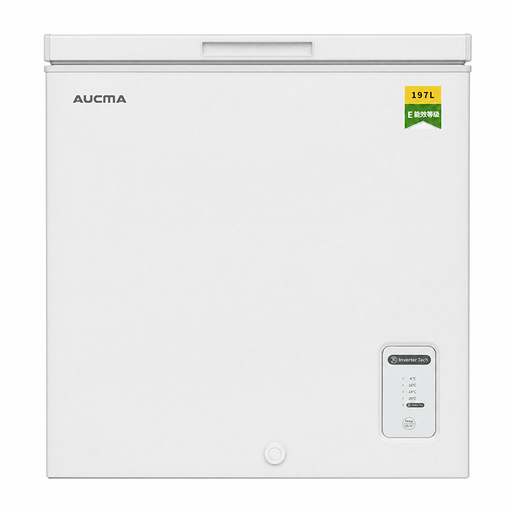 Image unavailable
AUCMA, 197 L convertible chest freezer
This chest freezer offers 197 L of separate storage. The product title mentions a removable basket, five-level digital controls and the option to switch between fridge and freezer modes; measure the space and check the installation requirements before buying.
View on Joybuy
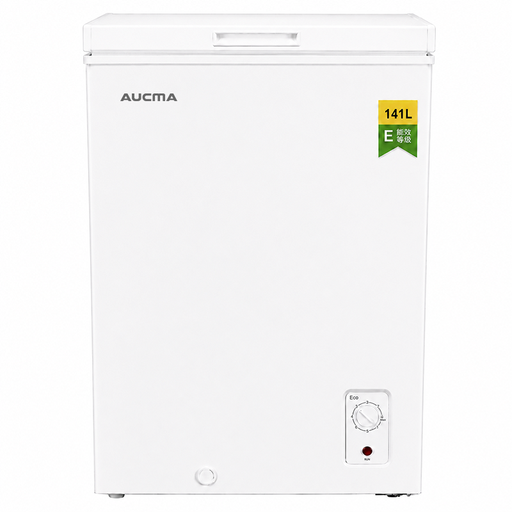 Image unavailable
AUCMA, 141 L convertible chest freezer
If you’re looking for a 141 L chest freezer rather than a large-capacity model, this one still opens from the top. It’s described as having a removable basket, a seven-level thermostat and the option to switch between fridge and freezer modes; check its dimensions and the permitted temperature range for your space.
View on Joybuy
 Image unavailable
Heinrich´s, 161 L stainless steel upright freezer
This 161 L model offers separate vertical storage, with three freezer drawers. The product title mentions No Frost, an alarm and energy class C; check its dimensions and how long it keeps food frozen during a power cut for your planned location.
View on Joybuy
Frequently asked questions
Can you install a freezer in an unheated garage?
Yes, as long as the model’s permitted ambient temperature range covers the temperatures the garage actually reaches. Check the climate class and the details for the exact model: Beko’s advertised low-temperature suitability for some ranges doesn’t apply to every freezer.
What does storage time during a power cut mean?
It helps you compare how well different models keep food frozen without a power supply. UFC-Que Choisir simulates a power cut in its tests and measures, among other things, how long food stays below −9 °C. Check the stated figure for each model and the conditions it applies to.
Does a No Frost freezer need no maintenance?
No. On models with this feature, the system is designed to limit frost build-up, but it doesn’t replace cleaning or the instructions in the manual about the door seal and ventilation.
How do you compare the energy use of two freezers?
Compare their annual energy consumption in kWh and their freezer capacity, ideally for appliances intended for similar use. ADEME points out that a freezer runs continuously; the A to G energy rating described by the European Commission provides another useful guide, but it doesn’t replace checking the model’s kWh/year.


