Households that stock up in bulk
You store large packs or bulky food and have enough floor space. Being able to reach items at the bottom of a chest freezer is one of the trade-offs to consider.


If you need to store large quantities, a chest freezer offers plenty of space, but requires floor space and some organisation to find what you need. An upright freezer with drawers makes it easier to sort portions. A table-top or under-counter model is better for more modest storage needs: check whether it is freestanding or designed for a fitted space, then compare the temperature in your cellar or utility room with the guidance for the exact model.
You store large packs or bulky food and have enough floor space. Being able to reach items at the bottom of a chest freezer is one of the trade-offs to consider.
You want to sort different foods into drawers and find them easily, and your room has space for an upright freezer. UFC-Que Choisir’s buying guide also highlights the importance of ease of use.
You need a modest amount of extra storage and must choose between a freestanding table-top model and one designed to fit under a worktop. The models in these formats featured by Liebherr show how installation requirements can differ.
Start by thinking about how much you need to store and how often you’ll take food out. Then check that the format, room temperature and installation requirements suit your space.
Worth considering : if you store large quantities or bulky packs and have enough floor space.
Bear in mind : you’ll need to organise the contents to reach items at the bottom, and the lid must be able to open without obstruction.
Worth considering : if you often take out different portions and prefer to organise them by category in drawers.
Bear in mind : check there’s enough room to open the door and that the compartments suit the food you store.
Worth considering : if you need a modest amount of extra storage and a small freestanding appliance would suit the room.
Bear in mind : measure the space and allow for the door to open, rather than relying on the stated appliance dimensions alone.
Worth considering : if you have a suitable space and want to fit the appliance beneath a worktop.
Bear in mind : the space, ventilation and door fitting must all comply with the instructions for your chosen model.
| What matters | What to check | Who prioritises it ? |
|---|---|---|
| Storage capacity | Compare the stated capacity with the amount you need to store and the usable space once baskets or drawers are in place. | When I store large packs or bulky food, I want enough capacity without losing sight of the floor space available. Around 34 % of consumers prioritise storing large quantities. |
| Access and organisation | Think about how you’ll organise your food and check the door opening, drawer removal or access to the bottom of the chest. | If I often take out different portions, I want to be able to sort them and find them easily. Around 25 % of consumers prioritise access and food organisation. |
| Room temperature | Note the room’s minimum and maximum temperatures, then check the ambient temperature range and guidance for the exact model. | If I’m installing the appliance in a cold cellar or utility room, I want to know whether it can cope with the room’s temperatures. This matters to around 25 % of consumers. |
| Space and operation | Distinguish between freestanding and under-counter installation, measure the clearances and compare the kWh/year of models suited to your needs. | When space is limited, I want an appliance that will fit without compromising on the capacity I need or how it works day to day. Around 16 % of consumers prioritise space constraints. |
The permitted temperature range and performance at low temperatures depend on the exact model. A claim that applies to one model doesn’t automatically apply to others.
Check the room’s highest and lowest temperatures, then consult the ambient temperature range and the manual before choosing.
A chest freezer needs room for its lid to open; an under-counter appliance must fit the dimensions of its space and meet its ventilation requirements.
Check the height, width and depth, the route to the installation space, the door opening and the installation instructions.
The European energy label also shows capacity and annual energy consumption. Appliances with different capacities may not meet the same needs.
Compare models with a capacity that suits you, then check their annual energy consumption in kWh.
These examples relate to specific models: their dimensions and features don’t apply to every product from a brand or to every cellar.
Examples of chest, table-top and under-counter models let you compare different installation types.
The H4F226WDH1 is an example of a freestanding upright freezer with drawers.
The LUB3AE88S is an example of a small built-in freezer, rather than a large appliance for storing bulk supplies.
This selection features upright and chest freezers for adding extra storage at home, with a range of capacities and storage options.
 No image available
A vertical design with drawers for organising food and finding portions; it isn’t designed to be built in.
161 L; 3 drawers and 2 compartments; C energy class; stated temperature: −14 °C ~ −22 °C. The description mentions No Frost.
 No image available
A top-opening chest freezer for extra storage; check there’s enough room to open the lid.
140 L; E energy class; storage basket; counterbalanced lid; adjustable temperature. The description mentions wheels and a front water drain.
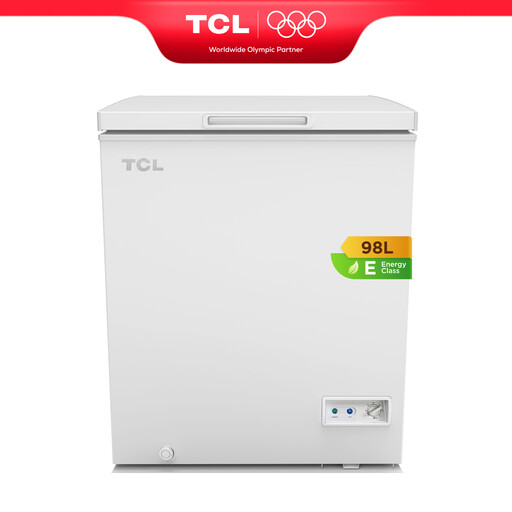 No image available
A compact chest freezer for extra storage, with top access; allow enough room for the lid to open.
98 L; E energy class; adjustable temperature. The description mentions a removable basket, wheels and a front water drain, as well as a compartment that can switch between fridge and freezer modes.
 No image available
A large chest freezer for bulk storage; it can be set to freezer or fridge mode.
291 L; E energy class; five-level digital control; LED light; removable basket and defrost drain. The description requires at least 10 cm of clearance around the appliance for ventilation.
 No image available
A compact chest freezer for extra storage; the removable basket lets you keep some smaller items separate.
99 L; E energy class; adjustable thermostat; removable wire basket and sliding lid. The description recommends placing it on a firm, level floor, leaving at least 10 cm of clearance on each side and manually defrosting when the ice is more than 5 mm thick.
It depends on the model and the temperatures the room actually reaches. Liebherr states that FrostProtect lets the CFe 2500 chest freezer operate down to −15 °C, but this doesn’t apply to all freezers. Check the full ambient temperature range and the manual for the model you’re considering.
Don’t assume they’re interchangeable. The Liebherr Fd 1404 is described as a table-top model, while the SDUFd 3603 is designed for a space with specific dimensions. Follow the installation and ventilation instructions for your chosen appliance.
Compare the annual energy consumption in kWh of models with a capacity that suits your storage needs; the European energy label also shows the energy class and capacity. Check each model’s defrosting instructions and maintenance requirements separately: the energy class alone can’t tell you what your bill will be.
The statutory guarantee of conformity applies to goods sold by a professional to a private individual and is claimed from the seller; it is separate from any commercial warranty. The DGCCRF states that you have two years from delivery of the goods to take action under this guarantee.
The Ministry for Ecological Transition’s FAQ describes a ‘one-for-one’ take-back scheme when you buy an appliance of the same type. Ask the seller how to arrange collection, particularly if your new appliance is being delivered to your home.