Households that organise food by category
If you regularly freeze portions and a variety of products, an upright freezer with drawers gives each category its own place. Check that its usable capacity and drawer openings suit your stock and the room.


If you often need to access different types of food, the drawers in an upright freezer make it easier to keep everything organised. A chest freezer is well suited to bulky items if you have enough floor space and organise the storage compartment. A fridge freezer is better for more modest freezing needs, as long as you check the capacity of its freezer compartment. Then compare the exact model’s dimensions, energy consumption, noise level and storage time in the event of a power cut. No format comes out on top in every respect.
The amount you need to store matters, but how often you look for a particular food also affects your choice of storage.
If you regularly freeze portions and a variety of products, an upright freezer with drawers gives each category its own place. Check that its usable capacity and drawer openings suit your stock and the room.
A chest freezer has room for bulky containers, making it a good option for a utility room or other spare space. Measure its floor footprint and use baskets and an inventory to keep track of what’s at the bottom.
If you also need a fridge, a fridge freezer combines both functions in one appliance. Compare the capacity of its freezer compartment with your usual stock: the stated total capacity also includes the fridge section.
Consider it if: you open the freezer often and want to find different food categories in separate compartments.
Bear in mind: the drawers need room to open, and they must be large enough for your bulkiest packaging.
Consider it if: you have a large stock of food and containers that are tricky to fit in drawers.
Bear in mind: items at the bottom take more effort to reach. Baskets and an inventory make it easier to keep track of where everything is.
Consider it if: you also need a fridge and a smaller freezer compartment will be enough.
Bear in mind: the appliance’s total capacity is not the same as the space available for frozen food.
Once you’ve chosen a format, compare each model with the amount you need to store, where it will go and how you’ll use its compartments.
| Criteria | What to check | Your needs |
|---|---|---|
| Access to food | Look at the model’s drawers, shelves and baskets. For a chest freezer, set aside clearly marked areas and keep an inventory of items stored at the bottom. | I want to find a portion or category without moving all my stock around. |
| Capacity and space | Compare the usable freezer capacity in litres, then measure the height, width and depth. Allow enough room to open the door, drawers or lid. | My usual stock needs to fit in the appliance without obstructing movement or access in the room. |
| Energy consumption and noise | According to ADEME, the energy label helps you compare energy consumption and noise levels. Check the kWh/year and dB(A) ratings of models with similar features and capacities, rather than looking at the energy rating alone. | If it’s near a living space, noise matters to me as much as the stated energy consumption. |
| Power cuts and location | Check the stated storage time in hours for each model. If you’re putting it in a cellar or garage, also check the ambient temperatures allowed in the manual. | I want to know the stated storage time in the event of a power cut and check that the appliance is suitable for the room. |
This figure includes the fridge section. For example, Bosch lists 103 L of freezer capacity for the KGN39AIAU, compared with 366 L for its GSN58AWCV upright freezer. These are two different capacities for different needs.
Estimate the volume of your frozen-food stock, then compare it with the freezer capacity alone for each appliance.
Food at the bottom is harder to reach. The accessories also vary by model: Beko lists one basket for the CF200EWN, while Whirlpool lists three for the W3RHS31DW2.
Count the baskets, check whether there’s room for suitable storage containers and assign areas to different categories. A visible inventory helps you keep track of what’s at the bottom.
The permitted ambient conditions depend on the model, not just whether it’s a chest or upright freezer.
Check the operating temperatures listed for the exact model, along with the clearances and ventilation required by the manufacturer.
A noise level or annual energy consumption figure doesn’t tell you everything about an appliance’s capacity and features. According to Whirlpool’s product information, the WHCF2044 and W3RHS31DW2 chest freezers are rated at 42 dB and 40 dB respectively, but their capacities and features differ.
Compare models with similar capacities and intended uses, then consider their kWh/year, dB(A) and usable capacity together.
These examples illustrate different configurations. The features listed apply to each specific model, not to the brand as a whole.
The range includes upright freezers and fridge freezers, with interior layouts that vary by model.
Chest freezers in the range come in different capacities and with different numbers of baskets.
The range includes chest freezers and fridge freezers, which should be compared by their individual freezer capacities.
This selection includes dedicated upright freezers and fridge freezers. For each model, check the space set aside for frozen food and the interior layout separately. Chest freezers are not included in this comparison.
 Image unavailable
Worth considering if you’d like a dedicated freezer with separate compartments for storing food. The product name lists a 161 L capacity, three drawers, No Frost and an alarm. Compare this capacity with your stock, then check the dimensions before choosing a spot for it.
 Image unavailable
Consider this if you also need a fridge and have a modest amount of frozen food to store. The stated 360 L capacity is for the fridge freezer as a whole, so check the freezer capacity before comparing it with a dedicated freezer. The product name lists Total No Frost and an E energy rating.
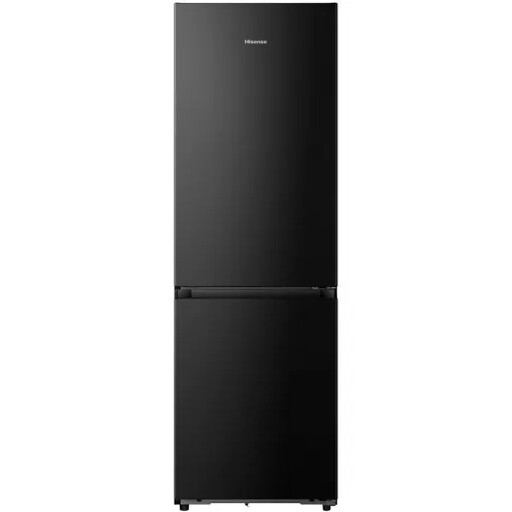 Image unavailable
This fridge freezer is worth comparing if you want to combine refrigeration and freezing in one appliance. The 330 L in its name is the stated capacity for the appliance; check the freezer compartment’s capacity and layout to see if they suit your stock.
 Image unavailable
The stated 60 L capacity is suited to a smaller stock than a large dedicated freezer. The door is listed as reversible. Before choosing this model, check the opening direction you need, the available space and the interior layout.
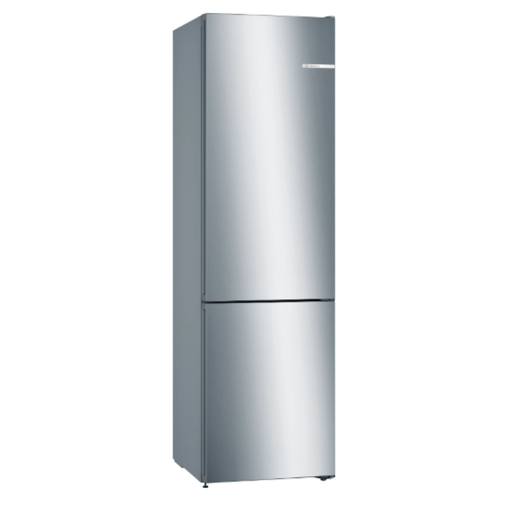 Image unavailable
Compare this if you need a fridge as well as freezer space. The stated 368 L capacity is for the fridge freezer as a whole. Check the freezer capacity and compartments separately to see how much storage it offers. The product name lists an E energy rating.
No. Check the permitted ambient temperatures for the exact model in its manual. Whirlpool lists a Freezer Guard feature down to -15 °C for the W3RHS31DW2, but this is specific to that model and doesn’t apply to every chest freezer.
Drawers make it easier to organise food by category if you access the freezer often, but a chest freezer can be organised too. Divide food between baskets or designated areas, and keep an inventory of what’s at the bottom.
Check the stated storage time in hours for each model rather than estimating it from the format. Bosch lists 13 hours for the GSN58AWCV upright freezer, while Whirlpool lists 36 hours for the W3RHS31DW2 chest freezer. These figures apply to the specific models and don’t mean that one format will always keep food frozen for longer.
It lets you compare factors such as energy consumption and noise levels. According to ADEME, large household appliances display this label in shops and online. Compare the capacity and function of the models too, rather than relying on their energy rating alone.