Households freezing portions for the week
If you regularly take out a meal, check how many drawers there are and how easy it is to see what’s inside. You should be able to find a portion without having to move everything else.


If you often take out individual portions, an upright freezer with drawers makes them easier to organise. For larger batches stored for longer, a chest freezer could work well if you keep its contents organised. A fridge-freezer avoids the need for a second appliance when you only have a small amount to store, but check the capacity of the freezer compartment alone. Whichever you choose, compare the space it takes up, annual energy consumption and how easy it is to access your portions.
If you regularly take out a meal, check how many drawers there are and how easy it is to see what’s inside. You should be able to find a portion without having to move everything else.
For large batches or bulky containers, compare the appliance’s net capacity and dimensions. If you’re considering a chest freezer for an unheated room, check that the climate class and the model’s instructions permit this type of installation.
A fridge-freezer can save you from installing a second appliance. However, work out how much food you need to store at once and compare it with the net capacity of the freezer compartment, not the total capacity shown.
Start by working out how many portions you need to store at once and how often you’ll take them out. Then check the space available and the features of the model.
Consider one if: you sort portions by category and often access them using the drawers.
Bear in mind: the drawers need to suit the size of your containers, not just the advertised capacity.
Consider one if: you store large batches, have enough room to open the lid and can keep the contents organised.
Bear in mind: Bosch’s guide says chest freezers have fewer dividers than upright models, so you’ll need to keep smaller portions well organised.
Consider one if: you’re replacing your fridge too, or don’t want to install a second appliance.
Bear in mind: only part of its total capacity is for freezing, so check that it can hold all the portions you plan to store.
| Factor | What to check | Think about your needs |
|---|---|---|
| Storage | Number and size of drawers; adjustable shelves or included baskets; access to containers at the back. | I often take out just one portion, so I need to be able to find it without rummaging through the other meals. |
| Capacity and space | Net freezer capacity in litres, separate from the total capacity of a fridge-freezer; external dimensions and the space needed to open the door or lid. | How many portions will I have in the freezer at once? I also need enough room to install the appliance and use its storage once it’s full. |
| Energy use and maintenance | Energy label consumption in kWh/year, compared across appliances of a similar type and capacity; the model’s defrosting method. | If the appliance runs all year round, I want to know its stated energy consumption and whether its defrosting method suits the level of maintenance I’m prepared to do. ADEME recommends checking the energy label. |
| Installation and use | Climate class and installation conditions specified in the instructions; stated noise level; whether it has a door alarm. | I may install it near a living area or in an unheated room. These locations call for different checks on the model I choose. |
This figure includes the fridge, so it doesn’t tell you how much space is available for frozen portions.
Check the net capacity of the freezer compartment and make sure its drawers can hold your usual containers.
According to Bosch’s guide, a chest freezer has fewer dividers than an upright model, so finding small portions may take more organisation.
Check how much room you’ll need to open the lid, which baskets are included and whether you can sort meals by category and date.
The letter alone doesn’t tell you how the energy consumption of two appliances compares if they differ in type or capacity.
Compare the kWh/year figures on the labels of appliances with a similar type and capacity, then factor in how you’ll use yours.
ANSES warns that poor storage or a break in the cold chain can encourage bacteria to grow. An appliance’s capacity doesn’t replace good food-handling practices.
Follow the storage instructions for your food and date your portions. DGCCRF advises against freezing food that is close to, at or past its use-by date.
These ranges offer useful points of comparison; check the features mentioned on the model you’re considering.
The range includes upright freezers. The GSN54EWCV is one example to consider when comparing storage options.
The range lets you compare freezers in different formats and capacities, including upright models.
Beko offers upright freezers, chest freezers and fridge-freezers to compare according to the space you have available.
This selection includes fridge-freezers, an upright freezer and a chest freezer for storing prepared meals. The capacities shown aren’t all measured in the same way: for a fridge-freezer, check the capacity of the freezer compartment separately.
 Image unavailable
Worth considering if you want a single appliance for both refrigeration and freezing. The model name lists a total capacity of 360 L, Total No Frost, an E rating, Wi-Fi and My Zone. Check the capacity and layout of the freezer compartment to make sure it suits your portions.
 Image unavailable
This four-door fridge-freezer is worth comparing if you need both functions in one appliance. Its product title lists a total capacity of 467 L, Total No Frost and an E rating. Check the freezer capacity, storage layout and space needed to open the doors.
 Image unavailable
This model, with its freezer at the bottom, is designed for households looking for a fridge as well. The stated 282 L capacity is for the whole appliance, so check the freezer capacity before planning to store several weeks’ worth of portions. The product title also lists an E rating and a stainless steel finish.
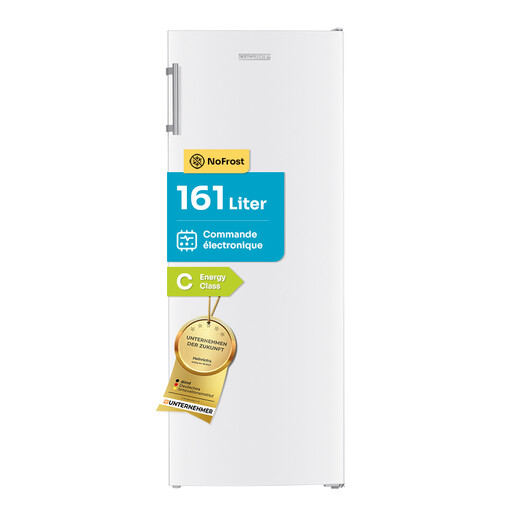 Image unavailable
The three drawers listed could help you sort portions by category. The product title mentions No Frost, an alarm and a C energy rating. Check the dimensions and annual energy consumption before comparing this upright freezer with other appliances.
 Image unavailable
This chest freezer could suit a supply of portions if you have room to access it from above. Its product title lists a removable wire basket, an adjustable thermostat, a four-star rating and an E energy rating. The basket won’t organise every portion for you, so check the annual energy consumption too.
An upright freezer with drawers generally makes it easier to find portions you’ve sorted. A chest freezer could work well for large batches, but Bosch’s guide says it has fewer dividers, so check which baskets are included and plan to organise food by category and date.
Compare annual consumption in kWh/year across appliances of a similar type and capacity, as well as their usable freezing capacity. ADEME describes the energy label as a useful aid when choosing; the rating letter alone doesn’t show an appliance’s annual energy consumption.
No. DGCCRF advises against freezing food that is close to, at or past its use-by date. For prepared meals, also maintain the cold chain and follow the storage instructions for the ingredients you’ve used.
No. Depending on the features listed for the model, No Frost may be a good option if you want to reduce the need for manual defrosting. It doesn’t replace storage that makes portions easy to find, or comparing net capacity and kWh/year.