Who might need an extra freezer?

Households that buy in bulk

If you shop in bulk, estimate the maximum amount you’ll need to store and how much fresh food you might add at a time. The specifications for the Bosch GSN58AWCV published by Bosch Électroménager France illustrate the difference between freezer capacity and freezing capacity.

People who take out portions every day

If you freeze meals and want to find each portion easily, consider how you access the compartments and check they’re suitable for your containers. Boulanger also recommends allowing enough room to open the appliance.

Households with limited space

If space is limited or the appliance needs to go in an unheated room, measure the available space and check the operating temperatures permitted for the model. Liebherr lists the ranges for its climate classes in its French FAQ.

What should you look for before buying?

Upright freezer

Best if: you want to access food in drawers, particularly when taking out portions.

Check: the appliance dimensions, door clearance and drawer access.

Chest freezer

Best if: storing large quantities is your priority and you have a suitable space.

Check: the room needed to open the lid and how easy it is to reach food at the bottom.

Tabletop or under-counter model

Best if: you’re looking for an extra appliance and have limited space.

Check: the dimensions and, for an under-counter installation, that the instructions explicitly confirm it’s suitable.

Large-capacity fridge freezer

Best if: you also want to replace your fridge and can’t install a second appliance.

Check: the freezer compartment capacity separately from the fridge capacity, as well as the appliance’s overall dimensions.

Criterion What to check before buying Who prioritises it most
Capacity and adding new food Compare the usable capacity with the amount you store, and check the freezing capacity in kg/24 h if you’ll be adding lots of fresh food. Bosch states 26 kg/24 h for the GSN58AWCV; the manufacturer’s specification sheet for the Haier HCE200E, published by Procie, states 12,5 kg/24 h. If I buy in bulk, I want enough room for my food and the ability to freeze new items without confusing storage capacity with freezing capacity. This is a priority for around 28 % of consumers.
Access to portions Check the drawers, baskets and internal dimensions against your usual containers, as well as how easy it is to reach the food. When I take out portions regularly, I want to find and reach them without having to move everything else. Easy everyday access is a priority for around 22 % of consumers.
Space and opening clearance Measure the width, height and depth, then allow enough room to open the door or lid. If the space is narrow, I need to make sure the appliance fits and can be opened properly in the room. Overall size is a priority for around 22 % of consumers.
Energy and maintenance Check the energy label for the exact model and distinguish between manual defrosting and features that are said to reduce or eliminate the need for it. I want to consider the energy label and time needed for maintenance without relying on a single marketing term. These criteria come first for around 17 % of consumers.
Room temperature and power cuts Compare the model’s climate range with the room temperature. If the room could drop below +10 °C, check that suitability for this temperature is explicitly stated. Consider the stated storage time in the event of a power cut separately. If my freezer needs to run in a cold room, or how it performs during power cuts matters to me, I check these limits for the exact model. This is a priority for around 11 % of consumers.

Mistakes to avoid

  • Confusing storage capacity with freezing capacity

    Capacity in litres describes the space available, while freezing capacity is the amount of food that can be frozen in 24 hours.

    If you regularly add large quantities of fresh food, compare these two figures separately on the model’s specification sheet.

  • Assuming any freezer is suitable for a cold garage

    A standard climate class and a stated ability to operate below +10 °C are not the same thing. Liebherr says its SN class covers +10 °C to +32 °C and lists FrostProtect down to −15 °C for the CFe 1870 Pure.

    Compare the possible temperatures in the room with those permitted for the exact model. Don’t assume a feature on one model applies to another.

  • Choosing by litres without checking the usable space

    The shape of your containers and how you access the food can affect how you use the available capacity. You’ll also need to allow enough room to open the appliance.

    Measure the space and check that your containers will fit in the compartments before choosing a model.

  • Assuming reduced frost means no defrosting

    Liebherr describes SmartFrost as a feature that reduces the need for defrosting, while Bosch says No Frost means the GSN58AWCV doesn’t need manual defrosting.

    Check the maintenance feature for the exact model and what its instructions say.

Brands and models to know

Bosch

The GSN58AWCV is an example of a large upright freezer, while the KFN96VPEA is a multi-door fridge freezer.

  • Bosch Électroménager France lists 366 l capacity, No Frost, a freezing capacity of 26 kg/24 h and a stated storage time of 13 h for the GSN58AWCV.
  • This model’s specifications and dimensions don’t represent the entire Bosch range. Check that the appliance will fit in your chosen space.

Liebherr

The CFe 1870 Pure is an example of a chest freezer to consider if the appliance needs to go in a cold room.

  • Liebherr lists 281 l capacity and FrostProtect down to −15 °C for the CFe 1870 Pure. The manufacturer describes SmartFrost as reducing the need for defrosting.
  • For the CFE1870-26 model, Proxi Confort states a storage time of 40 h. Don’t assume this model reference or figure applies to every version of the CFe 1870.

Haier

The HCE200E is an example of a 196 l chest freezer that provides extra freezer space.

  • The Haier manufacturer’s specification sheet published by Procie states a freezing capacity of 12,5 kg/24 h, a storage time of 21 h and operation down to −15 °C for the HCE200E.
  • The specification sheet also states that it requires manual defrosting and has one basket. These features apply to the HCE200E, not the entire Haier range.

Joybuy products to suit these needs

This selection includes upright and chest freezers, as well as large-capacity fridge freezers, to suit different home storage needs.

Heinrich’s 161 L upright freezer, stainless steel, energy class C

Heinrich’s, 161 L upright freezer, stainless steel, class C

An upright model to consider if you want to organise frozen portions separately.

Capacity: 161 L. No Frost. Energy class C. The instructions state that the appliance is not designed to be built in.

View on Joybuy

TCL CF182EWE0FR 140 L chest freezer with basket

TCL CF182EWE0FR, 140 L chest freezer

A chest freezer to consider for extra frozen food storage, provided you have enough space to open the lid upwards.

Stated capacity: 140 L. Storage basket. The counterbalanced lid is described as staying open between 40 and 75 degrees. Stated dimensions: 637 × 556 × 846 mm.

View on Joybuy

AUCMA 291 L convertible chest freezer, energy class E

AUCMA, 291 L convertible chest freezer, class E

Worth considering if you need a large-capacity chest freezer and want the option to select fridge or freezer mode.

Stated capacity: 291 L. Energy class E. The description states annual energy consumption of 226 kWh, five digital temperature settings and a removable basket. The description recommends leaving at least 10 cm of ventilation clearance.

View on Joybuy

Samsung RF50C530EB1 495 L multi-door fridge freezer, energy class E

Samsung RF50C530EB1, 495 L multi-door fridge freezer, class E

Consider this if you’d rather have a fridge and freezer in one appliance than add a separate freezer.

Stated total capacity: 495 L, including 165 L for the freezer compartment. No Frost. Stated annual energy consumption: 301 kWh. The description recommends leaving at least 50 mm of clearance at the back and sides for ventilation.

View on Joybuy
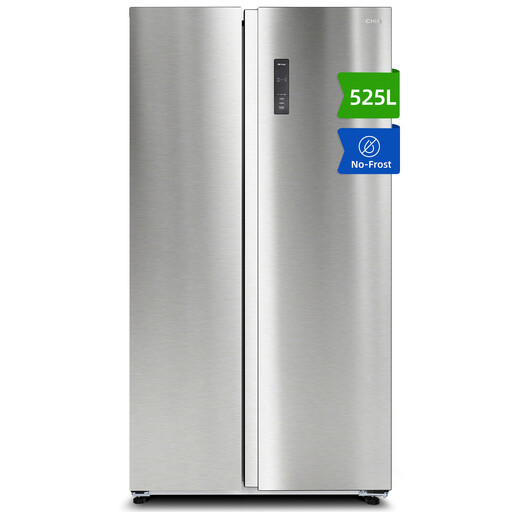
CHiQ JR525WSE 525 L side-by-side fridge freezer, energy class E

CHiQ JR525WSE, 525 L side-by-side fridge freezer, class E

Worth considering if you want more freezer space and a large fridge compartment in the same appliance.

Stated total capacity: 525 L, split between 333 L for the fridge and 192 L for the freezer. No Frost. The description lists an inverter compressor, a noise level of 37 dB and a reversible door.

View on Joybuy

Frequently asked questions

Which climate class should I choose for the room where the freezer will be installed?

Check the room’s minimum and maximum temperatures, then compare them with the range shown on the rating plate and in the instructions. Liebherr’s French FAQ lists these ranges: SN, +10 °C to +32 °C; N, +16 °C to +32 °C; ST, +16 °C to +38 °C. If the room drops below +10 °C, check that the model is explicitly designed to operate at lower temperatures.

Does the stated storage time guarantee food will stay frozen throughout a power cut?

No. The stated storage time doesn’t guarantee how long the contents will stay frozen in every power-cut or installation scenario. It can help you compare the stated specifications, but it isn’t a guarantee for your food.

Does a freezer that reduces frost mean you won’t need to defrost it?

Not necessarily. Liebherr describes SmartFrost as a feature that reduces the need for defrosting, while Bosch says No Frost means the GSN58AWCV doesn’t need manual defrosting. Check the feature described for the exact model rather than relying on the word “Frost” alone.

What statutory guarantee applies to a freezer bought from a professional seller in France?

According to Service Public, the statutory guarantee of conformity can be used for a fault that existed when the goods were delivered and appears within the following two years. It is separate from any additional commercial guarantees that may be offered.

Is an energy label compulsory for a freezer?

Yes. Info.gouv.fr’s guidance describes the energy label as a regulatory requirement for the relevant categories, including freezers and combined appliances. To compare models, check the label for the exact model reference.