Households stocking up in bulk
If you prepare lots of meals in advance or buy frozen food in bulk, usable capacity becomes a priority. A chest freezer could be a good fit, provided you have enough room and the temperature in the space is suitable.


If you’re stocking up on ready meals and frozen food, start by considering how much you need to store, how much space you have and how often you’ll need access. A chest freezer suits larger stocks, while an upright freezer makes it easier to organise individual portions. A compact freezer is better suited to topping up your existing storage; consider a large fridge-freezer if you also need more fridge space. In every case, check the room temperature range the model can handle, its annual energy consumption and how long it can keep food frozen during a power cut.
If you prepare lots of meals in advance or buy frozen food in bulk, usable capacity becomes a priority. A chest freezer could be a good fit, provided you have enough room and the temperature in the space is suitable.
If you often take out a particular meal or ingredient, drawers or adjustable compartments can make it easier to organise and access your food. An upright freezer may suit this purpose, as long as its capacity and drawer clearance work in your space.
Whether you’re fitting a freezer in a narrow kitchen, garage or cellar, measure the space and allow room to open it before choosing a format. For an unheated room, also check that its lowest and highest temperatures fall within the operating range specified for the exact model.
Worth considering: if you need to store a large amount and have enough floor space and room to open the lid.
The trade-off: food at the bottom takes more organising to keep easy to find.
Worth considering: if you regularly access portions that you want to organise by category.
The trade-off: drawers may limit the space available for some larger packs.
Worth considering: if space is your priority and you mainly need extra storage.
The trade-off: check that its usable capacity will comfortably fit the portions and frozen food you plan to store.
Worth considering: if you need more space for both chilled and frozen food.
The trade-off: the appliance’s total capacity isn’t the same as the space available for frozen food.
Once you’ve chosen a format to consider, compare its dimensions and usable capacity with the food you plan to store and the space available. ADEME points out that a freezer runs continuously, so its annual energy consumption is also worth considering.
| Consideration | What to check | What matters to shoppers |
|---|---|---|
| Storage capacity | Compare the usable capacity with your portions and the packs you store; check whether baskets or drawers can be moved. | If I’m storing ready meals and bulk buys, I prioritise the space available, even if it takes more effort to keep things organised. Around 33% of shoppers put capacity first. |
| Access to portions | Check the drawers and baskets, and make sure they open fully; consider bulky packaging too. | If I often take out a particular portion, I want to find it without moving the whole stock. Access and organisation come first for around 27% of shoppers. |
| Installation | Measure the space and allow for the door or lid to open; check the room temperature against the model’s instructions. | In a narrow kitchen or an unheated room, I first need to choose an appliance that can be installed and run in those conditions. This compatibility is the priority for around 20% of shoppers. |
| Everyday running and power cuts | Compare kWh/year for appliances with similar capacities and formats, then check the stated storage time during a power cut. | If I keep a large stock of food, I want to account for both the electricity it uses every day and how long it can keep food frozen during a power cut. Around 20% of shoppers prioritise these practical considerations. |
A large capacity won’t be much use if you can barely get the freezer into the room or can’t open its lid properly. UFC-Que Choisir gives an average width of 110 to 140 cm and an average depth of 70 cm for chest freezers; the dimensions of the model you choose are what matter.
Measure the delivery route, the space where the freezer will go and the clearance needed to open the lid before comparing capacities.
The temperature in an unheated garage or cellar may fall outside the ambient temperature range the appliance is designed for. A feature that allows certain models to work in very cold conditions won’t automatically apply to other models from the same brand.
Note the lowest and highest temperatures in the room, then check the permitted range in the instructions for the exact model.
As ADEME points out, a freezer runs continuously. The energy rating doesn’t replace the annual kWh figure, particularly when comparing different capacities and formats.
Compare the stated kWh/year for appliances with similar capacities and formats. Don’t confuse the energy consumption of an entire fridge-freezer with that of a separate freezer.
The open space in a chest freezer can accommodate different types of packaging, but portions at the bottom are harder to reach. An upright freezer’s drawers make it easier to organise food, but their dimensions may limit what you can fit inside.
Make a list of the tubs, bags and larger items you need to store, then choose an organisation system that suits how often you access them.
Beko chest freezers may suit households planning to store a large amount, particularly if the appliance will be installed in a cold room.
A Whirlpool upright freezer with drawers may suit you if you need plenty of capacity and an organised way to access your food.
Liebherr chest freezers are worth considering if how the lid opens and how easy the freezer is to maintain matter to you.
Bosch upright freezers are worth considering if organising portions for everyday use is a priority.
These appliances suit three different ways of planning your food storage: a chest freezer for bulk storage, an upright freezer for organising portions, or a fridge-freezer if you’d also like more fridge space. Match each model’s capacity to the food you plan to store rather than relying on the format alone.
 Image unavailable
Worth considering if you’re looking for a chest freezer for a large stock of food and have easy access to its top-opening lid.
The product name states that it can be used as a fridge or freezer, and mentions a removable basket, LED lighting, five-level digital controls and an E energy rating. Check the permitted ambient temperature range and how long it can keep food frozen during a power cut for your installation.
 Image unavailable
Worth considering if you want to organise portions in an upright freezer and 161 L is enough for the amount you plan to store.
The product name mentions drawers, a No Frost function, an alarm and a C energy rating. Before choosing where to put it, check its dimensions and the permitted ambient temperature range.
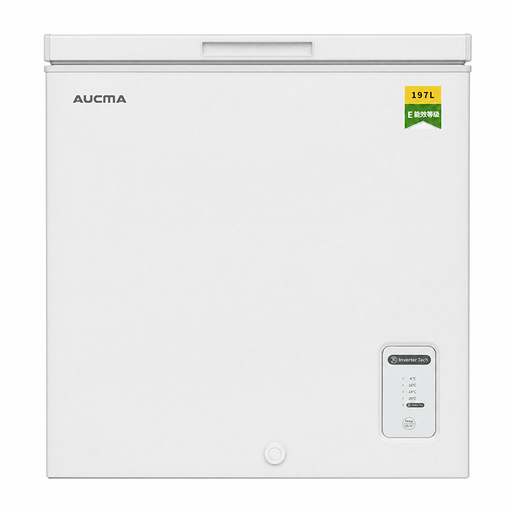 Image unavailable
This chest freezer may suit you if you need dedicated freezer space and its capacity is enough for your shopping and ready meals.
The product name states that it can be used as a fridge or freezer, and mentions a removable basket, five-level digital controls and an E energy rating. Measure the space needed to open it and check the permitted room temperature.
 Image unavailable
Worth considering if you want more fridge space as well as extra room for frozen food.
The product name states that the appliance has a total capacity of 467 L, a No Frost function and an E energy rating. Check the freezer compartment capacity separately: the total capacity doesn’t show how much space is available for frozen food.
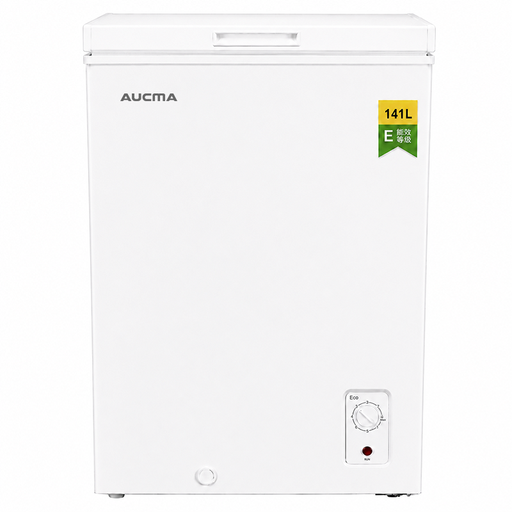 Image unavailable
Compare this chest freezer with your needs if you’re looking for extra storage rather than a large amount of freezer space.
The product name mentions a fridge or freezer mode, a removable basket, a seven-level thermostat and an E energy rating. Check its dimensions, the clearance needed to open it and the permitted ambient temperature before planning where to install it.
Choose a chest freezer if your priority is plenty of storage space for a range of packaging; opt for an upright freezer if you need to find organised portions regularly. UFC-Que Choisir distinguishes between these formats in terms of capacity and organisation. In either case, check the usable capacity and the space needed to open the appliance.
Yes, provided the actual temperatures in the room stay within the permitted range for the model you choose. For example, Bosch gives a range of 10 to 32 °C for climate class SN; Beko states that only some models with Freezer Guard can tolerate temperatures as low as −15 °C. Check the instructions for your exact model rather than relying on the type of room where it will be installed.
Compare their kWh/year figures for similar formats and capacities, as well as their energy ratings. Since freezers run continuously, as ADEME points out, it’s worth checking this figure on each model’s product information sheet. For a fridge-freezer, check whether the stated consumption applies to the whole appliance.
No. Check the stated storage time during a power cut for the model you’re considering rather than assuming it based on the format. UFC-Que Choisir measures this by the time it takes for the temperature to rise from −17 °C to −9 °C without power. Bear the test method in mind when comparing stated figures and test results.