
Livraison le jour même ou le lendemain

Qualité garantie

Débloquez vos offres de bienvenue: Livraison GRATUITE | Jusqu'à -80 % | 30 jours d'essai gratuits à JoyPlus
Téléchargez l'application
Buying a freezer isn't just about comparing capacity or hunting for a bargain. An ill-suited appliance can quickly take up too much space in your kitchen, push up your electricity bill, or make it difficult to access your food. Flat, house, garage, campervan or boat: the right choice largely depends on how you plan to use it.
A chest freezer may boast a generous capacity, but its interior layout can sometimes be quite basic. Food stored at the bottom then becomes hard to find. With its drawers, an upright freezer generally offers much better visibility, even with a slightly smaller capacity.
Before placing your order, check the external dimensions, the net capacity and the accessories supplied: removable basket, drawers, shelves or separate compartments.
The European energy rating, graded from A to G, makes it easier to compare appliances. However, to estimate the real annual running cost, the consumption stated on the label is the most telling piece of information. A large freezer rated C can therefore consume more overall than a small model rated E.
So compare the energy rating, the annual consumption in kWh and the usable volume. Consumption also varies depending on the ambient temperature, how often the door is opened and how full the freezer is.
A freezer rated at 38 or 40 dB can work perfectly well in a living space. A noisier appliance, on the other hand, will be less pleasant in a studio flat or an open-plan kitchen. You also need to allow for a stable floor, adequate ventilation and clear access to the power socket.
For a mobile appliance, also check the electrical compatibility. A car freezer running on 12 or 24 V is not chosen in the same way as a domestic model plugged into the mains.
A convertible model can switch from fridge mode to freezer mode depending on your needs. This versatility can be useful in a garage, a second home or a small business. However, check the stated temperature range.
A 4-star freezing capacity corresponds to storage at around −18 °C or lower, depending on the appliance's specifications. The fast-freeze function is particularly handy after adding a large quantity of food.
A No Frost freezer limits frost build-up thanks to a fan-circulated airflow. This reduces how often you need to defrost, at the cost of a slight fan noise. Traditional chest freezers generally need to be defrosted manually when the ice layer becomes too thick.
An electric cool box with a thermoelectric effect is mainly designed to keep food cool. For genuine freezing, choose a model equipped with a compressor and capable of reaching a sub-zero temperature.
A 12V portable fridge or a portable freezer can run on a vehicle's 12 or 24 V socket, and sometimes on a 100–240 V mains supply. Models designed for campervans, trucks, caravans or boats must include protection against battery discharge. When travelling, always secure the appliance to prevent it from sliding during braking.

Why this choice suits this profile: Its compact size fits into a small home, a student room, an office or a secondary space. Its capacity is 31 litres.
Its small dimensions eliminate the risk of choosing an appliance that is too bulky. The reversible door simplifies installation, whatever the room layout.
Energy rating E, stated consumption of 147 kWh per year, adjustable feet and a stated freezing capacity of up to 2 kg in 24 hours.
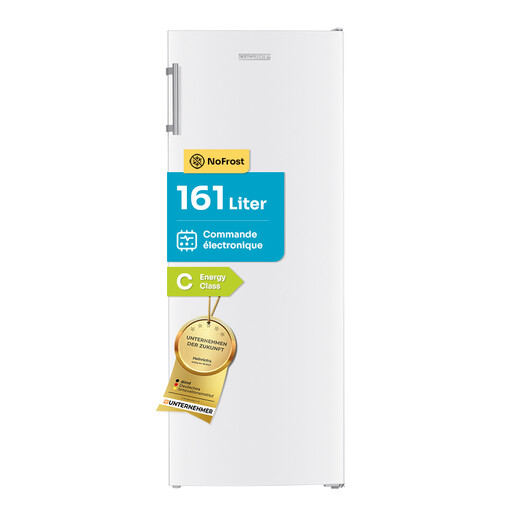
Why this choice suits this profile: This upright freezer is aimed at households who want to store their supplies in a spacious, well-organised appliance.
The drawers and shelves prevent impossible-to-sort piles. The No Frost technology limits frost build-up and manual defrosting.
Net capacity of 161 litres, class C, LED display, alarm and a stated temperature range of −14 °C to −22 °C.
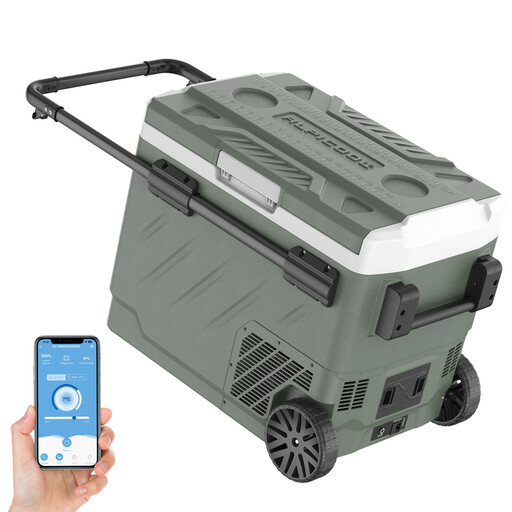
Why this choice suits this profile: Its capacity and various power options are suited to long campervan trips, fishing trips, boat outings and group travel.
Its compressor and 12/24 V and 100–240 V power supplies allow genuine freezing, unlike a simple electric cool box designed to keep food cool.
49 litres, dual zone adjustable from −20 °C to 20 °C, app control and wheels with a retractable handle.

Why this choice suits this profile: This chest freezer is suitable for households who want to adapt their appliance, depending on the season, to keeping food cool or freezing it.
The removable basket, defrost drain and seven-level thermostat make use simpler, despite the top-opening design.
141 litres, convertible operation, class E, stated consumption of 179 kWh per year and a stated noise level of 38 dB.
We've put together a comprehensive, real-time updated selection of products that meet these demanding criteria, while complying with European safety regulations.
It all depends on its annual consumption in kWh, the price of electricity and your habits. Note the consumption stated on the energy label, then multiply it by the rate charged per kWh. A very warm room, poor ventilation or frequent door openings can push consumption up.
Place it on a stable, perfectly level floor, respecting the ventilation space recommended in the manual. Avoid locations exposed to direct sunlight, dampness or high heat. If you install it in a garage, first check the climate class accepted by the manufacturer.
Yes, provided it works with a compressor and states a sub-zero temperature, for example −18 °C or −20 °C. A standard electric cool box generally only cools food relative to the ambient temperature. For use in a car, check compatibility with a 12/24 V socket, battery protection and securing the appliance during the journey.