
Livraison le jour même ou le lendemain

Qualité garantie

Débloquez vos offres de bienvenue: Livraison GRATUITE | Jusqu'à -80 % | 30 jours d'essai gratuits à JoyPlus
Téléchargez l'application
Buying a freezer isn’t just about comparing its capacity or price. A poorly chosen appliance can quickly clutter a small kitchen, make food hard to reach, or push up your electricity bill. To make the right choice, it’s best to start by defining how you’ll use it, measuring the available space, and looking at the technical features that really matter.
A chest freezer often offers generous capacity in a compact footprint. However, items stored at the bottom can quickly become difficult to retrieve. Models with baskets make organisation easier, but they still require a bit of method.
An upright freezer, on the other hand, makes better use of height. Its drawers let you easily separate meat, vegetables and ready meals. You do, however, need to allow enough width for the door to open fully.
The European energy rating is a good starting point, but it alone won’t let you estimate running costs. Also check the annual consumption in kWh and compare it against the usable volume. A small appliance that uses less energy overall isn’t necessarily the most economical per litre stored.
The models featured here include ratings of E and C, or clearly stated annual consumption. These figures come from the product datasheets: they should be assessed based on how often you open the door, the ambient temperature, and how full the freezer is.
A freezer rated at 38 or 41 dB can easily sit in a kitchen, office or studio. However, how noisy it feels depends on the room and the floor. Placed against a wall or on an uneven surface, the appliance can transmit more vibrations.
For a garage freezer, check the permitted ambient temperature range in the manual. A freezing garage in winter or a particularly hot one in summer can disrupt the operation of an appliance designed for standard domestic use.
Here are some useful benchmarks:
Measure the available width, depth and height, not forgetting the space needed for ventilation and for opening the door or lid. Depending on the model, you may also benefit from adjustable feet, castors, or a reversible door.
The 4-star marking indicates a compartment capable of reaching approximately −18 °C or lower, depending on the appliance’s specifications. This temperature is suitable for long-term storage of already frozen foods, as well as for freezing fresh produce, within the limits set by the manufacturer.
A fast-freeze function can be handy after adding a large quantity of food. However, it doesn’t replace the need to follow packaging instructions, avoid overloading the appliance, and allow cold air to circulate properly.
A removable basket keeps the most-used items within easy reach. On a chest freezer, a defrost drain simplifies maintenance. No Frost systems limit frost build-up, while a conventional model may require manual defrosting when the ice layer becomes too thick.
For a portable freezer intended for a campervan, car or boat, check the available power supplies: 12/24 V DC and, depending on the model, 100–240 V AC. The appliance must also be properly ventilated and secured during transport.
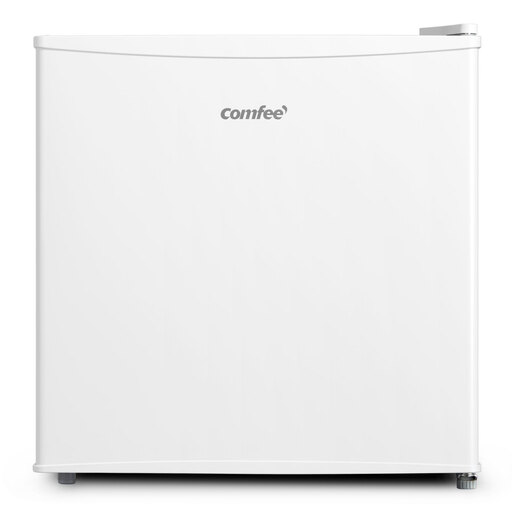
Why this choice suits this profile: Its compact size is ideal for a studio, office or small kitchen that needs extra freezer space.
With its 31 L and compact dimensions, it reduces the risk of buying an appliance that’s too bulky. Its reversible door lets you adapt it to the room layout.
Class E, 147 kWh per year according to the datasheet, stated noise level of 41 dB, adjustable feet, and a freezing capacity of 2 kg in 24 hours.
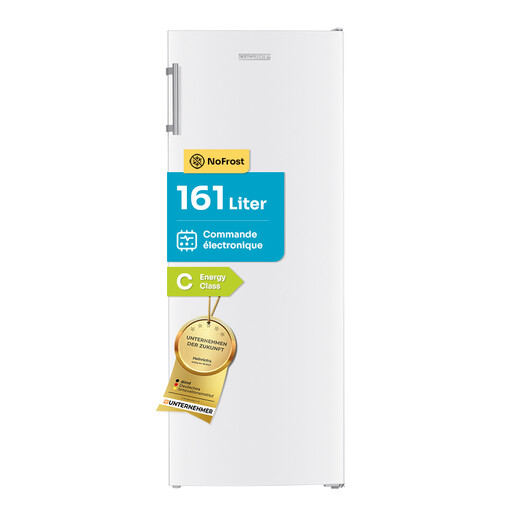
Why this choice suits this profile: Its vertical organisation and drawers suit households that value quick access and clear separation of foods.
The stated No Frost system limits frost build-up and avoids regular manual defrosting, provided you follow the maintenance recommendations in the manual.
161 L, three drawers and two shelves, LED display, alarm, and a stated temperature range of −14 °C to −22 °C. Energy class C according to the datasheet.
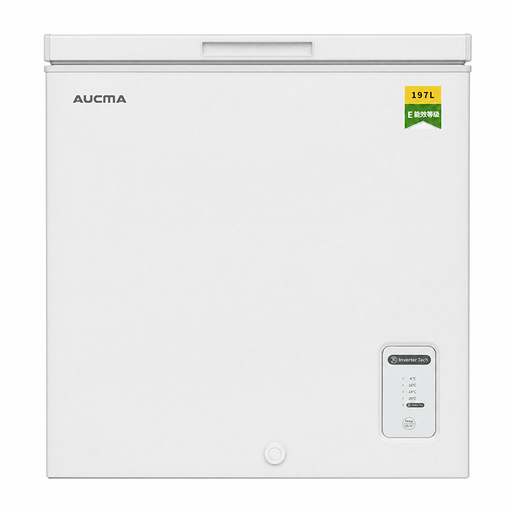
Why this choice suits this profile: Its capacity suits family storage, while the fridge and freezer modes offer real flexibility depending on the season.
The removable basket makes it easier to access small items. The five-level digital thermostat means you don’t have to make do with a single setting.
197 L, class E, 197 kWh per year and 38 dB according to the stated data. The defrost drain and adjustable feet simplify maintenance and levelling.

Why this choice suits this profile: This size is easy to transport in a car, campervan or boat, with 12/24 V and 100–240 V power supply options.
It doesn’t rely solely on a mains socket. Its adjustable range, from −18 °C to +15 °C, lets you choose between frozen and chilled storage.
Compressor, dual power supply and 22 L capacity. Clear ventilation of at least 10 cm and securing the unit during travel are essential.
We’ve put together a comprehensive, real-time updated selection of products that meet these demanding criteria, as well as European safety standards.
For supplementary use, 95 to 150 litres may be enough. A family that regularly stores food in bulk might consider a model of around 190 to 300 litres, provided they have an accessible and properly ventilated space.
It all depends on the volume, insulation, compressor, temperature setting and how often you open the door. A chest model can limit some cold loss when opened, but always compare the annual kWh of models with a similar capacity.
Yes, if the manual allows for the temperature range found in your garage. Check the climate class, protect the appliance from moisture, and leave enough space around the grilles. An earthed socket is essential.