Batch cooks
You freeze prepared portions and take them out regularly. UFC-Que Choisir highlights ease of use as an important factor when choosing a freezer.


If you regularly take out and organise portions, an upright freezer with drawers is a practical starting point. For larger quantities, a chest freezer may be suitable if you have enough floor space and clearance above the lid. An under-counter model is better suited to limited space, while a fridge freezer is mainly worth considering if you’re replacing your fridge too. Before choosing a spot, check the clearances required in the model’s manual.
You freeze prepared portions and take them out regularly. UFC-Que Choisir highlights ease of use as an important factor when choosing a freezer.
You store lots of frozen food or bulky packaging, so you need to balance capacity with floor space. UFC-Que Choisir distinguishes between upright and chest freezer formats in particular.
You need more room for frozen food without obstructing movement or preventing appliances from opening. The right format depends on the space available and how easily you can reach your food.
If you regularly store prepared meals and frozen food, your choice will mainly depend on how easily you can reach portions, how much you need to store and how much space you have. UFC-Que Choisir also points out that ease of use matters.
Choose this if: you often take out portions and want to organise them in drawers.
Bear in mind: some bulky packaging can be difficult to fit into the compartments.
Choose this if: you stock up in large quantities and have floor space, as well as enough clearance to open the lid.
Bear in mind: you’ll need to organise the contents carefully to find food at the bottom.
Choose this if: space is limited and you only need a small amount of storage.
Bear in mind: its capacity may limit how many batch-cooked meals or bulk buys you can store.
Choose this if: you also need to replace your fridge and the freezer compartment is large enough for your needs.
Bear in mind: the appliance’s total capacity isn’t the same as the space available for frozen food.
| What matters to you | What to check | Who is most concerned |
|---|---|---|
| Access to portions | Check how easy the drawers are to use, how the door opens and whether there’s enough usable space for your usual containers. | I often take out portions and want to find them without rummaging; this is a priority for around 33% of consumers. |
| Storage capacity | Compare usable capacity, external dimensions and the space needed to open the lid. | I store large quantities or bulky packaging and can set aside floor space for the appliance; around 25% of consumers prioritise this need. |
| Compact placement | Measure the space and check the door opening; consult the manual for the required clearances and the model’s ambient temperature range. | If my kitchen is small, I need to be able to install the appliance and open its door without obstructing the way; around 17% of consumers face this constraint. |
| Electricity consumption | Compare the kWh/year figures for the models you’re considering and take the relevant freezer capacity into account. | I’m comparing appliances that will run continuously and want to check their annual consumption; around 17% of consumers prioritise this criterion. |
| Replacing the fridge | Check the fridge and freezer capacities separately, then make sure the freezer capacity is right for the portions you plan to store. | If I need to replace my fridge, I also want enough freezer capacity for my needs, without confusing the capacity of the two compartments; around 8% of consumers prioritise this. |
The total capacity also includes the fridge compartment, so it doesn’t represent the space available for frozen food.
Compare the freezer’s capacity in litres with the quantities you want to store, then decide whether to replace your fridge or add a dedicated freezer.
The minimum operating ambient temperature and installation conditions vary by model.
Compare the room temperature with the figure given for the exact model reference and check its manual before choosing a garage or cellar.
Liebherr describes SmartFrost and StopFrost on the Liebherr CFd 2085 Plus as technologies that reduce frost build-up; they don’t mean that defrosting will never be necessary. The Bosch product page for the GTV15NWEB states that it isn’t No Frost.
Check the exact feature and care instructions for the model you choose rather than relying on a product name alone.
The GSN36VWEP and GTV15NWEB models illustrate an upright freezer with drawers and a small under-counter freezer respectively.
The CFd 2085 Plus is a chest freezer designed for storing larger quantities.
The FSE1174N is an example of a compact freestanding freezer.
The HDPW3620DNPD shows why a fridge freezer may be worth considering if you’re also planning to replace your fridge.
This selection includes an upright freezer with drawers for organising portions, as well as fridge freezers to consider if you’re replacing your fridge too.
 Image unavailable
An upright design with drawers to help you organise portions and find them more easily.
161 L; three freezer drawers; No Frost protection; energy rating C; stated temperature range of −14 °C to −22 °C.
 Image unavailable
Best considered if you’re replacing your fridge too; check the freezer compartment’s capacity separately to make sure it suits your portions.
360 L total capacity; three doors; Total No Frost; energy rating E; Wi-Fi and My Zone.
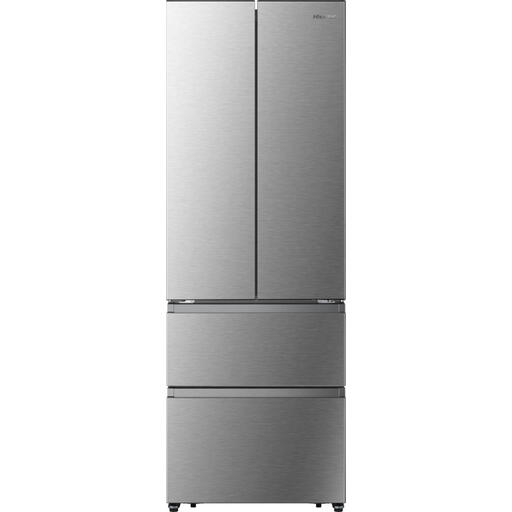 Image unavailable
Worth considering if you’re also replacing your fridge; check that the freezer compartment meets your storage needs.
485 L; French doors; Total No Frost; energy rating E; water dispenser; stated noise level of 38 dB.
 Image unavailable
A fridge freezer to consider if you also need to replace your fridge; its total capacity isn’t all available for frozen food.
444 L total capacity, including 168 L for the freezer; side-by-side design; No Frost; stated width of 83 cm; energy rating E.
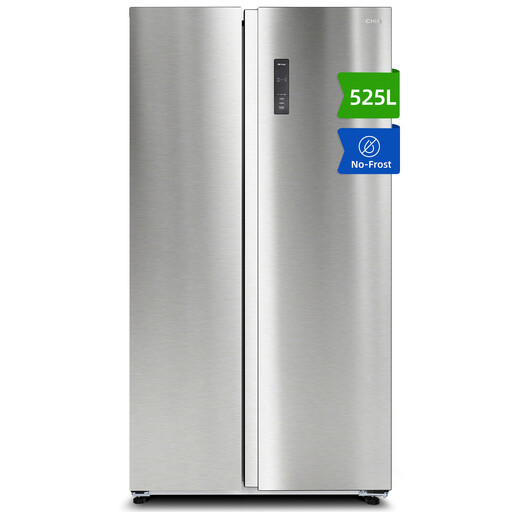 Image unavailable
Worth considering if you’re planning to replace your fridge and a separate freezer compartment suits your storage needs.
525 L total capacity, including 192 L for the freezer and 333 L for the fridge; side-by-side design; No Frost; energy rating E.
Compare the actual room temperature with the range specified for the exact model and check its installation manual. Liebherr lists FrostProtect down to −15 °C for the CFd 2085 Plus, while Beko gives a minimum operating ambient temperature of 5 °C for the FSE1174N; these specifications aren’t interchangeable.
Anses recommends freezing food as soon as you buy or prepare it, rather than waiting until the use-by date is approaching. At −18 °C, freezing stops bacteria from multiplying, but most micro-organisms survive. For cooked food, Anses advises not leaving it at room temperature for more than two hours before refrigerating it. Follow its advice on defrosting food too, and never refreeze food once it has thawed.
No. Also compare annual consumption in kWh and the freezer capacity shown on the EU energy label. The European Commission includes this information on the energy labels for fridges and freezers. Bosch explains that its stated annual consumption is based on a standardised test, and that actual consumption depends on how and where the appliance is used.
In France, the statutory guarantee of conformity is mandatory for new, second-hand and refurbished goods sold by a retailer to a consumer; claims must be made to the seller. The DGCCRF states that you have two years from delivery of the goods to make a claim under this guarantee. An additional commercial warranty does not replace it.
Follow the model’s manual for defrosting and maintenance. UFC-Que Choisir recommends defrosting regularly when there is no fan-assisted cooling and advises checking that the door seals are airtight. A feature that reduces frost build-up doesn’t necessarily mean you’ll never need to defrost the appliance.