Households that batch-cook
You want to find stored portions easily and access the drawers without a struggle. UFC-Que Choisir points out that easy access matters just as much as the stated capacity.


If you regularly reach for individual portions, an upright freezer with drawers makes them easier to store and find. For bulk shopping, a chest freezer offers plenty of space, provided you have room for it and can reach items at the bottom. An under-counter model can work as extra storage, while a fridge freezer is only suitable if its freezer capacity—not its total capacity—is enough for your needs. UFC-Que Choisir highlights the importance of being able to access your food easily. You should also check the appliance’s dimensions and the ambient temperature range specified for the model and its location.
You want to find stored portions easily and access the drawers without a struggle. UFC-Que Choisir points out that easy access matters just as much as the stated capacity.
You want to store more frozen food or bulky packaging, while making sure you have enough floor space and can reach items at the bottom of the freezer. UFC-Que Choisir highlights the importance of these storage considerations.
You need to choose between an extra freezer and a fridge freezer, taking into account where it will go and how much space is actually available for frozen food. The European Commission distinguishes between fridge and freezer capacity on the labels of relevant appliances.
When choosing extra storage for batch-cooked meals or bulk shopping, first consider how you like to organise your food, then check that the appliance will suit its location.
| Priority | What to check | Who it matters most to |
|---|---|---|
| Access to portions | Drawer dimensions and opening; whether your containers and packaging will fit. | If you often take out batch-cooked meals, you’ll want to find them without moving everything else. Around 31% of consumers prioritise easy access to portions. |
| Storage capacity | Usable capacity in litres; baskets, the shape of the compartment and the space needed to open it. | If you store bulk shopping or bulky packaging, consider the floor space required and how easily you can reach food at the bottom. Around 25% of consumers prioritise storage capacity. |
| Space required | Appliance dimensions and clearance needed; for a fridge freezer, check freezer capacity separately from total capacity. | When space is limited, check that the appliance will fit, can be opened and has enough room for your frozen food. Around 19% of consumers prioritise a compact design. |
| Room temperature | The minimum and maximum temperatures at the installation location; the permitted range for the exact model. | If you’re considering a garage or a cold room, check the conditions specified for the model rather than relying on a general claim. For the relevant climate classes, Bosch specifies ranges of 10 to 32 °C (SN) and 10 to 43 °C (SN-T); the Liebherr CFe 2500 separately states that FrostProtect works down to −15 °C. Around 13% of consumers prioritise suitability for the room. |
| Maintenance and energy use | Annual consumption in kWh on the energy label; whether the specific model has No Frost. | If you want to reduce manual defrosting and compare running costs over time, check these features on models with a capacity that suits your needs. Around 12% of consumers prioritise running costs and maintenance. |
A fridge freezer’s total capacity includes its fridge compartment, so it doesn’t tell you how much space is available for meals and frozen food.
Compare the capacity reserved for the freezer compartments on the energy label or product information sheet.
A large compartment takes up floor space, and food at the bottom is harder to reach.
Measure the space available and the clearance needed to open the lid, then check whether it has baskets and how you’ll organise your portions.
The climate class indicates the range of ambient temperatures an appliance can operate in. Some models are rated for lower temperatures, but this depends on the specific model.
Check the possible temperatures in the room against the product information and instructions for the model you’re considering.
As the European Commission explains, fridge and freezer energy labels have used the A to G scale since 2021.
To compare appliances, check the current energy label and annual consumption in kWh rather than relying on an old rating shown in an advert.
The brand offers upright and under-counter models in a range of capacities.
The CFe 2500 chest freezer is an example of a large-capacity model for storing food in a deep compartment.
The W3RHS19DW chest freezer is a mid-sized option with baskets.
The range featured includes upright and chest freezers, including the RFNE448E35W upright model.
Haier fridge freezers offer integrated freezer capacity if you’re also considering replacing your fridge.
This selection includes fridge freezers with a dedicated freezer compartment, an upright freezer with drawers and chest freezers for separate storage.
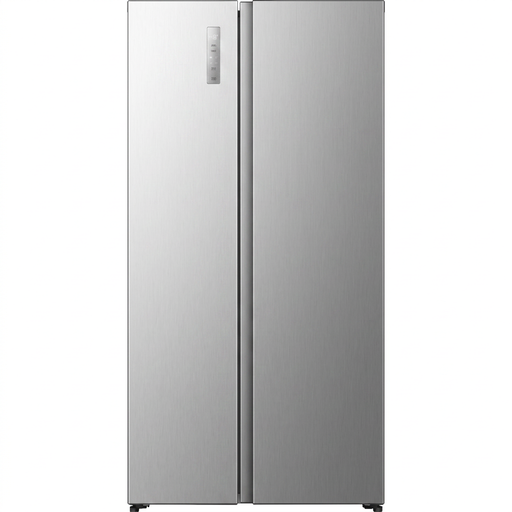 Image unavailable
For a generous freezer compartment while still having a fridge in the same appliance.
544 l total capacity, including 197 l for the freezer and 347 l for the fridge; No Frost; the freezer is listed with four shelves and two drawers.
 Image unavailable
For organising dedicated freezer storage in drawers and on shelves, with a stated capacity of 161 l.
No Frost; listed with three drawers and two shelves for storage.
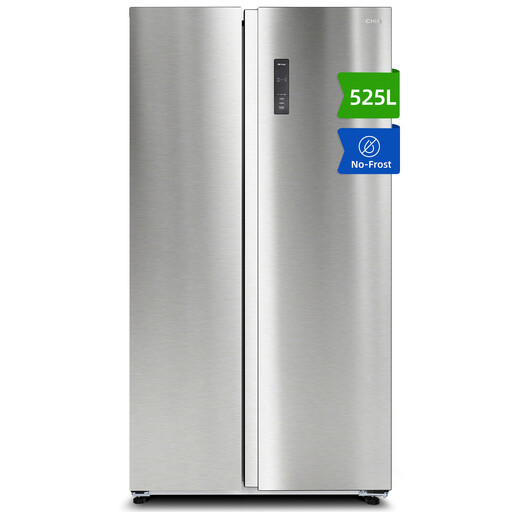 Image unavailable
For combining frozen food storage with a fridge compartment in one appliance.
525 l total capacity, including 192 l for the freezer and 333 l for the fridge; No Frost.
 Image unavailable
For storing bulk shopping or bulky packaging in a dedicated freezer.
Stated capacity of 291 l; listed with a removable basket and five-level digital control. In a chest freezer, items at the bottom are harder to reach.
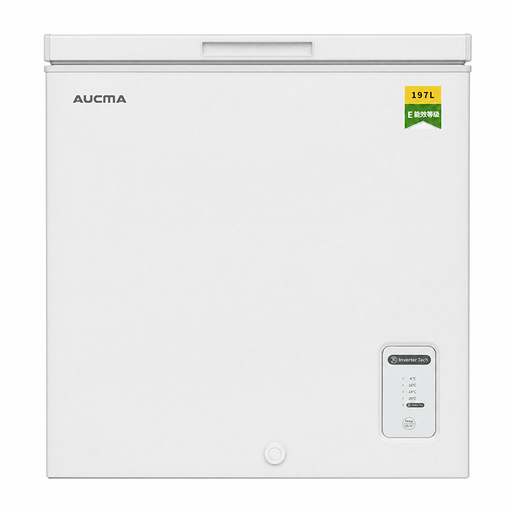 Image unavailable
For creating a separate freezer store with a removable basket, if the stated capacity of 197 l suits your needs.
Listed with five-level digital control. In a chest freezer, food at the bottom is harder to reach.
Compare the possible temperatures in your garage with the permitted range for the exact model. Bosch specifies a range of 10 to 32 °C for SN and 10 to 43 °C for SN-T; the Liebherr CFe 2500 and Whirlpool W3RHS19DW separately state that they can operate down to −15 °C. A general claim that an appliance is suitable for a “garage” isn’t enough to confirm that every model will be compatible.
Check the appliance’s dimensions, how far its door opens and the installation conditions in its instructions, then compare its usable capacity with your needs. For example, Bosch lists dimensions of 850 × 560 × 580 mm and a capacity of 83 l for the GTV15NWEB; these dimensions aren’t a universal guide.
No. In France, goods bought by an individual from a professional seller are covered by the statutory legal guarantee of conformity. The French Ministry of the Economy states that you have two years to exercise this right. Any commercial warranty is additional, subject to its own terms, and does not replace the statutory guarantee.