Which option is right for you?
How much you need to freeze matters, but the way you’ll retrieve meals from your supply can make a different format more practical.
People who prepare portions in advance
If you regularly take out a meal without wanting to move everything else, consider an upright freezer with drawers. Check that the number and size of the drawers suit your containers: storage options vary by model.
Households that buy in bulk
A chest freezer is worth considering for large batches or bulky containers if you have enough floor space. If you’re putting it in a cellar, pantry or utility room, also check that the room temperature is suitable for the appliance’s climate class.
Households without space for a second appliance
A fridge freezer lets you store extra food in a single appliance. Before deciding whether it can hold your portions and regular shopping, though, check the capacity of its freezer compartment.
What should you compare when choosing?
First, work out whether you have room for a freestanding appliance. Then compare how easy it is to reach your portions and how much space is actually available for frozen food. Check each model’s power-cut storage time individually rather than relying on the appliance format alone.
Upright freezer
Consider it: if you regularly take out portions and want to organise them in drawers.
Bear in mind: the drawers need to fit your largest dishes, and their layout limits how you can arrange your food.
Chest freezer
Consider it: for storing large batches, if you have enough floor space and room to open the lid.
Bear in mind: portions stored underneath other food take more organising to keep them easy to reach.
Fridge freezer
Consider it: when one appliance needs to store both fresh food and a supply of frozen meals.
Bear in mind: only part of its total capacity is for freezing, and it needs to be enough for your food supply.
| Factor |
What to check |
Best suited to |
| Access to portions |
Number and size of drawers or shelves; space for your containers and dishes. |
If I often take a meal from the freezer, I want to find it without moving everything else. Around 30 % of consumers would make easy access their priority. |
| Freezer capacity |
Freezer capacity in litres, separate from the total capacity of a fridge freezer; space for large containers. |
When I’m stocking up, I mainly need enough room for batches and prepared meals. This would be the priority for around 40 % of consumers. |
| Location |
Dimensions, door or lid clearance and the spaces specified in the manual; a climate class suited to the room. |
If my kitchen or utility room is small, the appliance needs to fit and open properly. Around 20 % of consumers would prioritise this constraint. |
| Power cuts |
Stated storage time in hours and whether a temperature alarm is included. |
If I’m concerned about power cuts, I want to know how long my food will stay protected. Around 10 % of consumers would put this storage time first. |
If there’s nowhere with enough space for the dimensions, opening clearance and installation gaps required by a freestanding appliance, limit your supply to what your existing freezer compartment can hold rather than installing an appliance in an unsuitable room. To compare energy use, also check the kWh/year figures for models with enough capacity for your needs.
What to avoid before you buy
-
Assuming a fridge freezer’s total capacity is its freezer capacity
The fridge compartment accounts for part of the total. For example, Whirlpool lists 355 L for its WHK26402XP4E, of which 106 L is for freezing. Use those 106 L to assess the space available for meals.
Note the freezer capacity in litres for each model you’re considering and compare it with the volume of your usual containers, bags and batches.
-
Choosing a chest freezer based on capacity alone
A chest freezer takes up floor space, and food stored at the bottom can be harder to reach. Que Choisir gives typical widths of 110 to 140 cm and a depth of around 70 cm for this format; the dimensions of the model you choose are what matter.
Measure the delivery route and the space where it will go, including the room needed to open the lid. Plan how you’ll organise the food so you can reach portions beneath larger batches.
-
Installing the appliance without checking the room
A cellar or utility room won’t necessarily stay within the temperature range required for your chosen model. Bosch explains that a climate class corresponds to a range of ambient temperatures; the ventilation clearances required also depend on the appliance manual.
Compare the temperatures the room actually reaches with the stated climate class, then follow the installation clearances specified for that model.
-
Comparing only the letter on the energy label
The energy rating alone won’t tell you whether the capacity is right for your food supply or how two appliances of different sizes will suit your needs. The EU energy label also shows annual consumption in kWh.
Choose a suitable capacity first, then compare the kWh/year figures for the models you’re considering. Check their power-cut storage time separately if that matters to you.
Brands and models to consider
These examples show different formats and capacities. The specifications apply to the models named, not to every appliance from each brand.
Beko
The CF200EWN chest freezer is worth considering if you want a mid-sized supply with mostly open storage.
- Beko lists a capacity of 198 L, an SN-T climate class and 36 h of storage time for the CF200EWN.
- Its basket won’t remove the need to organise portions stored lower down in the freezer.
Bosch
The GSN58AWCV upright freezer is a large-capacity option to compare with the dimensions of your room.
- Bosch states that this model has 366 L of usable capacity and 13 h of storage time in the event of a power cut.
- Its stated dimensions of 191 × 70 × 78 cm mean you’ll need to measure the space and required clearances.
Liebherr
The FNe 4204 Pure is a 160 L upright freezer to consider if vertical storage suits your needs.
- Liebherr presents its NoFrost system as a way to avoid manual defrosting on this model.
- Check that its 160 L capacity is enough for your portions and the other shopping you want to store at the same time.
Whirlpool
The WHK26402XP4E fridge freezer is an example of a single-appliance option when there’s no room for a separate freezer.
- Whirlpool lists 106 L of freezer capacity and 249 L of fridge capacity for this model.
- Assess its meal storage space using the 106 L of freezer capacity, not the stated total of 355 L.
LG
The GFT61PZCSE upright freezer is a large-capacity option for vertical storage.
- LG states that this model has a capacity of 324 L.
- Measure its height and depth, and check the space needed for installation before choosing this format.
Appliances for different needs
These Joybuy appliances let you explore the three options covered here: an upright freezer for organising portions, chest freezers for a separate food supply, and fridge freezers if you want to keep just one appliance. Compare each model’s freezer capacity and installation requirements before choosing.
 Image unavailable
Heinrich´s 161 L Stainless Steel Upright Freezer
Worth considering if you’d rather organise portions in a vertical freezer than stack them in a chest freezer.
The product name lists a 161 L capacity, freezer drawers, a reversible-hinge door, No Frost and a C energy rating. Check the dimensions, climate class and power-cut storage time for your chosen location.
View on Joybuy
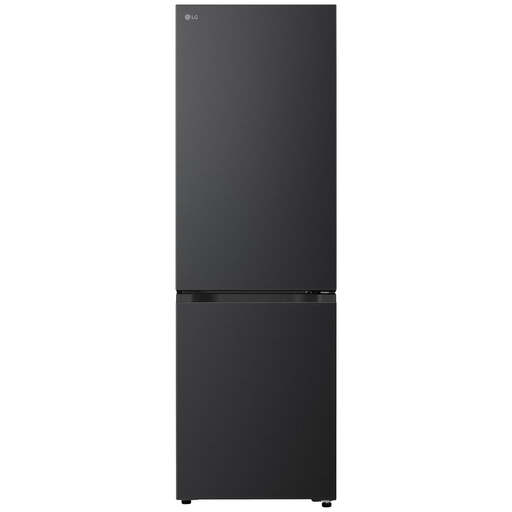 Image unavailable
LG GBBS312CEV 333 L Black Fridge Freezer
Consider this if you need to store your meals in a single appliance and can limit your stock to the space available in its freezer.
The product name states a total capacity of 333 L and a C energy rating. Check the freezer compartment capacity separately, along with the dimensions and the ambient temperature range suitable for your chosen location.
View on Joybuy
 Image unavailable
Samsung RF50C530EB1 495 L Black Multi-door Fridge Freezer
Worth considering if you’d prefer a multi-door appliance to a separate freezer for your prepared meals.
The product name states a total capacity of 495 L and an E energy rating. This includes the fridge compartment, so compare the freezer capacity with the amount you plan to store, then check the dimensions and access to the compartment in your kitchen.
View on Joybuy
 Image unavailable
AUCMA 291 L Convertible Chest Freezer
Consider this chest freezer if storing large batches and containers is more important than having every portion immediately to hand.
The product name states a capacity of 291 L, a removable basket, an E energy rating and switchable fridge and freezer modes. If you’re storing frozen meals, check the required setting as well as the floor space, lid clearance and climate class needed for the room.
View on Joybuy
 Image unavailable
TCL CF182EWE0FR 140 L Chest Freezer
Consider this if you want extra storage in a separate appliance and a chest freezer suits the way you retrieve meals.
The product name lists a 140 L capacity, a storage basket, a counterbalanced lid and an E energy rating. Check whether the basket will keep your portions easy to reach, as well as the climate class and power-cut storage time.
View on Joybuy
Frequently asked questions
Should I look beyond the letter on the energy label?
Yes. Compare annual consumption in kWh and the freezer capacity of models that suit the amount you want to store. The European Commission states that the energy label for household fridges and freezers uses a scale from A to G. The letter alone doesn’t replace comparing the capacities you need.
Can I put a freezer in a garage, cellar or utility room?
Yes, if the room temperature stays within the range specified for the model and its installation requirements can be met. Bosch explains that this range depends on the climate class, so check the class of the appliance you’re considering and the temperatures the room actually reaches before deciding.
How much clearance does a freestanding appliance need for ventilation?
Follow the clearances stated in the manual for your chosen model. For its freestanding fridges, Whirlpool gives the example of 5 cm above and 10 cm behind. Don’t assume these distances apply to all freezers.
Is No Frost essential for storing prepared meals?
No. No Frost mainly affects maintenance and defrosting, not how much food the appliance can hold or how long it can keep food during a power cut. First compare freezer capacity, storage layout and installation requirements, then check the care instructions for the model you’re interested in.


