
Livraison le jour même ou le lendemain

Qualité garantie

Débloquez vos offres de bienvenue: Livraison GRATUITE | Jusqu'à -80 % | 30 jours d'essai gratuits à JoyPlus
Téléchargez l'application
Navigating the world of freestyle scooters is no small feat. Unlike a classic scooter designed for cruising, a "stunt" scooter must withstand heavy impacts, offer perfect handling, and ensure the rider's safety. Whether it's for a child just starting out or a teen landing tricks at the skatepark, the gear needs to match their ambition.
To help you make an informed decision, our editors have broken down the key criteria and selected the best current models for beginner and intermediate levels. Our goal is simple?: to guide you to the right choice.
Before you rush into a purchase, it's crucial to understand the components that make all the difference. Here are the three key points to check when investing in a reliable, high-performance skatepark scooter.
Durability is the name of the game. A beginner's freestyle scooter must be able to handle failed first tricks and falls without breaking a sweat.
The quality of your glide, speed, and overall feel depend directly on this pair.
A scooter must be perfectly suited to the rider's body type. A model for a child's freestyle scooter will not be the same as one for a teen's freestyle scooter. Always check:
And now for our selection. Here are the models that stand out for their design, components, and overall value.
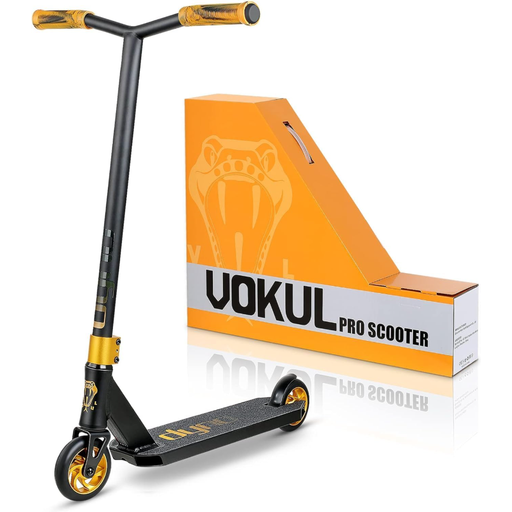
Why It Stands Out
This K1 Pro model is an excellent stepping stone for riders starting to take the sport seriously. Its full 6061-T6 aluminium construction and T4T6 fork give it rock-solid durability for intensive use at the skatepark. It's a well-balanced freestyle scooter for progressing your skills.
Key Features
Who Is It For?
Ideal for riders aged 8 and up, from beginner to intermediate level, who are looking for a progressive model to land their first bar spins or tailwhips.
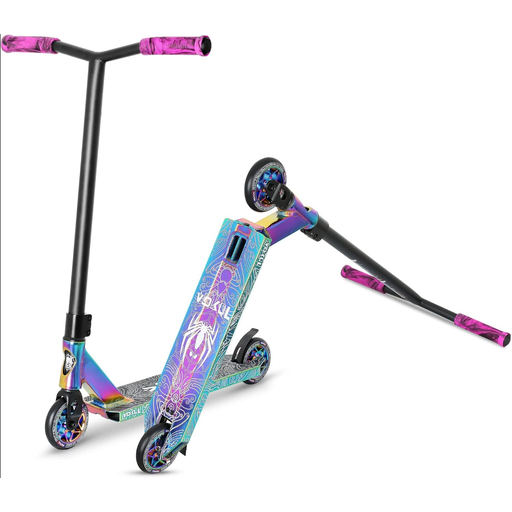
Why It Stands Out
This version of the K1 Pro stands out with its "Neo" design and iridescent finish, a highly sought-after look in skateparks. But don't be fooled by its appearance: it shares the same technical strengths as its counterpart, with a light, solid structure and high-performance components. It's a pro freestyle scooter at its core, yet remains very accessible in terms of handling.
Key Features
Who Is It For?
Perfect for teens and young riders (ages 8+) who want a scooter that's as stylish as it is high-performing.

Why It Stands Out
The S2 model was specifically designed for younger riders discovering the sport. The focus here is on safety and stability, with Chromoly steel "batwing" bars and a triple-bolt clamp ensuring an ultra-sturdy connection. Its reinforced deck is designed to forgive the small mistakes of a beginner.
Key Features
Who Is It For?
This is the sensible choice for a first child's freestyle scooter, ideal for the 7-14 age range. It offers the necessary durability to start riding with complete confidence.
Our selection focuses on versatile models, but there's no accounting for taste. If you're looking for a specific design or color, our full catalog is packed with other options.
? Discover our selection of stunt scooters for girls and other models here
A classic scooter is made for daily commuting. It's often foldable, with larger, softer wheels for a comfortable ride. A trick scooter, on the other hand, is never foldable—that would be a huge weak point. It's built with much more robust materials (reinforced aluminium, steel), smaller, harder wheels, and a fixed one-piece handlebar to withstand the impacts of jumps and tricks.
There's no official age, but most children have the necessary coordination and strength around age 7 or 8. The most important thing is to choose a model suited to their height and weight. And we can't stress this enough: wearing protective gear (helmet, knee pads, elbow pads) is non-negotiable.
Regular maintenance extends its lifespan and is a key safety measure. The best practice? Before each session, check that all bolts are tight, especially on the clamp and wheel axles. Clean it with a damp cloth, but avoid high-pressure water jets that could damage the bearings. Finally, listen for any suspicious noises (rattling, creaking)—they often signal a loose part or wear that needs attention.