
Livraison le jour même ou le lendemain

Qualité garantie

Débloquez vos offres de bienvenue: Livraison GRATUITE | Jusqu'à -80 % | 30 jours d'essai gratuits à JoyPlus
Téléchargez l'application
Does your child or teen dream of hitting the skatepark to land their first tricks?? Choosing a freestyle scooter can quickly become a headache when faced with a jungle of models, technical jargon, and marketing promises. A good stunt scooter must be durable, safe, and above all, perfectly suited to the rider's size and skill level.
Our mission at Joybuy?? To guide you with clear, objective information. This guide breaks down the essential criteria and presents a selection of proven models to help you make the right choice without getting lost in technical jargon.
Before comparing models, let's review the three core pillars of a good stunt scooter?: durability, component performance, and ergonomics.
Unlike a commuter scooter, a trick scooter is built to withstand harsh, repeated impacts. Its structure, which must be non-foldable, requires ultra-durable materials.
Ride quality and speed generation in a skatepark depend entirely on the wheels and bearings.
A scooter that doesn't fit the rider's height is difficult to control and potentially dangerous. As a general rule, the handlebar should sit somewhere between the hips and the navel. For a growing child or teen, it's tempting to choose a model "to grow into," but this is a mistake?: it will hinder their progress and control over tricks. Weight is also a key factor?: a lightweight model (around 3.5?kg) will be much more manageable for a beginner.
We've selected a few models that stand out from the pack thanks to their technical specs and suitability for young riders.
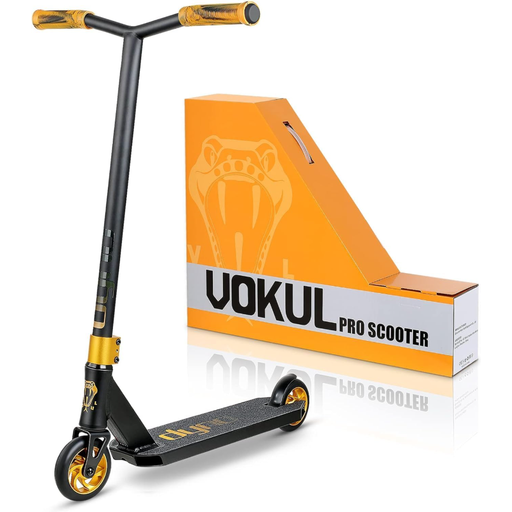
Why does it stand out?? The Vokul K1 Pro is a very well-balanced freestyle scooter, perfect for ambitious beginners and intermediate riders alike. Its robust design and quality components make it a durable investment for progressing with confidence.
Its strengths?:
Who is it for?? For riders aged 8 and up (including teens and adults) up to 100?kg, whether they're beginners or intermediate. It's the ideal model for tackling their first barspins and tailwhips.
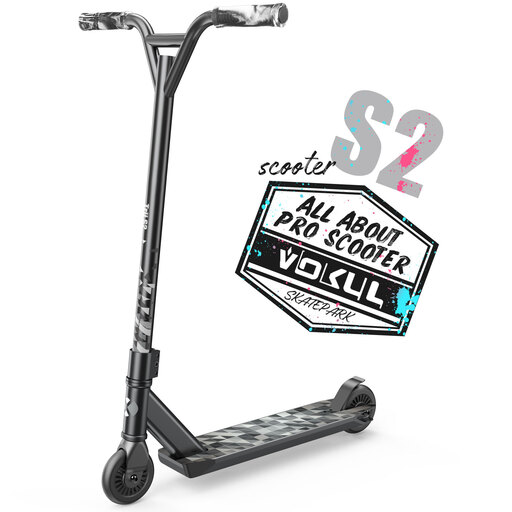
Why does it stand out?? The Vokul S2 was custom-designed for beginners. It combines quality materials with a design focused on stability and safety. It's the perfect entry point into the world of stunt riding.
Its strengths?:
Who is it for?? For kids and pre-teens (from 6-7 years old) taking their first steps in freestyle. A smart choice for learning the basics safely before aiming higher.
Please note, a freestyle scooter is neither a toy for toddlers nor a simple mode of transport for casual rides. For a younger child or for purely recreational use, a 3-wheel model or an adjustable scooter is a much better fit.

Warning?: This model is not a freestyle scooter. It is absolutely not designed for jumps or tricks at the skatepark; it is a recreational scooter.
Why does it stand out?? The Beleev V2 is designed for the fun and development of younger children. With its lean-to-steer system and light-up wheels, it's the kind of gift that's a guaranteed hit.
Its strengths?:
Who is it for?? For children aged 3 to 12, for casual rides, the trip to school, or just for fun. It's the perfect first scooter for developing motor skills before maybe, one day, moving on to a more athletic style.
Our selection highlights versatile and proven models. If you're looking for other styles, different colours, or more specialised models, explore our full category.
? Discover more models in our kids' scooters category
While there's no official age, we generally recommend starting around age 8. This is typically when children have the necessary coordination, balance, and strength to handle a freestyle scooter, which is heavier and more rigid than a commuter model.
It's all about design and purpose. The classic scooter, often foldable and lightweight, is made for getting around. The freestyle scooter, on the other hand, is a real tank?: non-foldable, ultra-durable, with a fixed handlebar and reinforced components built to withstand the impacts of jumps and tricks.
Proper maintenance is key to the safety and lifespan of your equipment. Before each session, a quick check-up is essential?: check that all bolts are tight (clamp, wheel axles). A damp cloth is all you need for cleaning; avoid high-pressure washers, which can damage the bearings. Finally, keep an eye out for any cracks or signs of wear.