
Livraison le jour même ou le lendemain

Qualité garantie

Débloquez vos offres de bienvenue: Livraison GRATUITE | Jusqu'à -80 % | 30 jours d'essai gratuits à JoyPlus
Téléchargez l'application
Choosing a freestyle scooter for a child or teen can be a daunting task. Between the technical jargon, the vast array of models, and the desire to find a scooter that is safe, durable, and stylish, it's easy to get lost. This guide is here to clarify everything, giving you the keys to make the right choice, whether it's for a first session at the skatepark or for taking skills to the next level.
A freestyle scooter is nothing like a commuter scooter. Engineered to withstand the impacts of jumps and tricks, its design meets specific demands for durability and performance. Here are the key factors to consider.
The deck and handlebars are the parts that take the most abuse.
Ride quality and speed generation depend directly on the wheels and bearings.
For a kids' or beginner scooter, weight is a critical factor. A lighter model (around 3.5 kg) will be much easier to handle for learning the first tricks. Also, be sure to check the maximum weight capacity to ensure the scooter is suitable for the rider's build. Finally, a reliable and responsive rear brake is non-negotiable.
We've selected a few gems, chosen for their design, materials, and suitability for different skill levels.
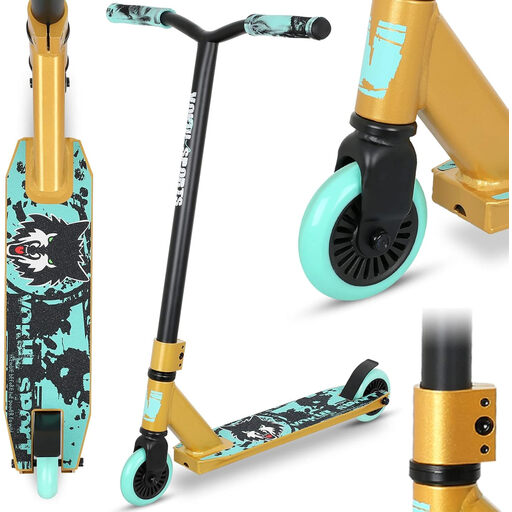
What Sets It Apart This model is designed for young riders just discovering freestyle scootering. Its design prioritises a light weight and ease of handling, with a super-simple assembly so you can start riding in minutes.
Key Features
Who is it for? Kids aged 6 and up and beginners looking for a reliable and manoeuvrable first freestyle scooter to learn the ropes safely.
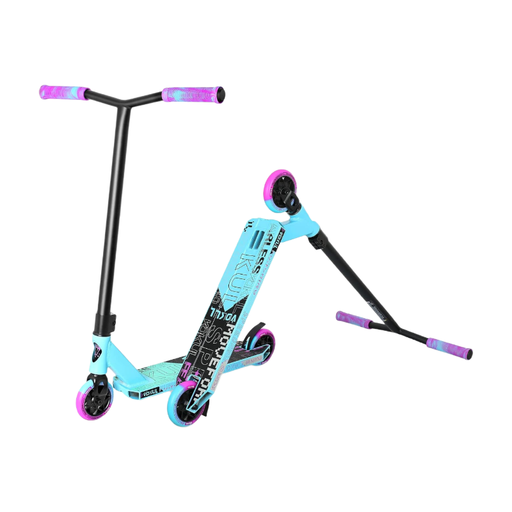
What Sets It Apart The VOKUL K1 is a step up, with components built for more intensive use. Its larger wheels and reinforced construction make it the ideal choice for those who have mastered the basics and want to tackle more complex tricks.
Key Features
Who is it for? Intermediate to advanced riders, from age 8 and up, who are regulars at the skatepark and need a higher-performance pro scooter to push their limits.

What Sets It Apart This model bridges the gap between beginner and expert scooters, featuring ultra-durable components like its steel handlebars. It's a versatile option for motivated young riders who want gear that can keep up with their progression.
Key Features
Who is it for? Young riders (7-14 years) who are just starting out but are determined to progress. It's an excellent investment for advancing from beginner to intermediate level without needing to upgrade their scooter.
If these models aren't exactly what you're looking for, or if you want to explore more designs and features, check out our full collection!
Discover Our Range of Kids' Trick Scooters
A classic scooter is made for daily commuting. It is often foldable, with larger, softer wheels and an adjustable handlebar. In contrast, a freestyle scooter is never foldable to ensure maximum structural integrity. It is built with reinforced materials (aluminium, steel), smaller, harder wheels, and a fixed handlebar to withstand the impacts from tricks and jumps.
You can find models suitable for children as young as 6. The most important thing is to choose a kids' scooter with a handlebar height and weight that match their build. For optimal control, the handlebars should come up to around their waist or hip level.
Freestyle scootering is not without its risks, so safety is not optional. Wearing a certified helmet, knee pads, and elbow pads is absolutely essential. Wrist guards are also a good idea, especially when starting out.