
Livraison le jour même ou le lendemain

Qualité garantie

Débloquez vos offres de bienvenue: Livraison GRATUITE | Jusqu'à -80 % | 30 jours d'essai gratuits à JoyPlus
Téléchargez l'application
A freestanding dishwasher can be installed without a door panel matching your kitchen units and is generally easier to move than an integrated model. This configuration is suitable for standard kitchens, rented homes and anyone looking to replace an existing appliance quickly. However, advertised capacity, noise levels and energy ratings are all details that deserve careful attention.
A 60 cm dishwasher is generally designed for a standard space. That does not mean every model has exactly the same dimensions: width, depth and the height beneath the worktop can vary. Before placing your order, measure:
Some freestanding appliances can be slid beneath a worktop after removing their top panel, but only if the manufacturer permits this. Check the model’s technical specifications.
Classes C, D and E are part of the current European energy scale, which runs from A to G. When comparing two appliances, do not rely solely on the displayed letter: also check the consumption figures shown on the label and be wary of older designations such as A+ or A++.
For a meaningful comparison, look at electricity consumption in kWh per 100 cycles, as well as water consumption per Eco cycle. Two dishwashers in the same C class may show different figures. The duration of the Eco programme is also worth checking: a long cycle can still be paired with controlled consumption.
A quiet dishwasher generally has a noise level of between 40 and 46 dB, depending on the model. The label also shows a noise emission class, which helps you assess how the appliance will fit into its surroundings.
In an open-plan kitchen or studio flat, even a few decibels can make a noticeable difference. However, the result also depends on the programme selected, the amount of crockery and where the appliance is positioned.
Capacity in place settings refers to a standardised quantity of crockery. However, it does not always reflect the space actually available for large saucepans, dishes and bulky utensils. A 14-place-setting dishwasher or large-capacity model will be more suitable for a family, a couple who cook frequently or a household that prefers to run fewer cycles.
Conversely, a compact mini dishwasher with a capacity of three place settings can fit into:
This format will not necessarily replace a full-size appliance, but it can significantly reduce hand washing when space is limited.
An adjustable upper basket lets you alter the loading height to make room for tall glasses, thick plates or a saucepan in the lower basket. Check whether the adjustment is still possible when the basket is loaded: in everyday use, this small detail can make a big difference.
The number of baskets, whether there is a cutlery drawer and whether certain supports can be folded down are just as important as the number of programmes. A stainless-steel tub is often valued for its durability and easy maintenance, but it does not remove the need to clean the filter and spray arms regularly.
The most useful functions will largely depend on your habits:
The stated consumption corresponds to the reference programme. Before directly comparing two figures, check the measurement conditions and consult the instruction manual.
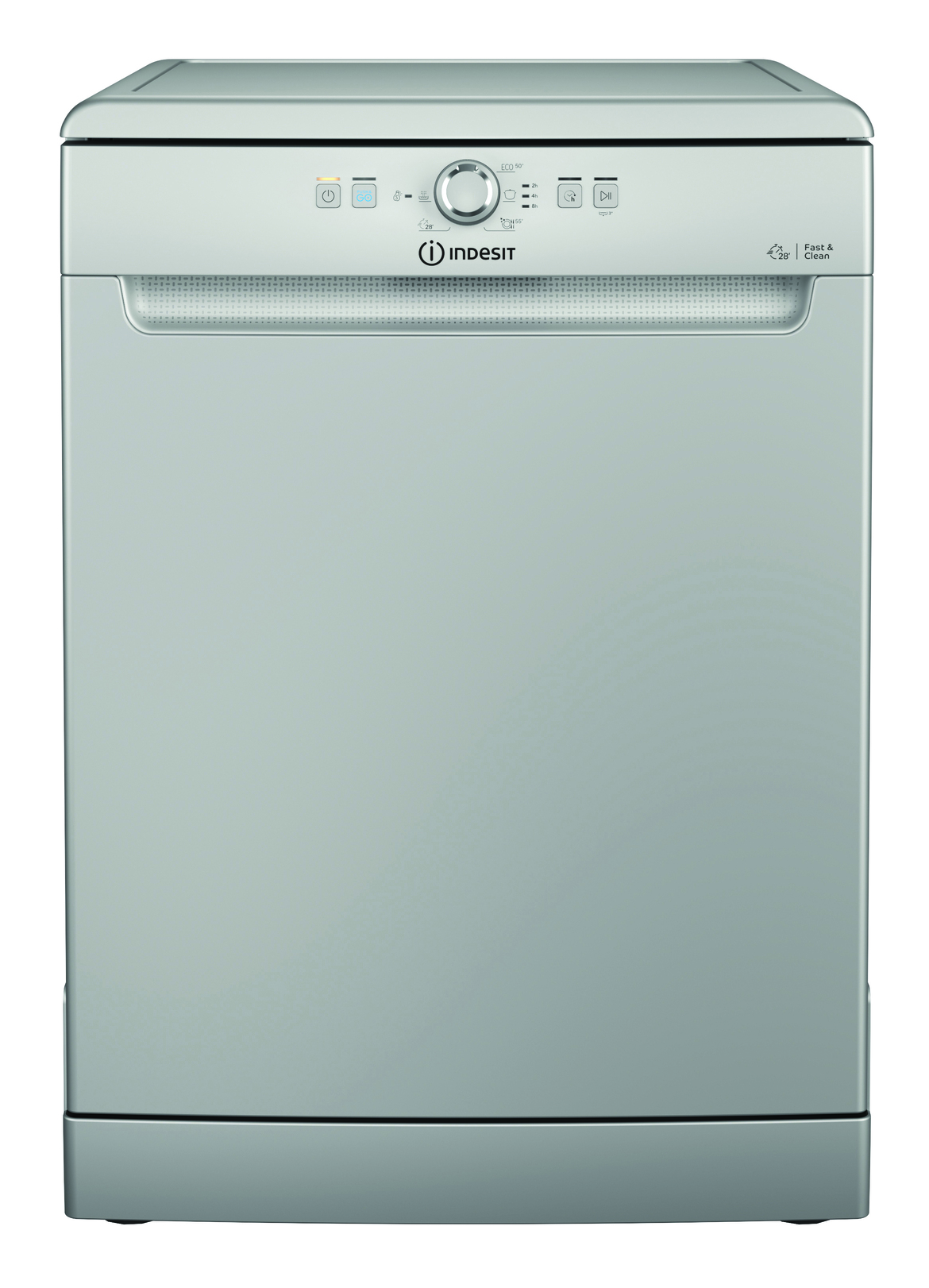
Why this choice suits this profile : this 60 cm model offers 14 place settings and six programmes. Its 85-minute Push&Go cycle at 50 °C makes everyday use simple.
The product details specify water consumption of 9.5 l per cycle, a noise level of 46 dB and an E energy rating. This gives you concrete figures to compare rather than a simple promise.
Adjustable upper basket, even when loaded, stainless-steel tub, delay start from 1 to 8 hours and overflow protection.
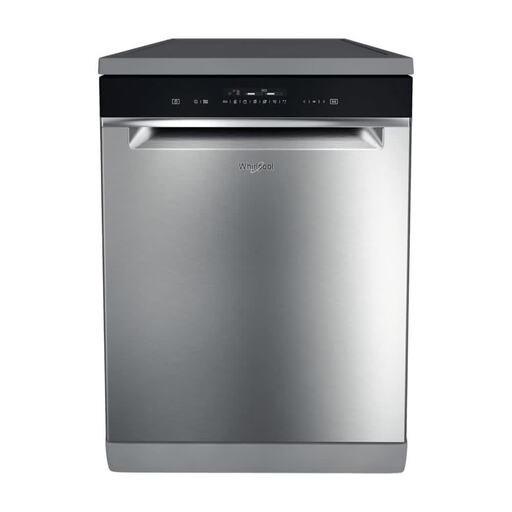
Why this choice suits this profile : its stainless-steel finish, 11 programmes and stated noise level of 41 dB make it an appealing option for an open-plan kitchen and versatile use.
The product details distinguish between the C energy rating, 9.5 l of water per Eco cycle and 0.748 kWh per Eco cycle. This is more useful than a vague claim of efficiency.
14 place settings, third cutlery drawer, adjustable upper basket, delay start of up to 24 hours and AquaStop protection.
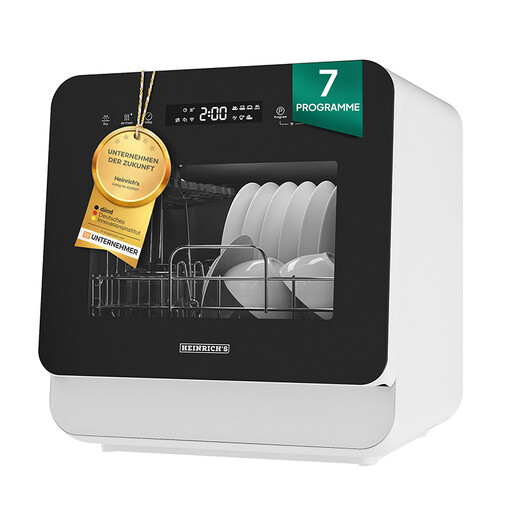
Why this choice suits this profile : this mini dishwasher, with capacity for three place settings, is designed for small spaces. It can operate using its water tank or be connected directly to the water supply.
Its size and capacity are clearly limited to three place settings: it meets a specific need but does not claim to replace a family-sized 14-place-setting appliance.
Seven programmes, stated consumption of 4.2 l per rinse, delay start of up to 24 hours and an additional drying function.
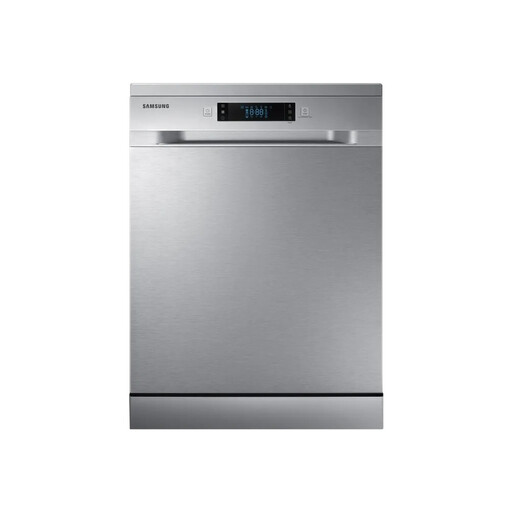
Why this choice suits this profile : its 14 place settings, seven cycles and adjustable upper basket make it easy to adapt the load to the needs of a household that uses it regularly.
The product details specify an E energy rating, consumption of 10.5 l per cycle and a noise level of 44 dB. Capacity, consumption and acoustic comfort can therefore be assessed separately.
Cutlery drawer, Auto programme, half-load option, 70 °C Hygiene cycle and LED display showing the time remaining.
A freestanding dishwasher must stand on a stable floor and be levelled using its adjustable feet. The water inlet hose must not be kinked, while the drain hose must remain correctly positioned. If you are considering connecting the appliance to a hot-water supply, check the maximum permitted temperature in the instruction manual.
Before using the appliance for the first time, fill the salt reservoir and rinse-aid dispenser, if your model has them. Use only products designed for automatic dishwashers. Liquid intended for hand washing would create excessive foam.
To maintain the appliance’s performance over time:
Allow approximately 60 cm of width, but always refer to the exact dimensions of your chosen model. Also leave enough space at the back for the hoses and check that the door can open fully without hitting a unit or wall.
The cost depends on the local electricity tariff, consumption in kWh per 100 cycles, water consumption and the number of washes carried out. To estimate the cost, multiply the consumption of one cycle by your electricity tariff, then add the cost of water and detergent. The Eco programme provides a useful reference, even though it often takes a considerable amount of time.
Lifespan varies according to how often the appliance is used, water quality, maintenance and installation conditions. Cleaning the filter regularly, using salt suitable for your water hardness and avoiding overloading all help to protect the appliance. Also check the availability of spare parts and the warranty terms offered by the seller.