People who need to avoid a specific allergen
Your first priority is the ingredients in the exact bar, including any ‘may contain’ warnings. A ‘gluten-free’ or ‘vegan’ label alone doesn’t mean the bar is free from peanuts, milk or soya.


Before taking a protein bar to Make Music Day, start with the ingredient you need to avoid: ‘gluten-free’, ‘vegan’ and ‘no added sugar’ don’t mean the same thing. Check the ingredients, allergens and any ‘may contain’ warnings on the exact product packaging. Then compare the portion size, protein per bar and storage instructions for your day out.
Your first priority is the ingredients in the exact bar, including any ‘may contain’ warnings. A ‘gluten-free’ or ‘vegan’ label alone doesn’t mean the bar is free from peanuts, milk or soya.
You want an easy-to-carry bar that’s explicitly labelled gluten-free. Check for any other allergens separately, depending on your needs.
You’re looking for a product labelled vegan, without assuming it’s also gluten-free or suitable for any other dietary exclusion. Compare the protein content based on the portion you’ll take with you.
First rule out any bars that aren’t suitable for your dietary requirements, then check the nutritional information and how to transport them. The word ‘protein’ doesn’t tell you how much protein is in each serving.
| What to check | Look for | Who is it for? |
|---|---|---|
| Specific allergen | Ingredients, highlighted allergens and any ‘may contain’ warnings on the exact product packaging. | If I need to avoid an allergen, another claim on the front of the pack isn’t enough to make a decision. Around 36% of consumers put this requirement first. |
| Gluten-free | A ‘gluten-free’ label on the product you choose, followed by a check for any other relevant allergens. | For a day out, I want to be able to choose a bar explicitly labelled gluten-free without assuming it’s also free from nuts or milk. This is the top priority for around 29% of consumers. |
| Vegan formula | The product description, ingredients and any ‘may contain’ warnings. | A bar to take with me needs to suit my vegan diet first and foremost; that doesn’t address any other dietary exclusions. Around 21% of consumers prioritise this. |
| Portion size and transport | Protein per bar, portion size and storage instructions. | If no dietary exclusion takes priority, I compare the amount I’ll actually eat and the storage conditions needed while I’m at the concert. Around 14% of consumers put these factors first. |
The Joybuy product page for Nature Valley salted caramel and peanut bars lists peanuts, soya, milk and almonds. Its gluten-free description doesn’t mean it’s free from these other ingredients.
Decide what you need to avoid, then check the ingredients list and any ‘may contain’ warnings for the exact product.
According to Auchan’s product page, a Barebells Cookies & Cream bar contains 20 g of protein, but also contains milk and soya and may contain gluten, peanuts and nuts.
First check that it’s suitable for your dietary requirements, then compare the protein per serving.
A bar left in a bag in direct sunlight may not be stored according to the instructions on its packaging.
Check the storage instructions before you set off and make sure you can transport it accordingly.
Lidl France says that gluten-free products aren’t part of its permanent range and are available only from time to time.
Check what your local shop has before you travel and identify another suitable product in advance.
Its product pages include Nature Valley, Eat Natural and Barebells protein bars, with different features depending on the product.
The retailer stocks bars described as vegan, including Basic Fit NXT Level brownie flavour and a KoRo brownie product.
Gluten-free products may be available from time to time rather than as part of the permanent range.
Aldi France stocks protein cereal bars in chocolate and peanut or salted caramel varieties.
These two bars are options to consider if you’re looking for a gluten-free protein snack to take with you. Before choosing either one, confirm the gluten-free claim and check the allergens on the packaging of the exact product. A ‘gluten-free’ label doesn’t guarantee that a product is free from other allergens.
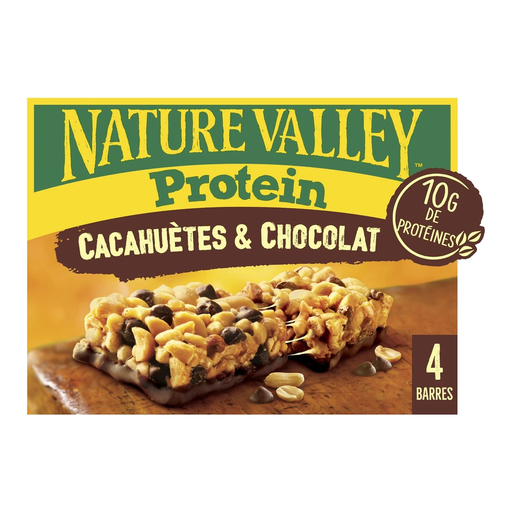 Image unavailable
A pack of four 40 g bars to consider for a snack on the go. If you need to avoid peanuts, soya or milk, check the ingredients and any ‘may contain’ warnings on the pack before making your choice.
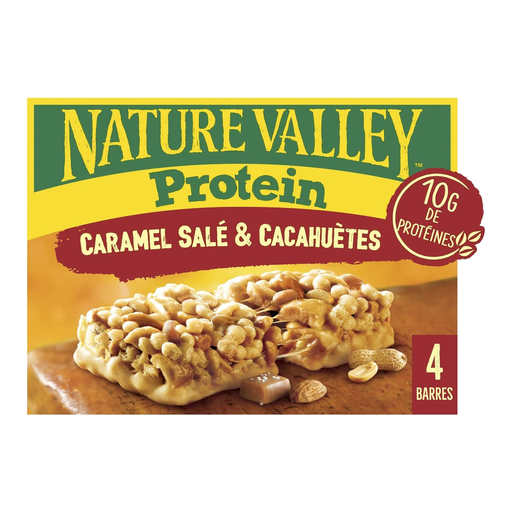 Image unavailable
This pack of four 40 g bars may be worth considering for a day out if the ingredients suit your needs. The Joybuy product page lists peanuts, soya, milk and almonds. Don’t choose it if you need to avoid any of these ingredients, and check the packaging for ‘may contain’ warnings.
No. Check exactly what the claim excludes: gluten-free or no added sugar doesn’t mean a product is free from peanuts, milk or soya. The Joybuy product page for Nature Valley salted caramel and peanut bars lists these three ingredients, as well as almonds.
Check the ingredients, highlighted allergens and any ‘may contain’ warnings, followed by the portion size, nutritional information and storage instructions. The DGCCRF says that allergens present in prepacked foods must be highlighted in the ingredients list.
This warning means there may be an accidental presence of the allergen; it doesn’t guarantee that the product is free from it. If you need to avoid an allergen because of an allergy, follow your healthcare professional’s advice rather than relying on another claim on the bar.
Compare the grams of protein in the portion you plan to eat, but don’t skip the allergen check. Auchan’s product pages list 8.6 g for a 40 g Eat Natural bar and 20 g for a 55 g Barebells Cookies & Cream bar. Their ingredients may not suit the same dietary requirements.
Not without checking what’s available locally: Lidl France says gluten-free products are available from time to time and aren’t part of its permanent range. Check the label on the bar in stock too, rather than relying on its category alone.