For a quick meal after moving in, choose a ready-to-eat fougasse based on its topping, ingredients, allergens and size. Don’t assume its dough contains wholemeal flour. If you specifically want a mix of white and wholemeal flour, making it at home lets you choose the flours, but takes time and requires an oven. If you’re buying for a fussy child, also consider the toppings and textures they’ll accept.
Who are these options for?
A student who’s just moved in and is short on time
A ready-to-eat fougasse means you don’t have to prepare dough when your kitchen isn’t fully equipped yet. Size, ingredients and storage instructions are particularly important if you’re eating alone.
A student who wants to choose their own flours
Making fougasse at home lets you choose the white and wholemeal flour separately. However, you’ll need the other ingredients, an oven and enough time to follow the recipe.
A parent or carer of a fussy child
The flavour of the topping, texture and portion size can all influence your choice. For children aged 4–17, Manger Bouger advises offering wholemeal or semi-wholemeal starchy foods according to the child’s appetite; that doesn’t mean a particular fougasse is made with wholemeal flour.
What should you look for first?
Ready-to-eat fougasse
Choose this if: you need a quick meal without having to make dough.
Bear in mind: the products listed by Carrefour, PAUL and Auchan don’t confirm that they contain a mix of white and wholemeal flour.
Homemade fougasse
Choose this if: you want to select the white and wholemeal flour for the dough yourself.
Bear in mind: you’ll need a recipe, other ingredients, time and an oven.
| Consideration |
What to check |
Who it’s for |
| Convenience |
Whether the fougasse is ready to eat or needs reheating; the size and storage instructions for the product you choose. |
When my kitchen has only just been set up, I want to eat without kneading dough or using an oven. Around 31% of consumers put convenience first. |
| Wholemeal flour |
The type of flour in the ingredients; fibre per 100 g if you want to compare products. |
If I specifically want a white and wholemeal mix, I want to see both flours listed rather than judge by how the fougasse looks. This is the top priority for around 25% of consumers. |
| Whether a child will enjoy it |
The topping, texture and portion size, depending on the child’s appetite. |
If I’m buying for a fussy child, I first look for a topping and texture they’ll accept. This is the main concern for around 19% of consumers. |
| Ingredients and allergens |
The ingredients list, allergens and salt per 100 g for the exact product. |
If certain ingredients need to be avoided or I’m comparing salt levels, ingredients matter more than the choice of topping. Around 25% of consumers say this is their main concern. |
Mistakes to avoid
-
Assuming olives mean the fougasse contains wholemeal flour
The product details for PAUL’s olive fougasse list T65 flour, while Auchan’s olive fougasse lists wheat flour. The topping doesn’t tell you whether the dough contains a mix of white and wholemeal flour.
If that mix matters to you, look for the flour types in the ingredients list.
-
Comparing nutritional values measured on different bases
Serving sizes can vary from one product to another. A value per 100 g doesn’t tell you how much you’ll actually eat.
Compare the nutritional information per 100 g, then consider the portion you plan to serve.
-
Relying on the topping name alone to check for allergens
Carrefour’s Provençal fougasse contains wheat, Emmental cheese and anchovies, among other ingredients. In France, the DGCCRF reminds food businesses that allergens must be highlighted on the labels of pre-packed foods.
Check the ingredients and any ‘may contain’ warnings on the exact product you’re buying.
-
Assuming all fougasse should be stored in the same way
Auchan’s product details say its cheese fougasse can be stored at room temperature, but this instruction applies to that product only.
Choose a size that suits the number of people you’re serving, and follow the instructions on the packaging you buy.
A large pack can also leave you with leftovers that are difficult to use within the storage period stated on the packaging.
Retailers and bakeries to consider
Carrefour
Two separate products can help you compare a topped fougasse with ingredients for making one at home.
- The details for the 300 g Provençal Fougasse list wheat flour, bacon lardons, Emmental cheese and anchovies, among other ingredients. Carrefour also lists FRANCINE T150 wholemeal wheat flour separately, suitable for making bread.
- The Provençal fougasse doesn’t confirm a mix of white and wholemeal flour; the T150 flour is a separate ingredient.
Auchan
The product details for the cheese and olive fougasses let you compare these two toppings.
- The details for the 400 g cheese fougasse include ingredients, nutritional information per 100 g and storage instructions specific to that product.
- The ingredients listed for the fougasses reviewed don’t confirm a mix of white and wholemeal flour.
PAUL
The olive fougasse is worth considering if you’re looking for this topping and the ingredients listed by the bakery suit your needs.
- PAUL describes this recipe as plant-based and lists T65 flour, olive oil and olives, among other ingredients.
- T65 flour doesn’t confirm the presence of wholemeal flour. Check the ingredients for the product you choose if you need to avoid a particular ingredient.
E.Leclerc
The flours listed may help you gather the ingredients for homemade fougasse.
- E.Leclerc lists T45 wheat flour and a multi-seed bread mix, among other products.
- Based on its name alone, a multi-seed bread mix shouldn’t be assumed to be wholemeal flour or a white and wholemeal flour mix.
Flour for homemade fougasse
If you’re making fougasse at home and choosing the flours yourself, this selection features wholemeal flour to combine with white flour according to your recipe.
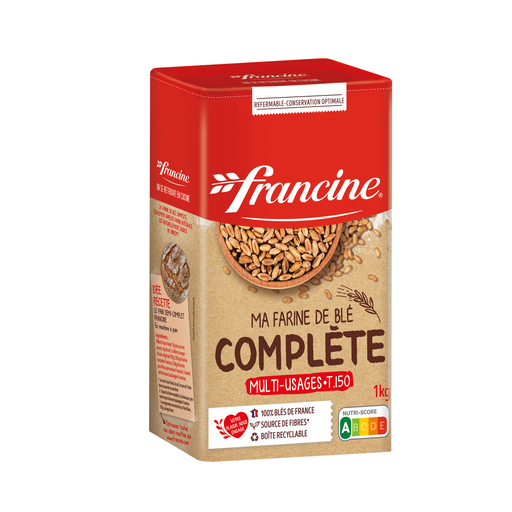 Image unavailable
FRANCINE T150 Wholemeal Wheat Flour, 1 kg
This flour is suitable for homemade baking if you want to choose the wholemeal flour in your dough yourself.
This is T150 wholemeal wheat flour in a 1 kg pack, not ready-to-eat fougasse. Buy white flour and the other ingredients in your recipe separately. Check the nutritional information on the packaging if it’s important to your choice.
View on Joybuy
Frequently asked questions
Does olive fougasse always contain wholemeal flour?
No. The PAUL and Auchan product details reviewed list T65 flour and wheat flour respectively for their olive fougasses, without confirming a mix of white and wholemeal flour. Look for the flour types in the ingredients list.
Is fougasse described as plant-based suitable for someone avoiding gluten?
Not on that basis alone: ‘plant-based’ doesn’t mean ‘gluten-free’. The olive fougasse recipe described by PAUL contains T65 wheat flour. Check the ingredients and labelling of the product in question.
Where can I check the allergens in pre-packed fougasse?
Read the ingredients list and any ‘may contain’ warnings on the packaging for the exact product. The DGCCRF states that allergens in pre-packed foods must be highlighted on the label.
How should I store fougasse after buying it?
Follow the date and storage instructions on the packaging. Auchan says that the cheese fougasse reviewed can be stored at room temperature, but this instruction doesn’t apply to other products. For foods that need to be kept chilled, Anses advises maintaining the cold chain.
Should you choose dough made entirely with wholemeal flour for a fussy child?
Choosing fougasse doesn’t mean you have to. Manger Bouger advises offering wholemeal or semi-wholemeal starchy foods to children aged 4–17 according to their appetite. Also check the topping and texture they’ll accept, without assuming what the dough contains.


