Who is this choice for?

Parents looking to adapt a familiar dough

You’d like to try wholemeal or semi-wholemeal flour without immediately making a completely different fougasse. Manger Bouger mentions wholegrain or semi-wholegrain starchy foods for children aged 4 to 17, depending on their appetite; this doesn’t predict how they’ll react to a particular recipe.

Families entertaining without making the dough

Ready-to-share fougasse makes serving brunch easier. However, the recipes featured by Carrefour and PAUL use different toppings and flours, so check the ingredients if a white-and-wholemeal mix is your priority.

Shoppers who pay attention to ingredients

The topping can make all the difference: one fougasse might contain olives, another cheese, while another includes ingredients such as bacon lardons and anchovies. For prepacked food, look for allergens highlighted in the ingredients list, as advised by the DGCCRF.

What should you look for?

Homemade fougasse

Worth considering : if you want to choose your flours separately and adapt the recipe to the dough you get.

Bear in mind : you’ll need to knead the dough, leave it to rest and experiment; no ratio can guarantee that children will like it.

Ready-to-serve fougasse

Worth considering : if avoiding the dough preparation matters more to you than choosing specific flours.

Check : the flour and toppings listed on the product page or label; ready-to-serve fougasse isn’t necessarily made with both white and wholemeal flour.

Factor What to check Who is it for?
Dough texture When making it at home, identify the flours used and adjust the mix without assuming that one ratio will suit every child. When children are unsure about a new texture, I want to be able to keep the dough familiar to them. Around 46 % of consumers would prioritise how well it’s received.
How much wholemeal flour it contains Look for wholemeal or semi-wholemeal flour in the ingredients; compare the nutritional information per 100 g between similar products, without attributing the nutritional values of the flour alone to the finished fougasse. I want to introduce a less refined flour gradually, rather than change the entire base at the first attempt. This gradual approach would be the main priority for around 36 % of consumers.
Toppings and allergens Read the ingredients of the product you choose. For prepacked food, check the allergens highlighted in the ingredients list. If someone at the table needs to avoid an ingredient, the exact recipe matters more than the texture. Around 18 % of consumers would put ingredients and allergens first.

Pitfalls to avoid

  • Assuming ‘with olives’ tells you what flour it contains

    The PAUL olive fougasse product page lists T65 flour. The Carrefour Provençal fougasse page mentions wheat flour: neither the topping nor the name confirms a mix of white and wholemeal flour.

    Look for the type of flour in the ingredients list. If you want to control the mix yourself, choose clearly labelled flours for homemade dough.

  • Starting with a high proportion of wholemeal flour

    Manger Bouger advises making the move to wholegrain or semi-wholegrain starchy foods gradually. No particular ratio guarantees that every child will like fougasse.

    Adapt your recipe through trial and error, and see how the dough turns out rather than treating entirely wholemeal fougasse as a necessary step.

  • Assuming the topping tells you everything about the ingredients

    Carrefour’s Provençal fougasse contains ingredients including wheat, Emmental, butter and anchovies. PAUL’s fougasse described as vegetarian contains cheese.

    Check the label on prepacked products or ask for the ingredients at the counter before choosing something for someone who avoids certain ingredients.

Brands and retailers to consider

Francine

Two different flours can be used to make fougasse at home: a bread flour base and a wholemeal component.

  • Auchan’s product page features Francine bread flour for homemade bread and fougasse. Francine T150 wholemeal flour contains 8.3 g of fibre per 100 g.
  • These products aren’t a pre-measured blend; the result will depend on your recipe and experimentation.

Auchan

The retailer offers different types of flour as well as ready-to-share fougasse.

  • Its flour range includes Auchan Bio T110 semi-wholemeal flour, alongside white and wholemeal varieties.
  • Seeing fougasse in the range doesn’t tell you which flours the recipe contains.

Carrefour

Carrefour’s Provençal fougasse is a ready-to-share option, rather than a blend of flours for you to mix yourself.

  • Its product page lists ingredients including wheat flour, bacon lardons, Emmental, butter, olives and anchovies.
  • This list doesn’t confirm a base made with both white and wholemeal flour.

PAUL

The bakery offers several ready-to-serve fougasse varieties, including recipes with olives and cheese.

  • PAUL describes its olive fougasse as entirely plant-based and lists T65 flour among its ingredients.
  • The cheese fougasse is described as vegetarian but contains cheese; these descriptions don’t replace checking the ingredients and allergens.

Flours available on Joybuy

These two Francine flours provide the wholemeal and white components for homemade fougasse; they aren’t ready-to-serve fougasse. Before combining them, check that your recipe is suitable for the flours you’ve chosen.
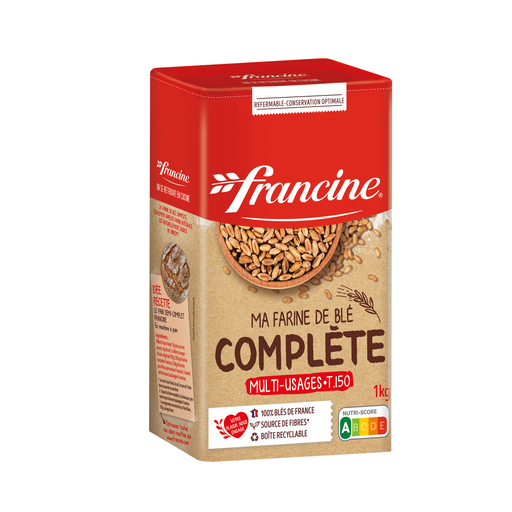
Francine T150 wholemeal wheat flour, 1 kg pack

Francine T150 wholemeal wheat flour, 1 kg

Consider it as the wholemeal component of homemade dough, alongside a white flour chosen separately. Auchan’s product page for Francine T150 wholemeal flour states that it contains 8.3 g of fibre per 100 g of flour; this doesn’t describe the finished fougasse. Check that your chosen recipe is suitable for fougasse before making the mix.

View on Joybuy
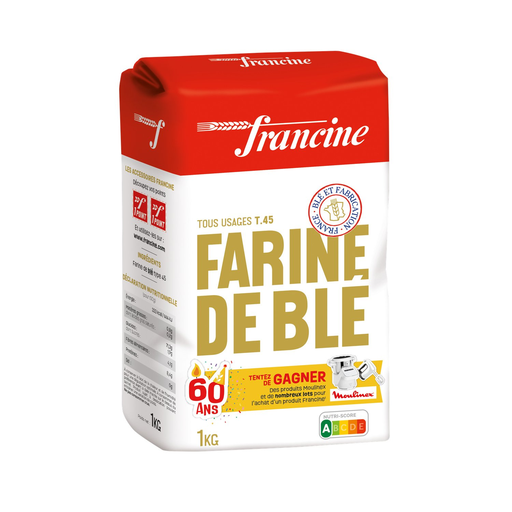
Francine T45 wheat flour, 1 kg pack

Francine T45 wheat flour, 1 kg

This white flour can make up part of your homemade mix if your fougasse recipe calls for it. The 1 kg pack is labelled T45; add a separate wholemeal or semi-wholemeal flour if you’re looking for a blend. The result in fougasse dough will depend on the recipe you choose.

View on Joybuy

Frequently asked questions

Should you use only wholemeal flour for fougasse made for children?

No. Manger Bouger mentions wholegrain or semi-wholegrain starchy foods for children aged 4 to 17, depending on their appetite, but doesn’t specify what to use in fougasse. Making the dough at home lets you try a blend without assuming that one ratio will suit everyone.

How can you compare two flours or two prepacked fougasse products?

Start with the type of flour and the ingredients list, then compare the nutritional information on the same basis, usually per 100 g. As the DGCCRF explains, this makes comparisons easier; the values for flour on its own aren’t the same as those for fougasse made with other ingredients.

What should you check if a child needs to avoid certain allergens?

For prepacked fougasse, read the ingredients list and check the allergens highlighted there, in line with the DGCCRF’s guidance. Check each recipe separately: Carrefour’s Provençal fougasse product page mentions ingredients including wheat, Emmental, butter and anchovies.

Is vegetarian fougasse always plant-based?

No. PAUL describes its cheese fougasse as vegetarian and its olive fougasse as entirely plant-based. These descriptions refer to two different recipes, so check the ingredients and allergens of the product you’re planning to buy.