Parents who want to try different flours
You’re making a fougasse for the family and want to try adding some semi-wholemeal or wholemeal flour, while choosing the recipe you serve to the children yourself.


For a French National Day apéritif with children who are reluctant to eat wholemeal flour, make the fougasse yourself if you want to choose the flours and topping. You can combine white flour with semi-wholemeal or wholemeal flour, without assuming how a particular recipe will turn out. If saving preparation time is your priority, a ready-to-serve fougasse means you can skip making the dough. Check its ingredients, allergens and topping before sharing it.
You’re making a fougasse for the family and want to try adding some semi-wholemeal or wholemeal flour, while choosing the recipe you serve to the children yourself.
For an apéritif to share, you’re looking for a ready-to-serve fougasse in a size and with a topping that suit your guests.
You need to check the ingredients and allergens, or compare the nutritional information for several recipes before serving them.
First decide whether you want to make the dough or save time on preparation. The flour and topping are the next key considerations.
| Criterion | What to check | Who is it for? |
|---|---|---|
| Choice of flours | For homemade dough, choose white flour and semi-wholemeal or wholemeal flour separately. If buying a ready-made fougasse, check the ingredients rather than judging by its colour. | When I’m making fougasse for children who aren’t keen on wholemeal flour, I want to choose how much of each flour to use. Around 42% of consumers prioritise this choice. |
| Time and size | Check the weight, topping and collection arrangements for the fougasse you choose. | If I’m organising an apéritif without kneading or baking, I need bread that’s ready to share. Saving time is the main priority for around 33% of consumers. |
| Ingredients | Check the ingredients, allergens and nutritional information for the specific recipe, particularly the salt content per 100 g. | Before serving a topped fougasse to a group, I want to know what’s in it. This is the top priority for around 25% of consumers. |
A brown colour or the presence of seeds doesn’t confirm that a fougasse contains semi-wholemeal or wholemeal flour.
If you’re buying a ready-made fougasse, read the ingredients. For homemade dough, choose flour with its type clearly stated on the packaging.
Manger Bouger recommends that cured meats should be occasional foods for children under 11. The topping matters just as much as whether you make the fougasse yourself or buy it ready to serve.
If you’re serving a fougasse with cured meat, offer an option without it too.
At PAUL, the olive fougasse contains wheat flour, while the cheese recipe contains milk. The topping alone doesn’t tell you about the allergens or nutritional values.
Check the information for the exact recipe, especially if you’re serving several types of fougasse.
The size and selection available may vary by store and time of year.
Before you collect your order, check the product weights, availability and collection arrangements locally.
One option for buying flour for homemade fougasse: the range includes T110 semi-wholemeal and T150 wholemeal wheat flour.
The range of apéritif breads includes topped fougasses, including olive varieties, with click and collect or delivery available at some stores.
The bakery offers fougasses with olives and cheese, among other varieties. Check the details of each recipe separately.
The retailer offers BELBAKE wholemeal spelt flour, as well as a separate recipe for olive fougasse.
The retailer offers organic wheat flour and, in its bread range, focaccia.
This Joybuy selection features wholemeal flour to add to homemade fougasse dough, if your recipe calls for it, alongside white flour bought separately.
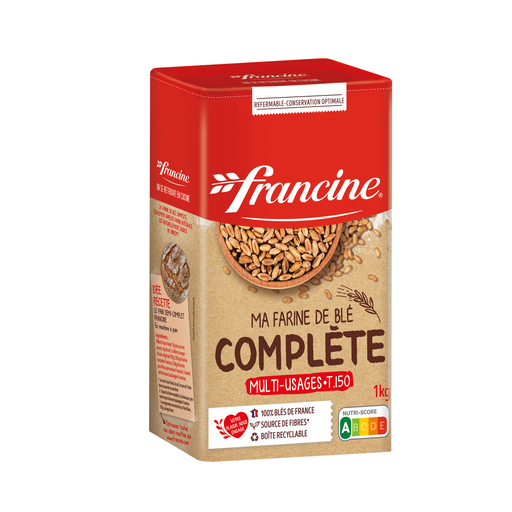 Image unavailable
If you want to add wholemeal flour to your homemade fougasse, this pack provides the T150 component. It contains 1 kg of wholemeal wheat flour, not a ready-made blend. You’ll need to buy white flour separately and choose a recipe before deciding on the proportions.
No. If you’re making the dough, you can choose a recipe that combines white flour with semi-wholemeal or wholemeal flour. The proportions depend on the recipe you choose, so don’t assume that every child will enjoy a particular blend.
First compare the ingredients and allergens in the two specific products, then their nutritional information per 100 g. PAUL’s product listings show why it’s important to check each recipe separately: the olive fougasse contains wheat, while the cheese one contains milk.
Check the ingredients list for the product you’ve chosen. The French Directorate General for Competition, Consumer Affairs and Fraud Control states that allergenic ingredients must be highlighted in the list. Check the exact topping too before serving the fougasse.
If children under 11 will be eating it, bear in mind Manger Bouger’s recommendation that cured meat should only be eaten occasionally at this age. A fougasse without cured meat gives everyone another option at the table.