
Livraison le jour même ou le lendemain

Qualité garantie

Débloquez vos offres de bienvenue: Livraison GRATUITE | Jusqu'à -80 % | 30 jours d'essai gratuits à JoyPlus
Téléchargez l'application
Playing on an artificial grass pitch—or 'AG' for short—demands the right gear. Choosing the right pair of boots isn't just about style or brand; it's a crucial decision for your performance, comfort, and most importantly, injury prevention. Yet, too many players fall into the classic traps: they invest in unsuitable models that wear out in no time or, worse, increase the risk of a twisted ankle.
Before you make your choice, let's review the mistakes to avoid and the essential criteria for a smart purchase, using a specialised model like the Joma Supercopa 24 AG football boots as an example.
To combine performance with longevity, two technical features are non-negotiable when choosing your football boots for artificial grass.
The soleplate is the most critical element. An AG (Artificial Grass) soleplate is specifically designed for this surface. Here’s how to recognise one:
For playing on synthetic turf, a high-quality microfibre upper is often the best choice. This material offers several advantages:
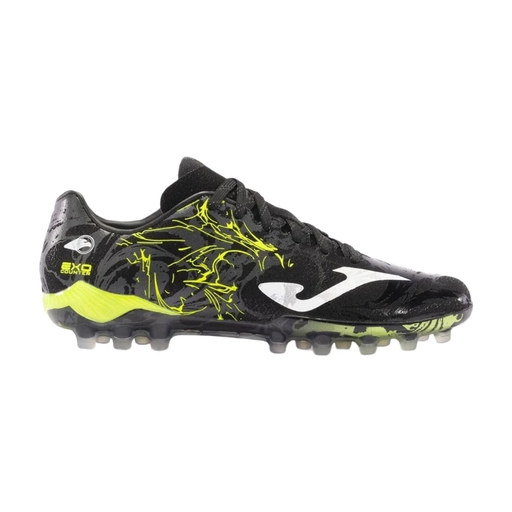
Why this model? Because it's designed for those who play primarily, or even exclusively, on synthetic turf and are looking for a tool perfectly suited to their preferred surface.
Its soleplate is a pure AG, with multiple short studs that distribute pressure and ensure secure traction. Its microfibre upper is engineered to resist the abrasion of synthetic turf.
Optimised grip and stability for artificial grass. Reinforced zones at the heel and toe for enhanced durability.
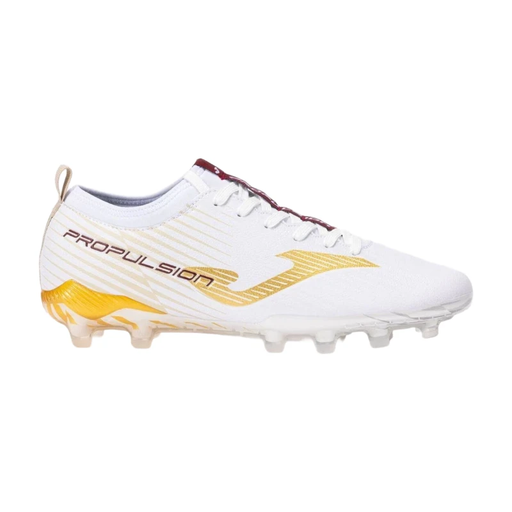
Why this model? Ideal for footballers playing on dry, natural grass (Firm Ground). This model is built for performance, featuring advanced support technologies.
This model perfectly illustrates the difference: its FG soleplate is designed to dig into natural ground. Using it on synthetic turf is therefore not recommended, which highlights the importance of choosing an AG soleplate for that surface.
The Sock System ensures a perfect fit and the Exo Counter reinforcement stabilises the heel—key advantages for changes of direction on grass.
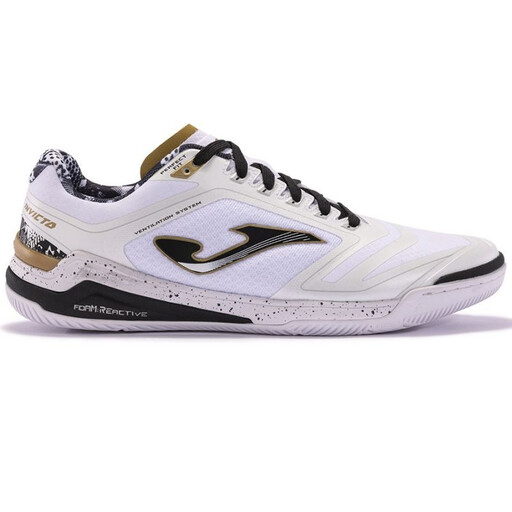
Why this model? Perfect for training sessions and indoor matches. This model is 100% dedicated to smooth indoor surfaces like hardwood or PVC.
Its flat, non-marking rubber sole is designed for maximum grip on smooth floors, obviously without any studs. Using this model on an artificial pitch would be completely ineffective and would certainly damage it.
Optimal grip on indoor surfaces. Lightweight design for quick movements and excellent ball control.
We have curated a complete, up-to-date selection of boots that meet these demanding selection criteria.
It all depends on the frequency of use, material quality, and maintenance. A good pair of boots for artificial grass, such as a model with an AG soleplate and a durable microfibre upper, can last one to two seasons for a regular amateur player. Proper care, especially cleaning after each match, is essential to extend their lifespan.
It is strongly advised against. FG studs are too long for modern synthetic pitches. They create excessive grip, which dangerously increases the risk of injury. Furthermore, the pressure concentrated on a few isolated points accelerates stud wear and makes the boot very uncomfortable. It's always better to opt for a dedicated AG soleplate.
After each match, brush the soles to remove rubber pellets and other debris. Clean the upper with a damp cloth, using a little mild soap if necessary. Let them air dry, away from direct sunlight or a heat source (like a radiator) that could harden and weaken the materials. And most importantly, never put them in the washing machine.