
Livraison le jour même ou le lendemain

Qualité garantie

Débloquez vos offres de bienvenue: Livraison GRATUITE | Jusqu'à -80 % | 30 jours d'essai gratuits à JoyPlus
Téléchargez l'application
Feeling a bit run down, following a plant-based diet, exercising regularly, or simply wanting to streamline your daily routine – food supplements, vitamins and minerals cater to a wide range of needs. But an attractive label isn't enough to make the right choice. Dosage, format, duration of use and precautions matter far more than marketing promises.
A particularly high NRV percentage can look tempting, especially for vitamin B12, vitamin C or vitamin D3. However, a high dose isn't necessarily suitable for every adult. Check the amount per serving, the recommended frequency, and any contributions already provided by a multivitamin.
A bottle of 400 tablets might last over a year, whereas a box of gummies could last just two months depending on the daily serving. The figure that really matters is the cost per day, calculated from the recommended number of servings – the unit count displayed on the front of the packaging isn't enough.
Gummies can contain sugar, glucose syrup or polyols. Chewable tablets may also contain isomalt or xylitol, and excessive consumption of these can cause digestive issues. If you're vegan, vegetarian, gluten-intolerant or lactose-intolerant, take the time to read the full ingredients list and any declared allergens.
The chemical form affects the composition and how easy the product is to understand. For magnesium, for example, you need to distinguish the amount of elemental magnesium from the total weight of the citrate. WeightWorld Magnesium Citrate clearly states 222 mg of elemental magnesium per capsule, with a recommended dose of one capsule per day.
For vitamin B12, available formulas usually contain cyanocobalamin or methylcobalamin. This information is worth checking, especially if you're looking for a vegan formula or a specific form. In any case, the stated dose should correspond to a clearly defined serving.
Claims such as vegan, gluten-free, lactose-free, the country of manufacture and certifications like Ecocert AB can make comparison easier. Information about manufacturing in line with good practices is also useful. These don't replace checking the ingredients, but they do help you quickly rule out products that don't fit your habits.
For vitamin D3 and vitamin K2, also check the source of the vitamin D3 and the form of K2, particularly MK-7. If you're taking anticoagulant medication, you must seek medical advice before using vitamin K.

Why this choice suits this profile: thanks to their pectin-based texture and orange flavour, these gummies are ideal for adults who want to start with a simple routine of two gummies a day. The formula is stated as vegan.
The daily serving is clearly stated: two gummies provide 200 mg of vitamin C and 10 mg of zinc. This makes it easy to calculate how long the bottle will actually last.
The bottle contains 120 gummies and each serving provides 10 mg of zinc, in a gelatine-free formula. However, the presence of sugar and glucose syrup should still be taken into account.

Why this choice suits this profile: the individual 25 ml sticks are designed for those who prefer a ready-to-drink format and a formula targeting hair, skin and nails.
The amount of marine collagen is specified for each stick: 12,500 mg. The 30 servings are already separated, so there's no need to measure out powder every day.
Each serving also provides 80 mg of vitamin C, 50 µg of biotin and 5 µg of vitamin D. As it contains marine collagen, this product is not suitable for vegans.
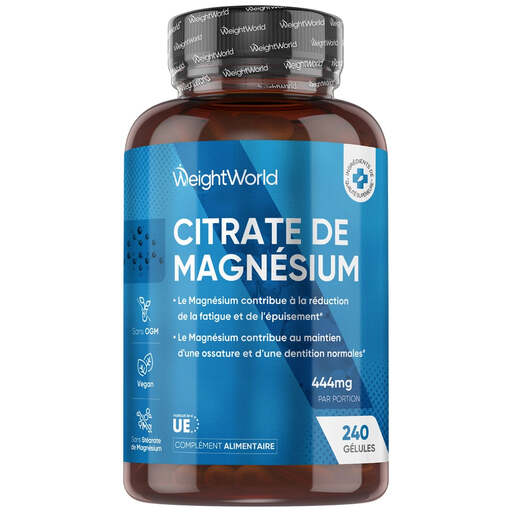
Why this choice suits this profile: with one capsule per day and 240 units, this product is ideal for a long-term routine. It's particularly aimed at adults looking for a magnesium supplement that's gluten-free, lactose-free and vegan.
The product page clearly distinguishes magnesium citrate from elemental magnesium: 740 mg of citrate provides 222 mg of elemental magnesium per capsule.
The bottle contains 240 capsules with a hypromellose shell. The manufacturer states that production complies with European GMP and HACCP standards.
We've put together a comprehensive, real-time selection of products that meet these strict criteria as well as European safety requirements.
A food supplement is not a substitute for a varied diet or a balanced lifestyle. Stick to the dose stated on the packaging and avoid combining several products that contain the same vitamins or minerals without calculating your total intake.
Seek advice from a healthcare professional if you are pregnant, breastfeeding, have a chronic illness or are on regular medication. Particular caution is needed with iodine, vitamin K2, iron and high doses of vitamin D3. Biotin can also interfere with certain blood test results – let your doctor know you're taking it before any tests.
It depends entirely on the formula and your goal. Some products are designed for courses of 20 to 45 days, while bottles of 365 or 400 tablets are intended for long-term use. Regularly reassess your needs and read the instructions rather than automatically reordering your supplement.
Gummies are easy to chew, but sometimes contain sugar or polyols. Tablets and capsules often offer a more concentrated composition and are easy to store. The choice therefore depends on your tolerance, your preferences and your ability to stick to the daily dose.
This is possible in some cases, but intakes can overlap. Compare the nutritional information tables of each product, particularly for zinc, vitamin D3, iodine and magnesium. If in any doubt, or if you are on medication, ask a healthcare professional for advice before combining them.