
Livraison le jour même ou le lendemain

Qualité garantie

Débloquez vos offres de bienvenue: Livraison GRATUITE | Jusqu'à -80 % | 30 jours d'essai gratuits à JoyPlus
Téléchargez l'application
A picnic, a barbecue, a takeaway meal or a kitchen reorganisation won’t all call for the same containers. Yet buying food containers and disposable tableware can throw up a few unwelcome surprises: a plate that’s too flimsy and bends, a box described as airtight that leaks, or a product labelled eco-friendly with no clear information about how to dispose of it.
To avoid impractical purchases, it’s better to compare capacity, materials, closure systems and usage instructions than to rely on marketing claims alone.
Biodegradable plates, bamboo fibre bowls and sugarcane pulp products can help reduce the use of virgin plastic. That doesn’t necessarily mean they’re suitable for home composting or accepted by every waste collection service. Check the manufacturer’s information, the product’s exact composition and your local recycling and waste disposal guidance.
So take the term ‘eco-friendly’ with a pinch of salt. The amount you use, whether it can be reused and how it’s processed at the end of its life all matter too.
A plate suitable for a dry dessert won’t necessarily work for a well-dressed salad or a hot meal. For soup, curry or pasta, choose a sufficiently deep shape and look for information about leak resistance. Disposable bamboo or plant fibre bowls may suit some meals, but be sure to follow the manufacturer’s guidance.
Choose a disposable or reusable lunch box to suit what you plan to put in it. A lid that simply rests on top may be enough for dry foods, but a clip or hinged closure is much more secure for carrying food around. Even if it has a seal, keep the container upright when it holds liquids.
Choose a capacity to suit the meal you have in mind:
Dimensions matter just as much as capacity. A wide box is easier to fit in the fridge, while a stackable design saves space in cupboards and transport crates.
Sugarcane pulp and plant fibres are widely used for so-called eco-friendly disposable tableware. For reusable containers, polypropylene is popular thanks to its light weight and easy care. 304 stainless steel has a durable, uncoated surface, but is generally not suitable for use in a microwave.
Before first use, check the guidance on food contact, freezer, dishwasher and microwave suitability, and maximum temperatures. This information is far more useful than a simple marketing claim about the material.
An airtight box should have a seal and a clearly described closure system. Lids with four clips or a double closure can help prevent leaks in normal conditions, but you should still carry soup upright.
For reusable freezer bags, check the minimum temperature, cleaning instructions and which foods they’re intended for. Some models cope very well with cold temperatures but aren’t suitable for hot liquids, the oven or microwave. For raw meat and fish, single use may still be preferable for hygiene reasons.
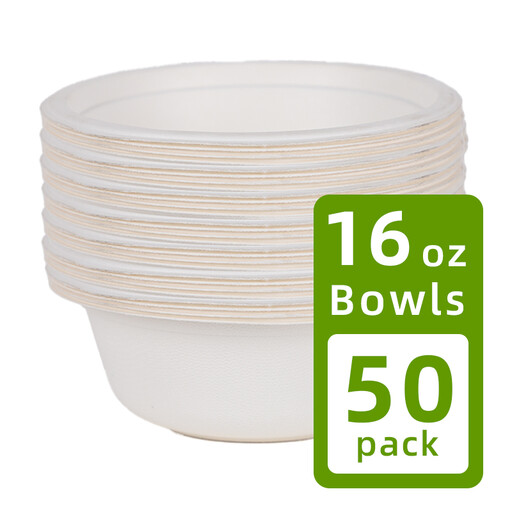
Why this is a good choice for this kind of user : With 50 bowls, each holding 500 ml, this pack is ideal for occasional meals, students and small gatherings, without the need to invest in extra tableware.
The capacity and deep shape are clearly stated, so you won’t end up with a bowl that’s too small for liquid dishes. Check local disposal guidance before throwing it away.
A pack of 50, a 500 ml capacity and a design described as leak-resistant and insulating for meals outdoors.
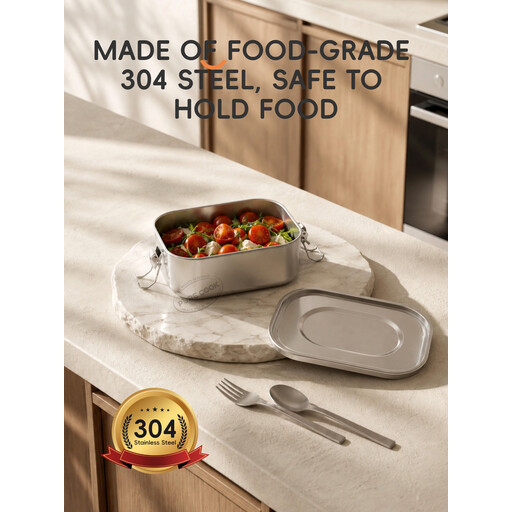
Why this is a good choice for this kind of user : This stainless steel lunch box is designed for commuters and anyone looking for a reusable container for work, school or days out.
The clip closure and silicone seal are clearly described. However, the manufacturer recommends carrying the box upright when it contains liquid dishes.
304 stainless steel, a single compartment, a silicone seal and stated dishwasher compatibility.
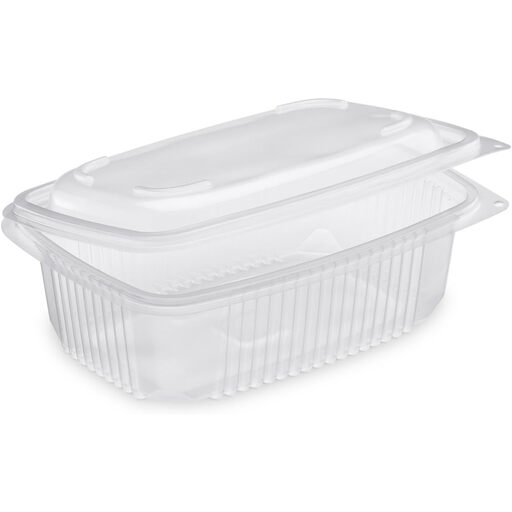
Why this is a good choice for this kind of user : The 800 ml size and pack of 50 make these a practical choice for restaurants, caterers and batch meal preparation.
The capacity, hinged lid and stackable design are all specified. It’s still a good idea to check the temperature limits before putting a box in the microwave.
50 containers, each holding 800 ml, with hinged lids and a stackable design. They also fit 600 × 400 mm transport crates.
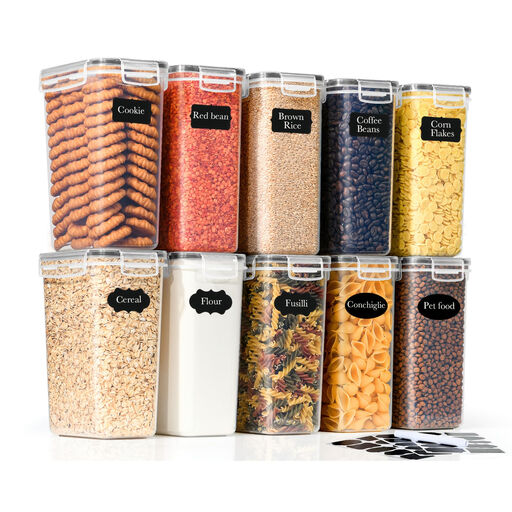
Why this is a good choice for this kind of user : This set is ideal for families looking to organise their storage of cereal, pasta, flour, rice, sugar and other dry foods.
The four-sided closure and silicone seal are clearly specified. To maintain the seal, hand-washing the lids is recommended.
Polypropylene described as BPA-free, dishwasher-safe bases, stackable designs, plus labels and a pen included.
For dishes with sauce, choose sturdy plates and deep bowls. Plant fibre options may be suitable, but check that they can withstand liquids and heat. For very hot or particularly greasy foods, always check the manufacturer’s guidance.
It depends on the material and model. Containers specifically designed for freezer use can be used within their recommended temperature range. Leave a little room for food to expand, and don’t put a cracked container in the freezer. A box that’s dishwasher- or microwave-safe isn’t necessarily suitable for freezing.
Remove any leftovers after each use, clean the bag according to the instructions, then dry it completely before sealing it. Avoid hot liquids, sharp objects and the microwave unless these uses are specifically permitted. For raw meat or fish, single use may still be preferable, depending on the cleaning conditions.