
Livraison le jour même ou le lendemain

Qualité garantie

Débloquez vos offres de bienvenue: Livraison GRATUITE | Jusqu'à -80 % | 30 jours d'essai gratuits à JoyPlus
Téléchargez l'application
Whether you are storing leftovers, taking meals out with you or keeping dry goods in the cupboard, food storage containers make everyday organisation easier. The key is to choose a model suited to the temperature, the amount you need to store and how you plan to transport it. An airtight container is not necessarily designed for use in the freezer, oven or microwave.
Here are the main criteria to consider to avoid impractical purchases and choose containers that genuinely suit your kitchen.
A clip-on lid may seem sturdy without being sufficiently leak-proof for liquids. For soup, sauce or meals carried in a bag, look for a silicone seal or a system explicitly described as leak-proof. Also check the manufacturer's recommendations for transporting containers upside down: some models must always be kept upright.
Borosilicate glass generally withstands temperature changes well, but not all lids can be used in the oven or microwave. Stainless steel, on the other hand, is not microwave-safe. Plastic is lightweight and practical, but check for statements such as freezer-safe, dishwasher-safe or microwave-safe with the lid removed.
A large container can be useful for preparing several meals in advance, but difficult to fit into a narrow fridge. Conversely, a set of small containers makes portioning easier, at the cost of having more lids to wash. Rectangular, stackable designs are often well suited to kitchen storage, provided you check their exact dimensions.
Prioritise product listings that clearly specify the material used, such as borosilicate glass, BPA-free polypropylene or 304 or 316L stainless steel. This information tells you about the stated composition, but does not replace the usage instructions specific to each product.
For dry foods, a transparent container makes it easy to identify rice, pasta or flour at a glance. For transport, stainless steel offers durability, while glass is particularly practical in the fridge and for preparing portions that are easy to identify.
Do not rely solely on the number of pieces stated for a set. Eight small boxes will not necessarily replace four 1.6 l containers.
Check the temperature limits and washing instructions. A container may be dishwasher-safe even though its lid must be washed by hand. When freezing food, leave a little room at the top if it contains a lot of water, and avoid sudden temperature changes.
Inspect the lids, seals and sides regularly. A crack, deformation or closure that no longer holds properly is a good reason to replace the container, even if it still appears usable.

Why this choice suits this profile : The eight sizes, from 150 ml to 1,040 ml, make it easy to build your collection gradually for the fridge, leftovers and individual portions.
The range of capacities means you do not have to buy only large boxes, which are often too big for small portions. It is still essential to check the permitted uses for the glass and lids before reheating or freezing food.
Stated borosilicate glass construction and an eight-piece set in graduated sizes.

Why this choice suits this profile : The four identical 1,600 ml containers are ideal for households that prepare several meals in advance or regularly store large quantities.
The uniform size makes stacking easier and avoids having to juggle boxes with incompatible dimensions. However, please note: stainless steel must not be placed in the microwave.
Stated 316L stainless steel construction, close-fitting lids, and stated compatibility with the freezer and dishwasher.
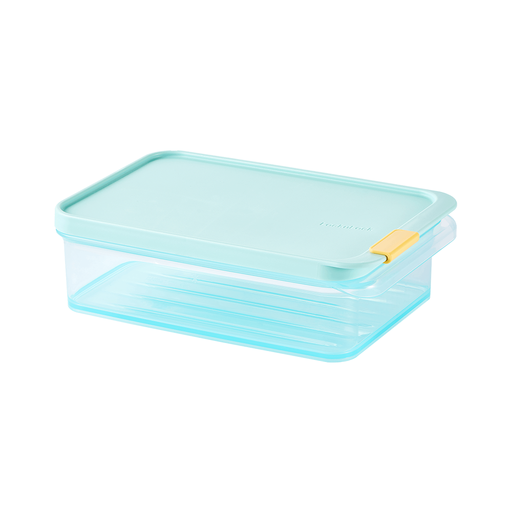
Why this choice suits this profile : Its 1.05-litre capacity and modular system are designed for people who regularly organise their freezer or prepare meals in advance.
The transparent body and label-holder clips make it easy to identify the contents and date. The recessed lid is designed for stacking. In the microwave, the lid must be removed or left ajar.
Stated BPA-free polypropylene construction, compatible with the freezer and the top rack of the dishwasher, with modular stacking.

Why this choice suits this profile : The five compartments keep food separate for an office lunch, picnic, children's meal or everyday portioning.
The compartments help prevent side dishes from mixing, but all four clips must be closed properly before transport. This model is not suitable for use in the oven or microwave.
Stated 316L stainless steel construction, five compartments and a PP lid with four clips.
We have brought together a complete, real-time updated selection of products that meet these demanding criteria and European safety regulations.
No. Only models whose product listing or instructions state that they are freezer-safe should be placed in the freezer. Also follow the recommended fill level and avoid thermal shock, particularly with glass.
It depends on the journey and the contents. Plastic is lightweight, glass makes it easy to see what is being stored and stainless steel is suitable for regular transport. When reheating a meal, always check that the container is compatible and remove any metal components.
There is no universal lifespan. Longevity depends on the material, care and frequency of use. Replace a container as soon as it develops a crack, persistent odour, deformed lid or seal that no longer closes properly.