
Same-day & Next-day Delivery

Quality Guaranteed

Unlock Your Welcome Offers: FREE Delivery | Up to 80% OFF | Free 30-day JoyPlus trial
Download the APP
An overflowing cupboard, food going soft or lids that are impossible to find: food storage containers meet a wide range of needs, but not all of them are suitable for the same uses. For families, batch-cooking enthusiasts, fans of buying loose ingredients or campers, the choice mainly comes down to the material, closure system and capacity.
Before buying food storage boxes, it is also worth knowing how to spot a few misleading marketing claims.
A lid that is easy to put on does not guarantee an airtight seal. For storing dry foods, look for a silicone seal or a clearly described locking system. For liquid preparations, also check that the manufacturer approves the container for transport and that it can withstand the intended handling.
A plastic container may be lightweight and practical, but it is not automatically suitable for the oven, microwave or freezer. A food-grade glass jar may withstand certain temperature changes, but glass remains vulnerable to thermal shock.
The BPA-free label refers to the product’s stated composition. It does not mean that the container is suitable for heat or for all types of food. Always check the symbols and the manufacturer’s instructions.
A capacity of 1 litre is not enough to determine whether a box will fit in your drawer. The shape, lid height and ability to stack the containers are just as important as the internal volume. A container that is too tall may be impractical in a fridge, while one that is too wide will take up unnecessary shelf space.
For dry foods, plastic declared suitable for food contact offers a lightweight and impact-resistant solution. Glass models, such as a food-grade glass container, generally do not absorb odours and are easy to clean. However, they are heavier and should be handled with care.
Look for a statement confirming suitability for food contact, the glass-and-fork symbol or the regulatory information provided by the manufacturer. In France, these indications are more reliable than a simple marketing claim.
Airtight jars are suitable for rice, pasta, cereals, flour, sugar and dried fruit. A correctly positioned seal limits the entry of air and moisture, but it must be kept clean and dry. A warped lid or damaged seal may compromise the airtightness.
For spices and small quantities, spice jars or containers holding 250 to 600 ml prevent too much empty space being left around the product. Transparent boxes also make it easy to identify their contents without having to open them every time.
For an individual portion or leftovers, a capacity of 0.5 to 1 litre is generally sufficient. Boxes holding 1 to 2 litres are better suited to family-sized preparations. A 25 L food container is more suitable for high-volume storage, transport or outdoor use.
Stackable food boxes save space in the pantry, provided that their bases are stable and the lids can support stacking. Also check whether the different parts are dishwasher-safe. For lids fitted with a seal, thorough drying is essential to help prevent odours and residual moisture.
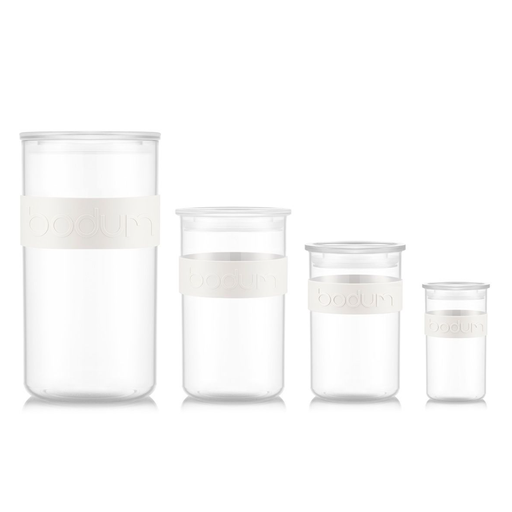
Why this choice suits this profile: this set of 12 containers covers the most common needs, from small portions to family-sized preparations, without having to put together your own assortment.
The four stated capacities — 0.25, 0.6, 1 and 2 L — prevent small quantities from being stored in an oversized box. However, the lids must be properly closed to maintain the seal.
BPA-free plastic as stated, a variety of sizes and a stackable design. Keep away from heat sources, the oven and microwave unless the manufacturer explicitly states otherwise.

Why this choice suits this profile: this rectangular size is suitable for leftovers, individual portions and meal preparation, with stated suitability for moving from the fridge to the oven, provided the usage instructions are followed.
The stated non-porous borosilicate glass helps limit the retention of odours and staining. Nevertheless, avoid sudden temperature changes and inspect the container before each use.
0.8 L capacity, stackable rectangular shape and stated compatibility with the oven, microwave, fridge, freezer and dishwasher.
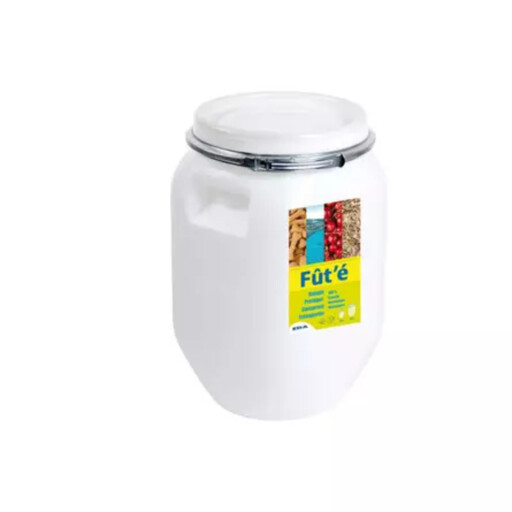
Why this choice suits this profile: its capacity and closure system meet the needs of camping, transport or storing pet food and large quantities of food supplies.
The stated food-contact certification and lid secured by a metal band define its intended use. The lid must be properly fastened before transport.
BPA-free polyethylene as stated, 25 L capacity, impact resistance and protection against moisture. Any padlock is not supplied.
Start by measuring your shelves and sorting foods according to how often you use them. Sizes from 0.25 to 0.6 L are suitable for seeds, spices and small toppings. Containers holding 1 to 2 L are ideal for pasta, cereals and baking ingredients. A large drum should be reserved for substantial quantities and placed on a stable surface.
For an organisation system that lasts, write the product name and opening date on a label. Avoid filling a container while it is damp or mixing two batches of food. This approach makes stock rotation easier and can help reduce waste, without relying on any promise of unlimited preservation.
We have put together a comprehensive, real-time updated selection of products that meet these demanding criteria and European safety regulations.
For an individual portion or side dish, you will generally need between 0.5 and 1 L. For a preparation intended for several people, a 1 to 2 L container will often be more practical. A rectangular shape also makes stacking in the fridge easier.
Not always. The BPA-free label provides information about the stated composition, but it does not replace the symbol or the instructions for use. Also check whether the lid needs to be removed or left ajar during reheating.
The lifespan depends on the condition of the material and closure system, rather than on a set number of years that applies to every product. Replace any box with a crack, deformation, persistent odour or damaged seal. For glass, discard any container that is chipped or deeply scratched.