
Livraison le jour même ou le lendemain

Qualité garantie

Débloquez vos offres de bienvenue: Livraison GRATUITE | Jusqu'à -80 % | 30 jours d'essai gratuits à JoyPlus
Téléchargez l'application
A leftover gratin to take with you, lunch to prepare the night before or portions to freeze: a food storage container should handle all of this without taking up too much space in the kitchen. Yet some models prove disappointing in everyday use. A lid that is difficult to clean, a poorly chosen capacity or a misunderstanding about microwave compatibility can turn a container marketed as versatile into an impractical accessory.
Here are the key points to consider before buying an airtight food container, along with a selection of models suited to different uses.
A lid that clips into place is not necessarily leakproof. To transport soup, sauce or a meal by car, choose a leakproof lunch container with a silicone seal or a clearly detailed locking system. The seal should also be removable to prevent residue build-up and unpleasant smells.
The phrase ‘microwave-safe’ sometimes applies only to the container. The lid may need to be removed or left slightly ajar to allow steam to escape. This precaution is particularly important with plastic containers. Also check the maximum temperature specified by the manufacturer.
A container filled to the brim may warp or crack as its contents expand. With a freezer-safe container, leave enough room at the top, especially when storing liquids. With glass, avoid thermal shock: a very cold container should not be placed directly in a very hot environment.
A borosilicate glass storage container generally withstands the temperature changes specified in its technical information and absorbs very few smells. However, it is heavier and requires greater care to prevent impact damage.
Polypropylene, which is widely used for plastic containers, is lighter and convenient to carry. If you are looking for a BPA-free container, check that this feature applies to the container, lid and sealing components. A simple statement on the packaging does not always provide information about each component.
For individual portions, capacities under 500 ml are suitable for side dishes, fruit or small portions. Between 700 ml and 1.1 l, the size is generally suitable for lunch or leftovers from a meal. 2 l containers are more suitable for family-sized dishes.
A rectangular food container generally leaves less wasted space in the fridge than a round model. If you prepare several meals in advance, choose a set of food containers offering complementary sizes. Interchangeable lids should only be considered if the manufacturer explicitly states that they are compatible.
A stackable container makes it easier to organise your cupboards and freezer. Hollow or flat-surfaced lids can improve the stability of stacked containers, but check the dimensions before buying: two stackable containers will not necessarily fit your shelves.
To minimise lingering smells, choose a container that is dishwasher-safe when this feature is clearly stated. Removable seals make separate cleaning easier, but they must be completely dry before being refitted.
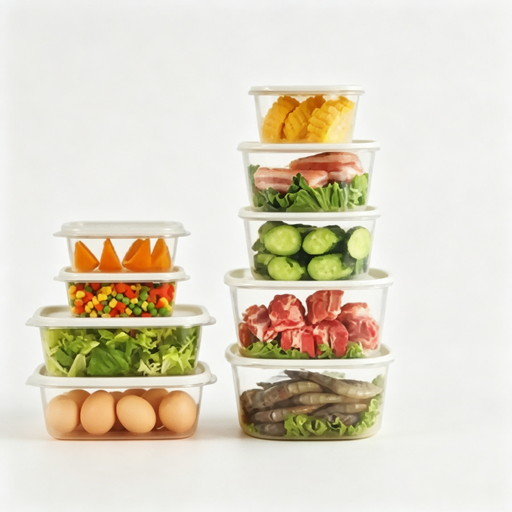
Why this choice suits this profile : This set is ideal for anyone looking to equip their kitchen with several sizes for meals, leftovers and everyday organisation.
The product information states that the containers are airtight and leakproof, and compatible with the microwave and freezer. Nevertheless, check the instructions concerning the lid before each use.
A 9-piece set designed for storage and a range of food storage needs.

Why this choice suits this profile : With its 2-litre capacity, this model is well suited to families and anyone who cooks in larger quantities.
The silicone seal is removable and the lid is described as airtight. The product information recommends removing the lid in the microwave and leaving space in the container before freezing.
Borosilicate glass, 2 l capacity, with stated compatibility with the dishwasher, freezer and microwave, provided the manufacturer’s precautions are followed.
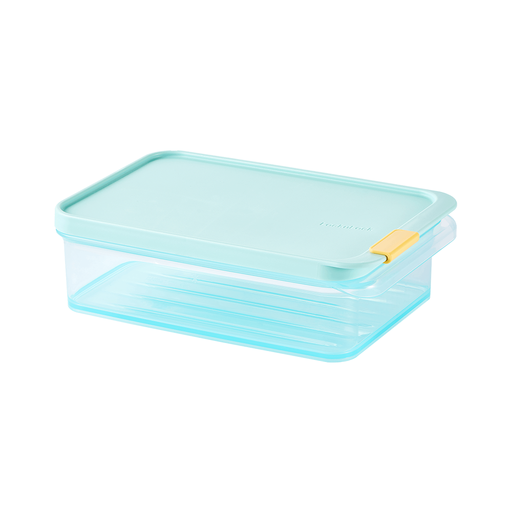
Why this choice suits this profile : Its rectangular shape is ideal for meal prep and freezer storage, and for kitchens where every square centimetre counts.
Its hollow lid is designed for stacking, while clips let you label the contents and date. The manufacturer limits dishwasher use to the top rack and microwave use to the container without the lid securely closed.
BPA-free polypropylene, 1.05 l capacity, modular stacking system and a stated maximum temperature of 110 °C.
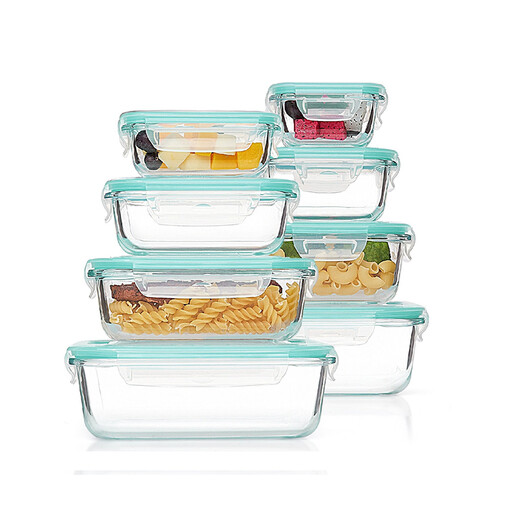
Why this choice suits this profile : With eight capacities ranging from 150 ml to 1,040 ml, this set makes it easy to portion sauces, side dishes, individual servings and larger meals.
The range of sizes means you do not need to use a large container for a small quantity. However, check the permitted temperatures and closure instructions before reheating or freezing.
Borosilicate glass, 8 containers with capacities of 150 ml, 200 ml, 320 ml, 370 ml, 520 ml, 640 ml, 800 ml and 1,040 ml.
We have put together a complete, real-time updated list of products that meet these demanding selection criteria as well as European safety standards.
For preparing several meals in advance, choose a 700 ml to 1.1 l container that is easy to stack and dishwasher-safe. A set offering several capacities can also be more practical for separating the main dish, side dish and sauce.
It is better to let the glass gradually return to room temperature. Thermal shock can cause cracking, even when the material is described as heat-resistant. Also remove the lid before reheating the contents, in accordance with the manufacturer’s instructions.
The answer depends on the food, how it was prepared and the temperature of the fridge. An airtight container helps prevent leaks and odours, but it does not replace food storage guidelines. Cool dishes quickly, write the date on prepared food and follow the current food safety recommendations.