
Livraison le jour même ou le lendemain

Qualité garantie

Débloquez vos offres de bienvenue: Livraison GRATUITE | Jusqu'à -80 % | 30 jours d'essai gratuits à JoyPlus
Téléchargez l'application
A tidy kitchen and food that lasts longer isn't a luxury; it's essential for simplifying your life and reducing waste. Yet, choosing the right food storage container is often a real headache. Faced with marketing promises, we quickly end up with cupboards full of containers that leak or age poorly. This guide is here to help you see things more clearly and make the right choice.
Before even comparing models, let's review the recurring flaws that turn a good idea into a daily disappointment.
To avoid these disappointments, here are the key points to check before you buy. These are what truly make a difference in day-to-day use.
Glass, plastic, stainless steel? There's no perfect material, just the one that best suits your habits.
The seal of an airtight food container depends on just two things: a thick, well-fitted silicone gasket and a closure system that inspires confidence (sturdy clips, a solid screw thread...). Take the time to inspect the lid: a removable gasket is a real plus for thorough cleaning, preventing the growth of mould.
For storage that doesn't descend into chaos, think in terms of a "system," not a "single container." The key? Containers that stack perfectly without sliding. A good set of storage containers offers consistent sizes, sometimes interchangeable lids, and bases that nest together for maximum space-saving, both in the cupboard and in the fridge.
Rather than an endless list, we've selected a few models that meet specific needs while respecting our criteria for quality and practicality.

Why we love it: Perfect for those who prep their meals in advance and want to eat a hot lunch at the office or on the move. Its large capacity can hold a full meal.
Its 304 stainless steel construction puts an end to stubborn stains and odours. The screw-on lid ensures a secure closure, ideal for transporting soups and saucy dishes without fear.
Vacuum insulation: Keeps food hot or cold for 4 to 6 hours. Wide opening: Very practical for filling, serving, and cleaning.
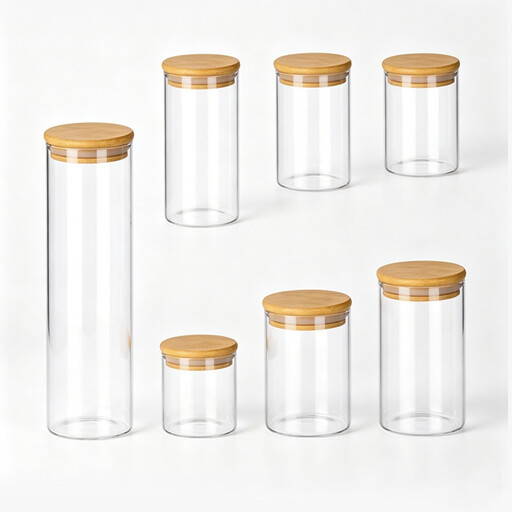
Why we love it: The perfect solution for bringing order and harmony to your pantry. This set offers multiple sizes to store everything from spices to cereals in jars that are as beautiful as they are practical.
The non-porous borosilicate glass won't stain or retain any odours. Say goodbye to the chaos of mismatched containers: the set's cohesive design ensures visually calming and efficient storage.
Complete set: 7 different sizes (from 431 ml to 2178 ml) for maximum versatility. Airtight lids: The gasket effectively protects dry goods from moisture.
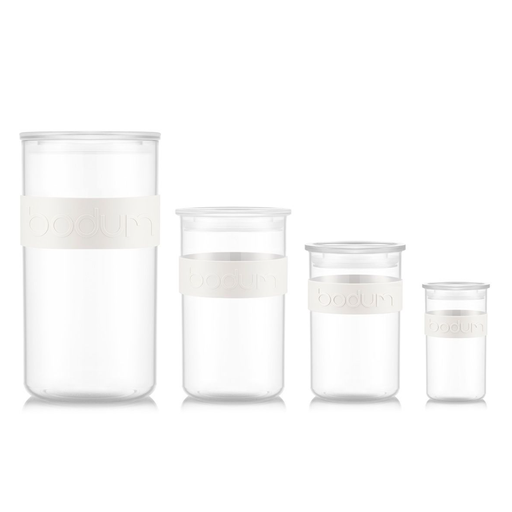
Why we love it: The all-in-one solution to equip your kitchen without a second thought. This set covers every need, from a small dip for appetisers to a large container for the week's *meal prep*.
The high-quality (BPA-free) plastic ensures safe food use. Most importantly, the design is truly made for stacking: these containers optimise space instead of creating clutter.
Complete system: 12 containers in 4 sizes (0.25 L, 0.6 L, 1 L, 2 L) for perfect organisation. Airtight lids: They preserve freshness and prevent disasters in the fridge.
Explore our full selection of containers and jars, all chosen for their quality and durability.
1. How can I be sure a container is truly airtight? The ultimate test: fill it with water, close it, then shake it vigorously. If not a single drop escapes, you've got a winner! Your container is ready to transport your soup risk-free.
2. Do plastic containers pose a health risk? For added safety, always choose plastics labelled as "BPA-free" (Bisphenol A). This information is usually visible on the packaging or engraved on the product. Also, strictly follow the manufacturer's recommendations, especially for microwave use.
3. Can you put glass jars in the freezer? Yes, as long as you take a few precautions. Choose a thick glass designed to withstand thermal shock. And most importantly, never fill the jar to the brim! Always leave 2 to 3 cm of space at the top to allow the food to expand as it freezes, otherwise the glass could crack under the pressure.