
Livraison le jour même ou le lendemain

Qualité garantie

Débloquez vos offres de bienvenue: Livraison GRATUITE | Jusqu'à -80 % | 30 jours d'essai gratuits à JoyPlus
Téléchargez l'application
Leftovers from dinner, batch-cooked meals, dry goods or portions for the freezer: a food storage container should make life easier in the kitchen, not add leaks, stubborn odours or lids that are impossible to find. So it’s worth taking a closer look at some of the features highlighted on product pages.
Before buying an airtight food container or a set of containers, first consider their compatibility with your appliances, the quality of the seal, and how much space they’ll actually take up in your cupboards.
A lid described as airtight may limit air exchange without completely preventing liquid leaks. If you’re transporting soup, sauce or a dish in the car, choose a leak-proof container fitted with a seal and, if possible, locking clips. Make sure the lid is properly engaged all the way around.
The phrase “microwave-safe” doesn’t always apply to the lid. Some models only allow the container itself to be heated, with the lid removed or left ajar. Other containers, designed for the pantry, should not hold hot food. Always check the instructions and the manufacturer’s guidance before reheating a dish.
A large capacity doesn’t guarantee optimal organisation. A container that’s too tall can waste space in the fridge, while one that’s too wide can make stacking difficult. For a container intended for both the fridge and the freezer, compare the external dimensions, the shape, and the space needed for liquids to expand when they freeze.
For meal prep, several containers of the same size make portioning and organising meals easier. In a cupboard, a transparent, stackable food storage container lets you see its contents at a glance.
BPA-free plastic is lightweight and convenient to carry. Polypropylene, for example, can be designed to withstand the freezer and dishwasher, but the maximum temperature varies from model to model.
A glass food container generally resists stains and odours well. Depending on the model, borosilicate glass can be used in the fridge, freezer, microwave or oven. However, be careful with thermal shock: don’t place a scorching hot container directly into a cold environment, or vice versa.
A stainless steel container resists odours and scratches well, making it particularly suitable for heavy-duty use. The presence of a plastic lid or silicone seal means you must follow the specific instructions regarding heating.
A removable seal is easier to clean and helps prevent odour build-up. Clips should close without force and remain functional after several cycles in the dishwasher. For the dishwasher, check whether the manufacturer recommends placing the container only on the top rack.
Before freezing a food storage container, avoid filling it to the brim. Leave enough space for liquid foods and note the date on a label. This habit is especially useful for keeping track of leftovers and homemade preparations.
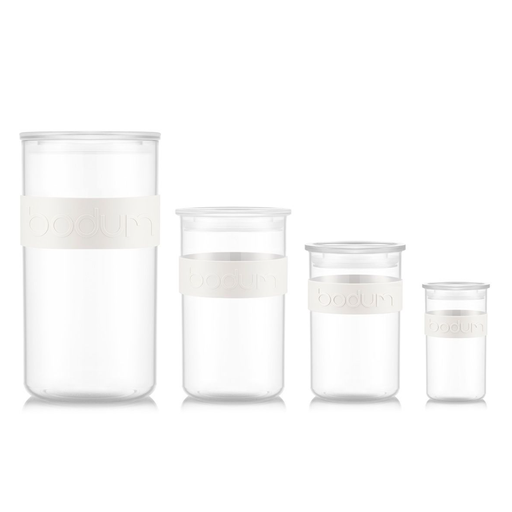
Why this choice suits this profile: The twelve sizes cover everyday small needs, leftovers and pantry storage, without having to buy several separate references.
The range of capacities reduces the risk of choosing a container that’s too big or too small. The airtight lids are designed to minimise spills.
BPA-free plastic, twelve containers, stackable formats and airtight closure. Check the instructions before microwaving or using with very hot food.

Why this choice suits this profile: Its 2-litre borosilicate glass is ideal for those who want a single container to store, portion and reheat their dishes, within the limits specified by the manufacturer.
The transparent body makes it easy to check the contents, while the removable seal allows for thorough cleaning. In the microwave, the lid must be removed.
Borosilicate glass, 2-litre capacity and stated compatibility with the fridge, freezer, dishwasher and microwave. Avoid sudden temperature changes.

Why this choice suits this profile: The four identical containers are ideal for batch cooking, large portions and regular storage in the fridge or freezer.
Stainless steel limits odour retention and the four clips help keep the lid in place. To reheat a dish, consult the instructions and remove the lid.
316L stainless steel, four 1.6-litre containers, stated compatibility with the freezer and dishwasher. According to the safety instructions provided, this model should not be placed in the microwave.
We’ve put together a comprehensive, real-time updated selection of products that meet these demanding criteria, while complying with European safety regulations.
Yes, provided the manufacturer states that the model is freezer-safe. Always leave a little space, because liquid expands as it freezes. Also avoid thermal shock, especially with glass containers.
There is no universal lifespan. Replace it as soon as it shows a crack, deformation, a lid that no longer closes properly, or a damaged seal. Deep scratches or persistent odours may also justify replacing it.
Yes, if the lid is properly locked and the container is genuinely leak-proof. For liquid foods, transport the container upright in a suitable bag and check the condition of the seal before you leave. The manufacturer’s instructions remain the priority, especially for transporting hot food.