
Livraison le jour même ou le lendemain

Qualité garantie

Débloquez vos offres de bienvenue: Livraison GRATUITE | Jusqu'à -80 % | 30 jours d'essai gratuits à JoyPlus
Téléchargez l'application
Buying food storage containers seems straightforward… until lids leak, odours linger, or the containers take up more space than the food itself. Whether you're organising the fridge, batch-cooking meals, or tidying a pantry, it's best to start with your everyday needs rather than how the product looks.
Marketing claims aren't always enough to make an informed choice. Here are the key points to check before buying airtight food containers, storage jars, or meal prep boxes.
A lid that clips on isn't necessarily airtight. To store leftovers or transport lunch, look for a silicone seal, a clearly described locking system, and, if possible, a mention that the container is leak-proof. A removable seal makes cleaning easier, but you must refit it correctly after each wash.
Glass containers generally resist odours and stains well. However, they are heavier and can crack from thermal shock. Plastic is lightweight and practical for transporting portions, but not all models are oven or microwave safe.
The BPA-free label tells you about the product's stated composition, not its heat resistance. Always check the permitted uses on the manufacturer's specification sheet.
A large 2-litre container is perfect for a family dish but becomes bulky for a single portion. Conversely, a collection of small containers multiplies the number of lids and can quickly complicate storage. Before ordering, measure your fridge shelves, drawers, and the available height in your pantry.
To cover most needs, the following capacities make a good starting point:
Rectangular containers often make better use of fridge space. In a pantry, stackable models and cylindrical jars can be more practical, provided they are stable enough.
A dishwasher-safe container makes cleaning much easier, but check whether this also applies to the lid and seal. In the microwave, remove the lid unless the manufacturer states otherwise. With glass, avoid going straight from the freezer to the oven, or pouring boiling liquid into a cold container, to reduce the risk of thermal shock.
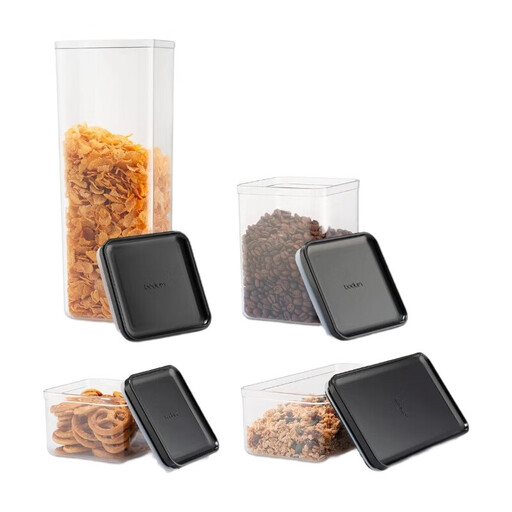
Why this suits this profile: This set brings together six transparent containers in several capacities. A way to start organising your kitchen without investing in a large collection straight away.
The different sizes prevent using one large container for everything. The airtight lids are designed to limit spills and exposure to moisture.
BPA-free plastic, transparent bodies, and dishwasher compatibility stated for both containers and lids.

Why this suits this profile: With its 2-litre capacity, this container is suitable for family portions, meal prep, and storing a cooked dish.
Its rectangular shape reduces wasted space, while the removable silicone seal makes it easy to clean areas that might trap odours.
Borosilicate glass, 2-litre capacity, and compatibility stated for the fridge, freezer, microwave, and dishwasher. Remove the lid before reheating in the microwave.

Why this suits this profile: Its 0.8-litre size is ideal for individual portions, meal prep, and leftovers, moving from storage to reheating in line with the manufacturer's instructions.
Its intermediate size avoids over-sizing portions. Its rectangular, stackable shape makes organising the fridge or freezer easier.
Non-porous borosilicate glass, 0.8-litre capacity, and compatibility stated with the oven, microwave, fridge, freezer, and dishwasher.
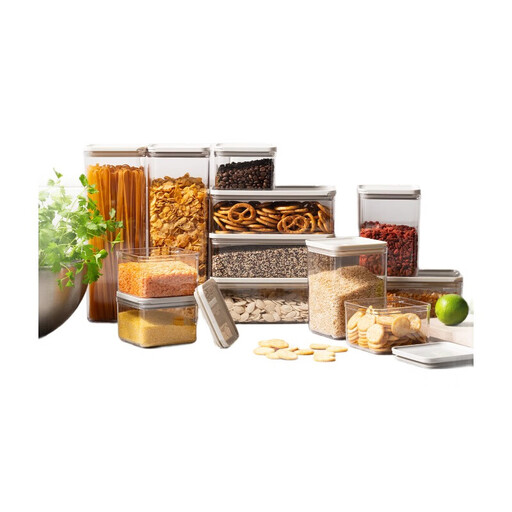
Why this suits this profile: The twelve sizes cover everything from small quantities to dry goods bought in bulk, while offering a uniform look for your cupboard or pantry.
The 0.5, 1, 1.2, and 2.6-litre capacities prevent using a large jar for every ingredient. The lids and containers are designed for stacking.
Transparent BPA-free plastic, silicone seals, and dishwasher compatibility stated for the various components.
We've compiled a comprehensive, real-time selection of products that meet these exacting criteria as well as European safety regulations.
Wash each container before its first use and dry the seal thoroughly before closing the lid. For hot foods, let them cool down if the manufacturer advises against storing at high temperatures. In the freezer, avoid filling the container to the brim: liquids expand as they freeze.
Regularly inspect the glass, lids, and seals. A crack, a distortion, or a closure that no longer holds are good reasons to replace the affected part. For wooden lids, hand washing is preferable, and avoid prolonged soaking.
A 600 to 800 ml container is generally suitable for a lunch, a salad, or a portion of leftovers. For a dish for several people, go for 1.5 to 2 litres, remembering to consider the space available in your fridge.
No. Glass generally resists odours and stains better, while BPA-free plastic is lighter and more practical to carry. The right choice depends on the use, the weight you're willing to accept, and the instructions regarding the oven, microwave, and dishwasher.
When possible, remove the seal and wash the lid separately. Dry all parts thoroughly before reassembling. Don't close a container while it's still damp, and avoid leaving leftovers for several days without checking the storage recommendations appropriate for the food in question.