
Livraison le jour même ou le lendemain

Qualité garantie

Débloquez vos offres de bienvenue: Livraison GRATUITE | Jusqu'à -80 % | 30 jours d'essai gratuits à JoyPlus
Téléchargez l'application
A well-organised kitchen often starts with the right containers. Yet buying food storage containers can quickly lead to disappointment: lids that leak, awkward sizes, or materials that are a hassle to clean. To avoid unnecessary purchases, it's better to compare capacity, closure system and permitted uses rather than relying solely on appearance or marketing promises.
A lid that clicks into place doesn't always guarantee a perfect seal. For soups, sauces and moist foods, look for airtight food containers fitted with a silicone seal or a clearly described closure system. A poorly fitted lid can cause leaks in your bag and let odours spread through the fridge.
The phrase "dishwasher safe" doesn't automatically mean "microwave safe" or "oven safe". Plastic containers must be used according to the manufacturer's instructions and kept away from heat sources when not designed for them. Borosilicate glass handles temperature changes better, but you should still remove the lid before reheating the contents and avoid sudden thermal shocks.
A set of large boxes might seem like a good deal, but it quickly fills up your cupboards. Matching sizes, stackable food storage containers and easy-to-store lids prove far more practical day to day. Also check whether the seal is removable: this part needs to be cleaned and dried properly to prevent residue build-up.
For leftovers and individual portions, capacities of 250 to 600 ml are generally suitable. Sizes of 1 to 2 litres are better suited to family meals, bulk ingredients and meal prep. In the fridge, a rectangular container often makes better use of space than a very rounded one.
In a pantry, transparent kitchen storage jars let you identify contents at a glance. A range of volumes makes it easier to store cereals, pasta, flour, dried fruit and small quantities of ingredients.
The "BPA-free" label is useful, but it doesn't replace reading the usage and care instructions. For products sold in the UK, check the food contact information, warnings and permitted uses.
For a reusable lunch box, examine the number of clips, the presence of a seal and the stability of the lid. Several fasteners can improve security during transport, without making the container foolproof if it's not closed properly.
A container that's dishwasher safe makes life easier, especially for families. When the manufacturer recommends hand washing, it's best to follow this advice to preserve the seal, decoration or closure mechanism.
The models below cater to different needs: pantry storage, office lunches, meal prep or portion control.
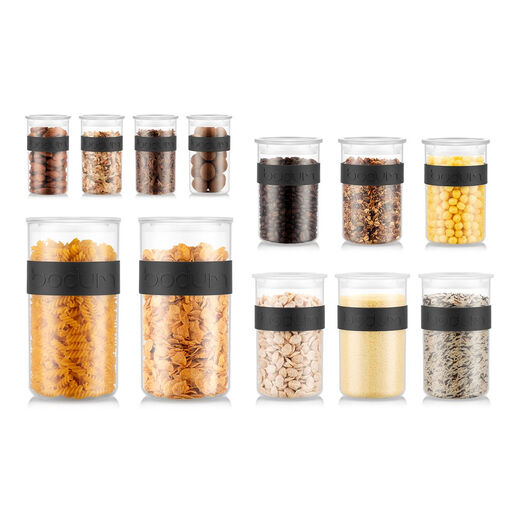
Why this suits this profile: This set offers four capacities, from 0.25 to 2 litres, so you can start organising leftovers, snacks and ingredients without having to buy several separate sets.
The variety of sizes stops you buying containers that are too big, while the airtight lids are described as suitable for food storage. The BPA-free plastic should still be used within the limits stated by the manufacturer.
12-piece set, varied sizes, airtight lids and dishwasher safe according to the product listing.

Why this suits this profile: Its 2-litre capacity is ideal for family meals, storing leftovers and meal prep. The transparent borosilicate glass body lets you easily see what's inside.
The listing states compatibility with the fridge, freezer, dishwasher and microwave, provided the lid is removed. It also recommends leaving enough space to allow liquids to expand.
Borosilicate glass, removable seal, airtight lid and claimed resistance to thermal changes up to 200 °C.
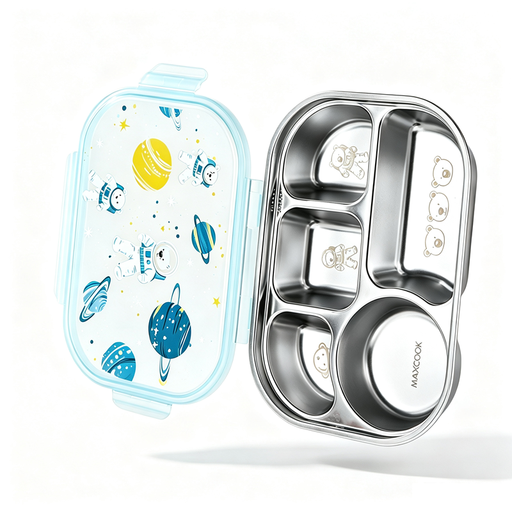
Why this suits this profile: Its five compartments are ideal for packed lunches, children, picnics and anyone who likes to keep different portions separate.
Food stays separated and the four fasteners keep the lid secure. The manufacturer recommends hand washing and prohibits microwave use due to the metal components.
316L stainless steel, five compartments, PP lid and a practical design for viewing and controlling portions.
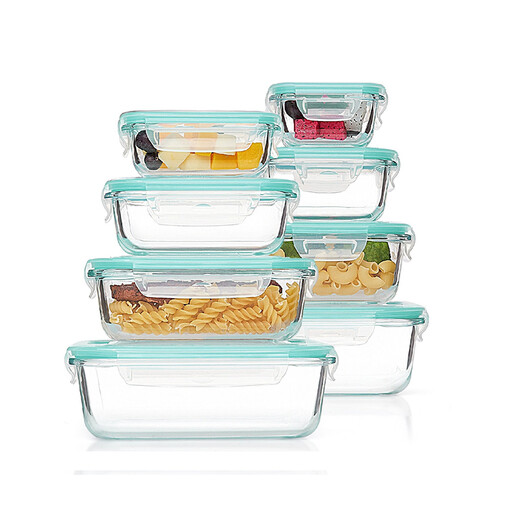
Why this suits this profile: The eight capacities, from 150 to 1,040 ml, let you divide up portions and choose the right container whether for an office lunch or leftovers.
Borosilicate glass reduces lingering odours and the range of sizes stops you carrying an oversized container. However, check the specific lid instructions before reheating the contents.
Eight borosilicate glass containers, with sizes suitable for both individual portions and larger preparations.
We've put together a comprehensive, real-time selection of products that meet these exacting criteria as well as European safety regulations.
Go for a compact, reusable lunch box with a lid that stays securely in place and a capacity suited to your portion. For separating different foods, a compartmentalised bento box is particularly handy. Stainless steel can't go in the microwave, whereas some glass containers can be used without their lid, if the instructions allow it.
It depends on how often you use it, how you wash it and the condition of the lid. Replace any container that is cracked, warped, has a lingering odour or a deteriorated seal. Lids and seals can wear out before the container itself, so check them regularly.
Remove any detachable seals, wash each part with a mild detergent, then dry them thoroughly before closing the container. Avoid abrasive sponges on plastic and steel. For meal prep, let food cool according to the manufacturer's instructions before sealing the containers and putting them in the fridge.