
Livraison le jour même ou le lendemain

Qualité garantie

Débloquez vos offres de bienvenue: Livraison GRATUITE | Jusqu'à -80 % | 30 jours d'essai gratuits à JoyPlus
Téléchargez l'application
A good food storage container can simplify your life in the kitchen, preserve the freshness of your food, and become your best ally for meal prep. However, the market is flooded with products whose promises often fall short. A lid that warps from heat, a questionable seal that turns your bag into a swimming pool, or plastic that stains orange after the first bolognese sauce: these small daily frustrations are, however, avoidable.
As the head of product selection at Joybuy, I'm here to separate fact from fiction for you. Here are the pitfalls to avoid and the criteria that truly matter when making the right choice.
To be confident in your purchase, consider these three essential points.
The choice of material depends entirely on your intended use.
A foolproof seal relies on a power duo: the silicone gasket and the locking system. Look for a thick, and if possible, removable gasket for impeccable cleaning. The locking system (clip-on or screw-top) must be robust to apply uniform pressure and guarantee leak-proof transport, even for soup.
Always check the pictograms on the packaging. Freezer, microwave, and dishwasher compatibility has become the standard. However, only a borosilicate glass container can go in the oven, and be careful, always without its plastic lid. This versatility is the masterstroke of meal prep: a single dish to cook, store, freeze, and reheat.
Rather than an endless list, we've chosen products that excel in their category, designed for specific uses.

Why it's the perfect match: Ideal for meal prep enthusiasts. This glass dish lets you bake a portion in the oven, store it in the fridge, and then reheat it at the office. One container, from start to finish.
Its borosilicate glass body withstands thermal shock and is genuinely oven-safe (without its lid). The 4-clip locking system ensures a foolproof seal.
Its total versatility: oven, microwave, freezer, and dishwasher safe. The glass remains non-porous, never retaining odours or stains.
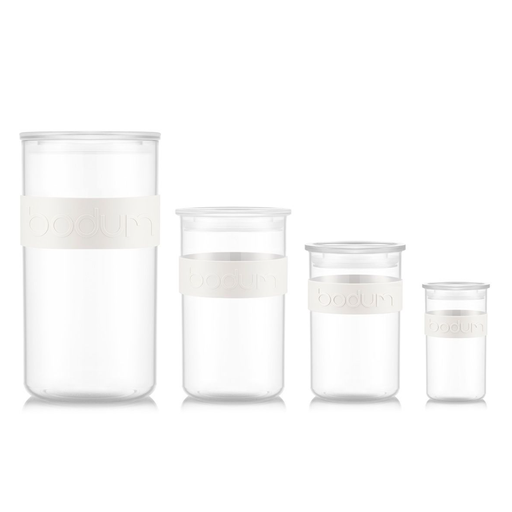
Why it's the perfect match: This set of storage containers is the ideal solution for bringing order to the pantry and fridge. With 12 pieces in 4 different sizes, it allows you to store everything coherently and efficiently: leftovers, dry ingredients, snacks...
No more headaches from mismatched containers! Their uniform, stackable design maximises kitchen storage space. The plastic is, of course, guaranteed BPA-free for safe family use.
A complete and versatile 12-piece set. Its stackable design is a real space-saver, and the airtight seal effectively preserves freshness.

Why it's the perfect match: For those who eat on the go, this stainless steel lunch box is the ultimate durable and lightweight solution. Stainless steel is unbreakable, won't retain odours from yesterday's curry, and is a healthy alternative to plastic.
Unlike plastic that stains or warps, 316 stainless steel is virtually indestructible and perfectly hygienic. It will hold up, even with intensive daily use.
A healthy, lightweight, and ultra-durable material. It's resistant to both stains and odours. The set of 3 sizes adapts to all types of meals.
We have curated a complete selection of products that meet our quality criteria and current safety standards.
It all depends on the material and care. A glass or stainless steel container can last for years if you take care of it. For plastic, longevity varies: a quality BPA-free model will last several years, whereas a low-end plastic one will warp or crack in a few months, especially with repeated use in the microwave and dishwasher.
Absolutely not. It is imperative to check for the "microwave-safe" symbol on the product. Only certified containers are safe for microwave use, and it is always advisable to remove or vent the lid to allow steam to escape. For reheating, always opt for a BPA-free food container to prevent any transfer of unwanted substances to your food.
For plastic and silicone gaskets, odours can be persistent. The most effective trick: fill the container with a mixture of hot water and baking soda (or white vinegar), let it sit for several hours, then rinse thoroughly. Letting the container air-dry open in the sun can also work wonders.