
Livraison le jour même ou le lendemain

Qualité garantie

Débloquez vos offres de bienvenue: Livraison GRATUITE | Jusqu'à -80 % | 30 jours d'essai gratuits à JoyPlus
Téléchargez l'application
Between dinner leftovers, lunch at the office, the kids' snacks and weekend meal prep, a food storage container has to handle some very real demands. A leaky lid, hard-to-clean grooves or an awkward size can quickly turn a practical purchase into a source of frustration.
Before you decide between a lunch box, a bento box or a simple food container, it's worth looking beyond the design and marketing promises.
A clip-on lid isn't necessarily airtight. How well the system works depends on the quality of the seal, how snugly it fits and how rigid the container is. If you're transporting soup, sauce or a dish with gravy, check for a removable silicone seal and a closure that holds the lid securely on several sides.
A container with a simple press-on lid is fine for dry foods. It's far less reassuring when you're carrying it in a bag.
Plastic, glass and stainless steel all offer different possibilities. A stainless steel container can't go in the microwave, while a glass one can be heavy and vulnerable to thermal shock. With plastic, always check the instructions for fridge, freezer, dishwasher and reheating.
The phrase "microwave-safe" doesn't necessarily mean the lid can stay on during reheating. Follow the manufacturer's guidelines and let steam escape when recommended.
Grooves, hinges and seals can trap food residue. A container that's difficult to take apart quickly loses its appeal for everyday use. For regular use, choose models with removable parts and surfaces that are easy to rinse. If the manufacturer recommends hand washing, it's best to bear that in mind before you buy.
The capacity needs to match your portion sizes, but also the space available in your fridge or bag. Here are some useful benchmarks:
External dimensions matter just as much as the stated volume. A stackable container with a flat lid can make organising a cupboard or kitchen drawer much easier.
Polypropylene is lightweight and practical for carrying meals. Borosilicate glass makes storage easy and lets you see the contents at a glance, but it's generally heavier. 316 or 316L stainless steel is robust and resistant to corrosion, but it's not microwave-safe.
For each model, check the symbols and instructions regarding:
A container with compartments lets you separate foods and stop them from mixing together. This is handy for a meal with a side, vegetables and a dessert. However, be aware that the dividers don't always guarantee independent leak-proofing between compartments. For liquid foods, it's better to use separate small airtight containers.
A bread box needs enough ventilation to stop the crust from going soft too quickly. Conversely, a sharing platter or a container designed for presenting food will prioritise access and separation over perfect airtightness.
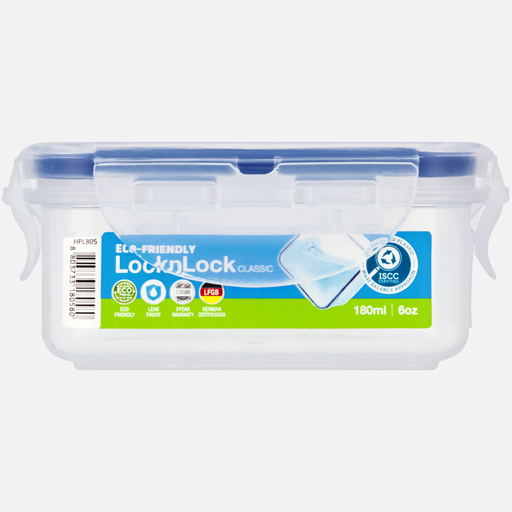
Why this suits this profile: At 180 ml, this small container is ideal for sauces, compotes, spices and small portions, while taking up very little space in the fridge.
Its four clips and removable silicone seal reduce the risk of leaks, while allowing you to clean the seal separately.
BPA-free polypropylene, stackable design, and compatibility with the fridge, freezer and dishwasher according to the product listing.

Why this suits this profile: This set includes five 1,040 ml containers and five 370 ml ones, a practical combination for organising family meals or prepping portions in advance.
The different sizes stop you from using a large container for a small portion and help you make better use of available space.
Borosilicate glass, clip-lock lids and a ten-piece set to cover a wide range of uses.

Why this suits this profile: Its five compartments are ideal for meals you want to keep separate, pre-prepared portions and picnics, especially when you don't need a microwave.
The four loops hold the lid securely in place. The listing recommends hand washing and notes that the metal means it's not suitable for microwave use.
316L stainless steel, five separate compartments, PP lid and a design made to keep foods apart.
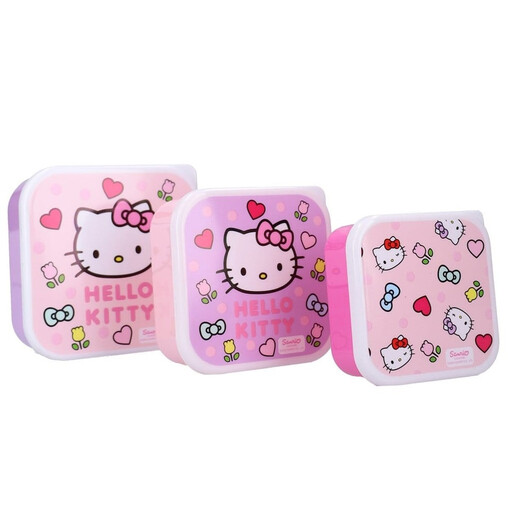
Why this suits this profile: Its dimensions of 6 × 12 × 12 cm and 3-in-1 organisation make it ideal for small snacks, school lunchboxes and family outings.
Its compact size takes up minimal space in a child's bag. The listing recommends cleaning with a damp cloth, followed by air drying.
Plastic construction, official Hello Kitty licence and 3-in-1 organisation for small portions.
We've put together a comprehensive, real-time selection of products that meet these exacting criteria as well as European safety standards.
Even an airtight container needs a few simple precautions:
For very acidic or very salty foods, check the recommendations for the specific material. With stainless steel, the Maxcook model's listing advises against storing these types of foods for a long period.
For an individual lunch, a volume of 600 to 1,000 ml is usually enough for a full meal, depending on what's in the portion. A compartmentalised box may need a bit more capacity, since the dividers take up some of the internal space.
No. It all depends on the material and the model. Glass and some plastics can be designed for microwave use, but the lid usually needs to be removed or left slightly open. Stainless steel must never be placed in a microwave.
Replace it if the lid no longer closes properly, if the seal is cracked, if the plastic is heavily scratched or warped, or if odours persist despite washing. A well-maintained container can last a long time, but its lifespan depends on how often you use it, the material and whether you follow the care instructions.