
Livraison le jour même ou le lendemain

Qualité garantie

Débloquez vos offres de bienvenue: Livraison GRATUITE | Jusqu'à -80 % | 30 jours d'essai gratuits à JoyPlus
Téléchargez l'application
Keeping food fresh, optimising fridge space, or prepping meals in advance: without the right containers, it can quickly become a headache. Between dinner leftovers, ingredients for the week's meal prep, and the lunch box you toss in your bag, choosing the right food storage container is a crucial task.
Glass, stainless steel, or plastic? Clip-on lids or simple covers? Faced with a jungle of options, it's easy to feel overwhelmed. As a product expert at Joybuy, I'm here to help you navigate the choices. This guide breaks down the essential criteria and presents a selection of products to help you make an informed decision that's perfectly suited to your habits and your kitchen.
Before diving into our selection, let's review the key points to consider to find the storage solution that's truly right for you.
The choice of material is often the first dilemma. Each option has its strengths and weaknesses:
An airtight container is non-negotiable for transporting a saucy dish or preserving food freshness. The secret? A lid equipped with a silicone gasket and four-sided locking clips. This system guarantees a leak-proof seal, preventing disasters in your bag and protecting your meals from air and fridge moisture.
Think about your daily routine. Do you need multiple sizes for your meal prep? Do you dream of containers that nest together for optimised storage? Is freezer and dishwasher compatibility a priority to make your life easier? A good food storage container set often checks all these boxes and becomes a valuable ally for your kitchen organisation.
To move from theory to practice, here are three options that each meet a specific need.
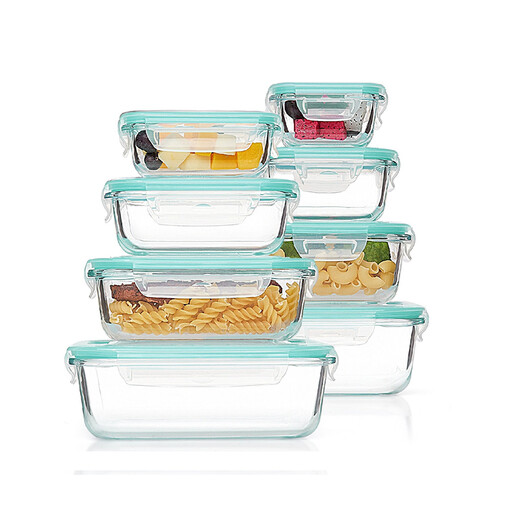
Why we love it
This borosilicate glass food storage container set is the ideal solution to outfit your kitchen in one go. With eight different sizes, from 150 ml to over a litre, it adapts to every scenario: from a small sauce to family-sized leftovers and the week's meal prep.
Advantages
Who is it for?
This set is ideal for families and avid meal prep enthusiasts. It's also the perfect starting point for those who want to finally say goodbye to their old plastic containers in favour of glass.
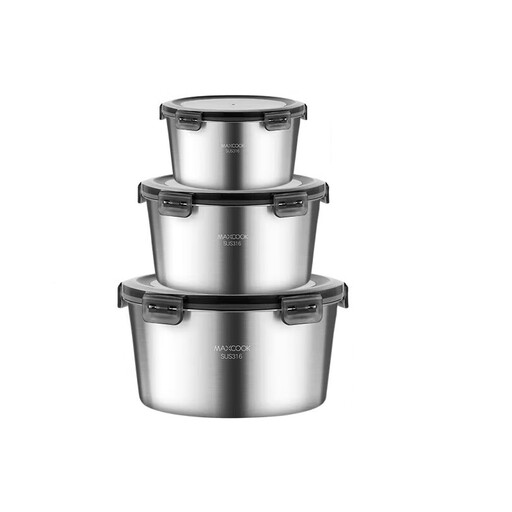
Its strong suit
Made from 316 stainless steel, an alloy known for its high resistance to corrosion, this three-piece Maxcook set is built for adventure. Lightweight and indestructible, it's the ideal companion for taking your meal anywhere: to the office, on a picnic, or on a hike.
Advantages
Who is it for?
For anyone on the go looking for a reliable and shock-proof lunch box. It's also a smart choice for those who prioritise durability and want an alternative to plastic or glass, which can be considered too heavy and fragile.
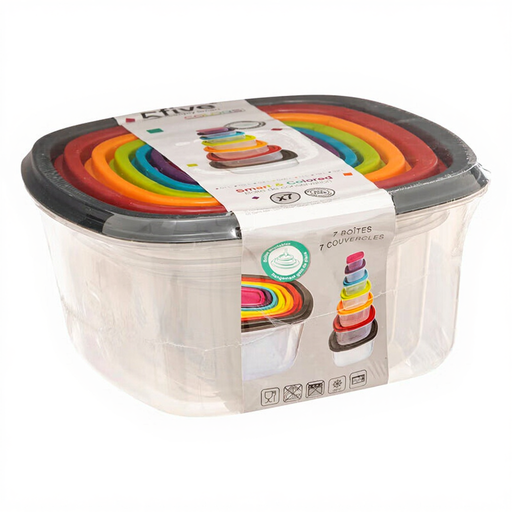
The smart choice
This set of seven food-grade plastic (polypropylene) containers stands out for its ultra-practical design and excellent value. The colourful lids help identify contents at a glance, and their nesting design is a real bonus for optimising kitchen organisation and saving space.
Advantages
Who is it for?
This set is perfect for students, small kitchens where every inch counts, or anyone looking for an economical and functional solution to organise their pantry and fridge.
Plastic remains a champion for its light weight and versatility. If you're looking for other practical everyday containers with simple and effective locking systems, we have a full range to offer.
Discover all our plastic food storage containers
An airtight container has a gasket (often silicone) and a locking system (usually clips) that make it completely impermeable to air and liquids. A regular container has a lid that simply sits on top or clips on loosely, offering much less protection against oxidation and leaks. An airtight seal is essential for saucy dishes and for optimal food preservation.
No, not always. The rule of thumb is to always check the manufacturer's instructions, usually found as pictograms on the product or its packaging. While most quality borosilicate glass, stainless steel, and food-grade plastic containers are freezer and dishwasher-safe, exceptions exist. As for the microwave, glass is often compatible (without its lid), but stainless steel never is!
Each material has its strengths. Glass is considered the champion of neutrality: it's completely inert and never reacts with food. Food-grade stainless steel (like type 304 or 316) is also very stable and hygienic. For plastic, the key is to choose products designed for food contact and guaranteed "BPA-free" (Bisphenol A) for peace of mind.